
Valid 1 day·Spanish, English
5.0(3)
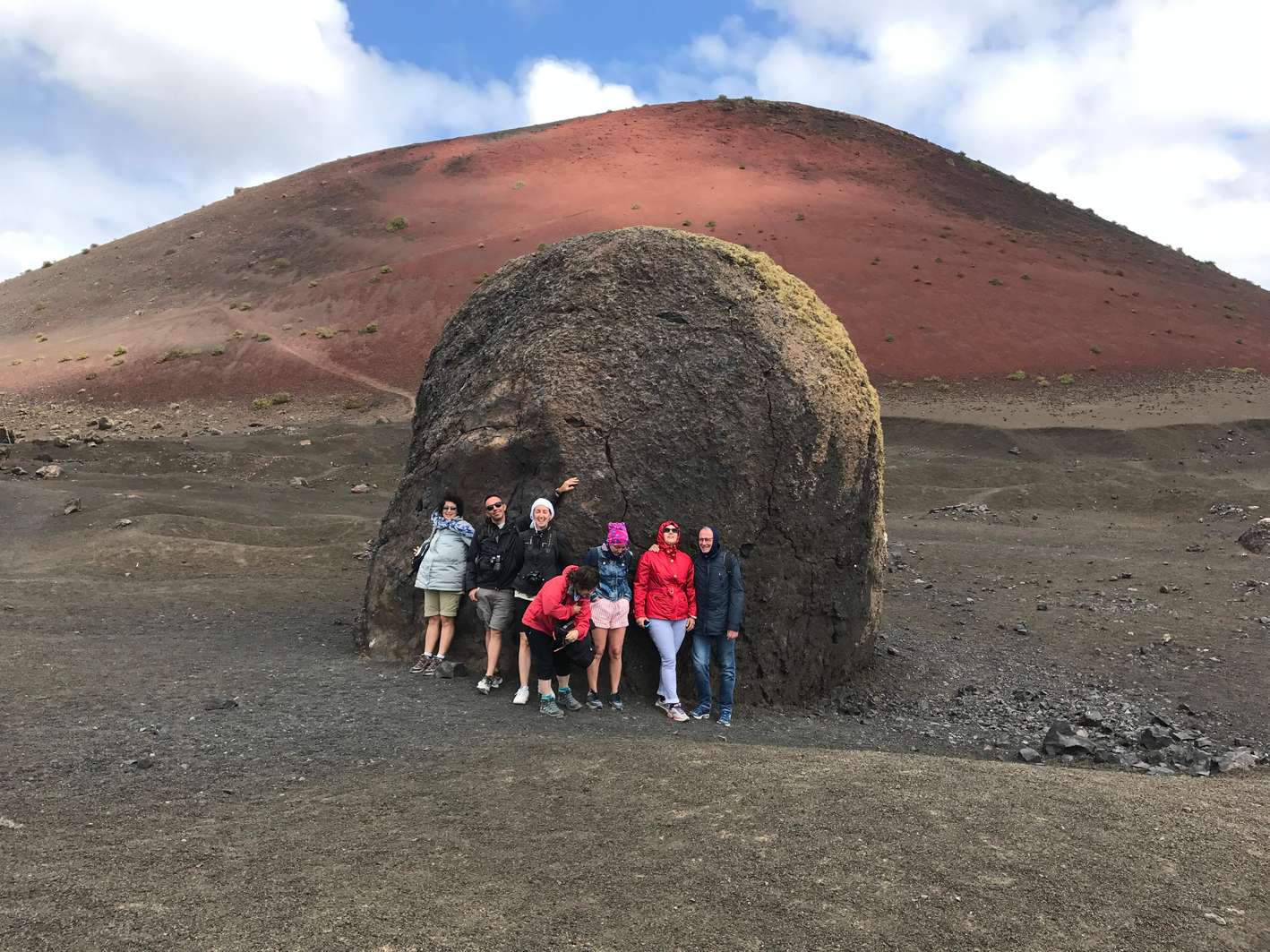
Wine and volcan private tour
Free cancellationHotel pickup includedprivate transportation

Taste Lanzarote volcanic wine where it grows - crisp, mineral Malvasía from vines planted in black ash pits. Local guides walk you through La Geria's stone zocos and pour at working bodegas, so your whole party can taste and no one drives. Book a vineyard tour today.
"Great tour full of interesting info. Our guide Charlie was wonderful with great humor. The wine tasting was perfect. Worth the price."


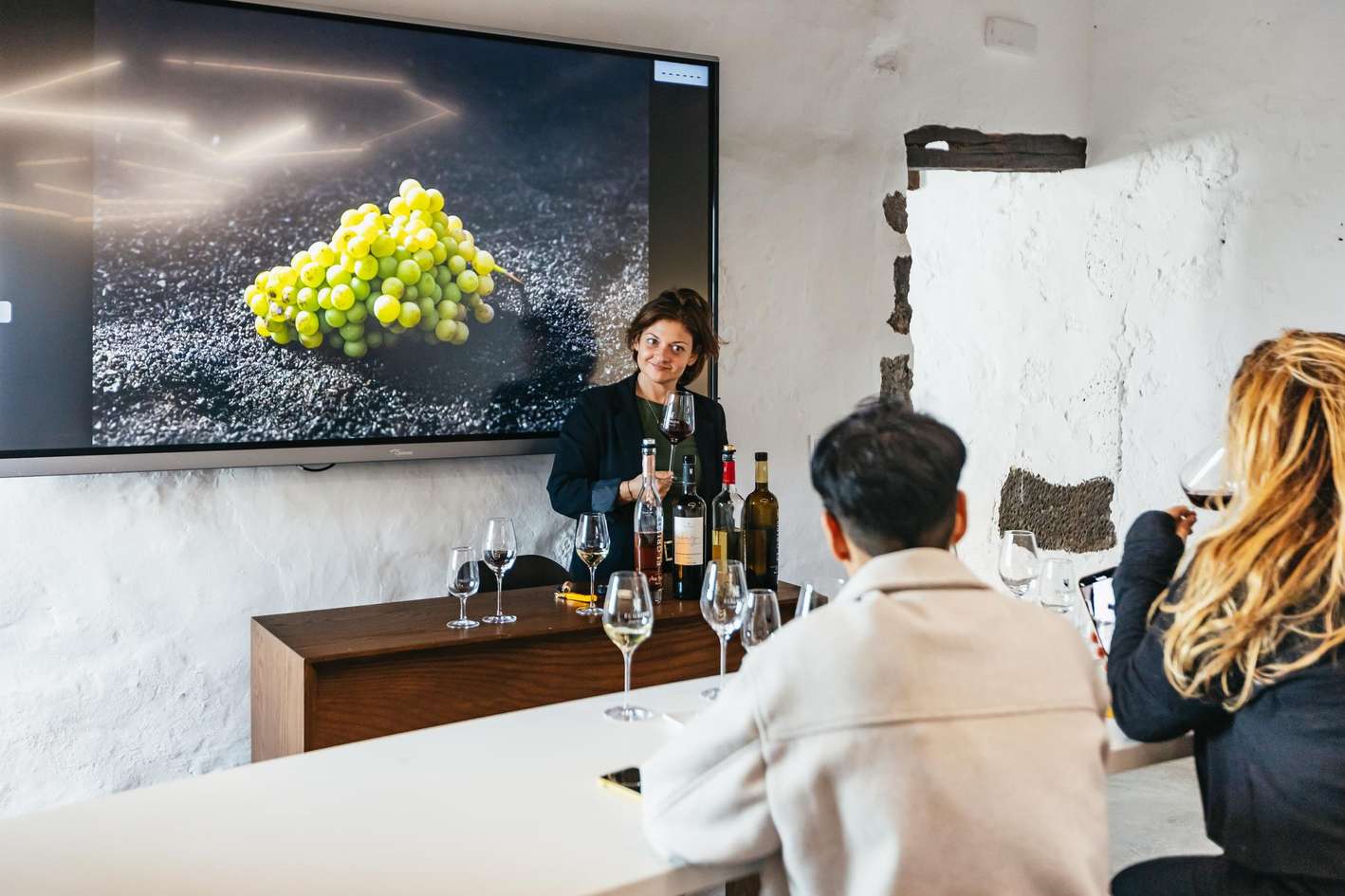
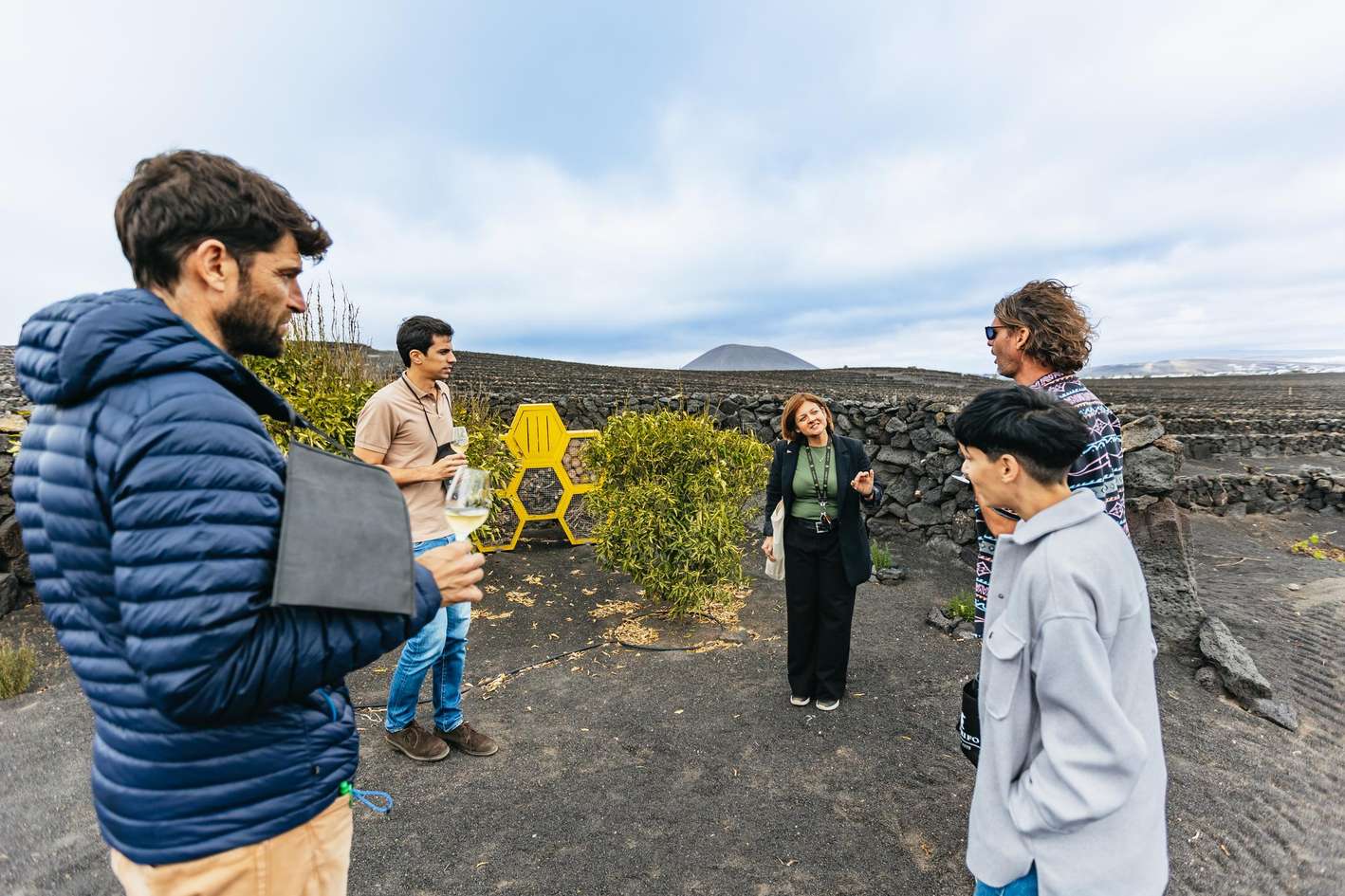
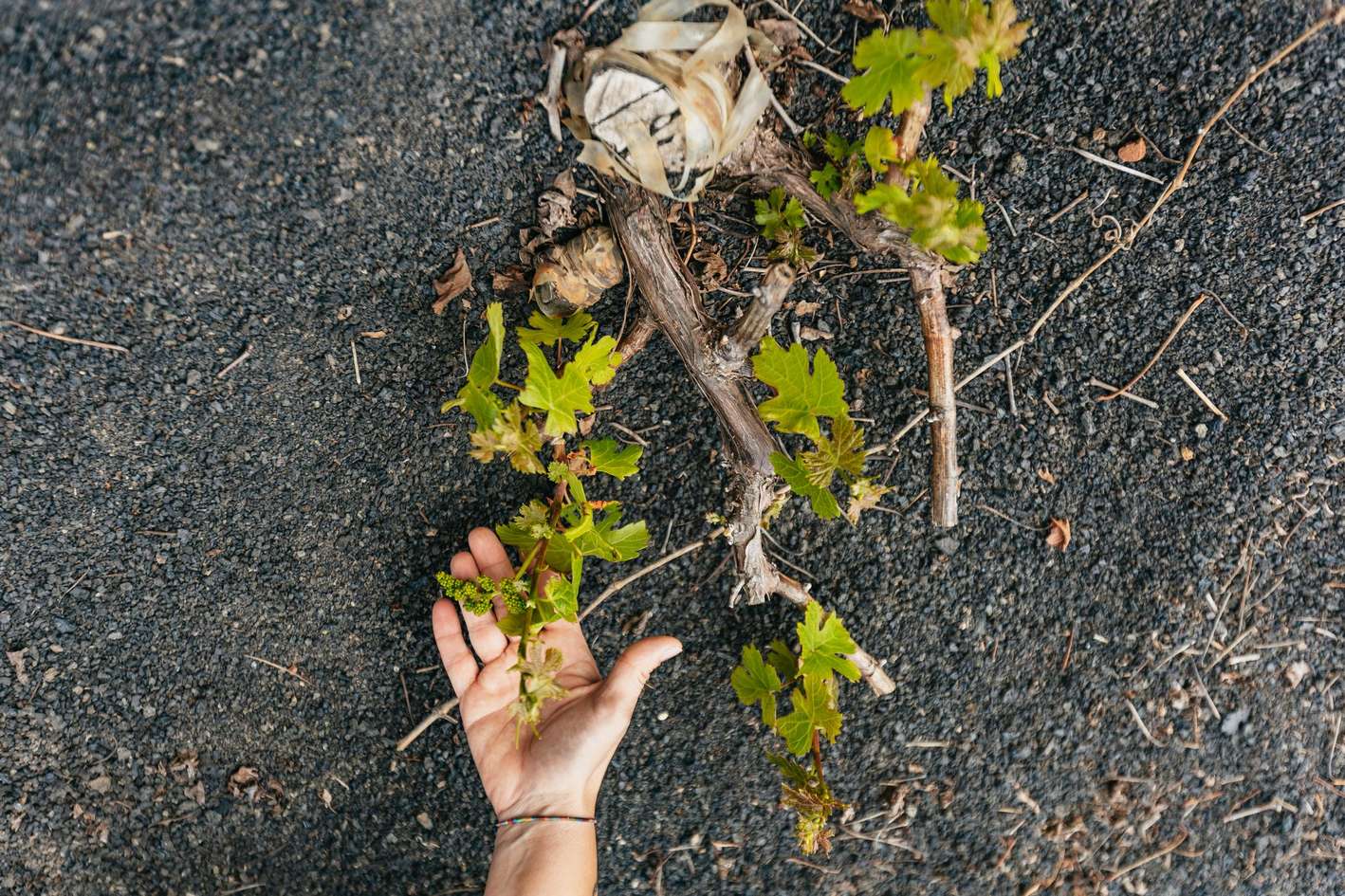
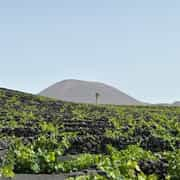

Vineyard tastings that pair the island's wines with chocolate and cheese, from 90 minutes to a half-day hike.
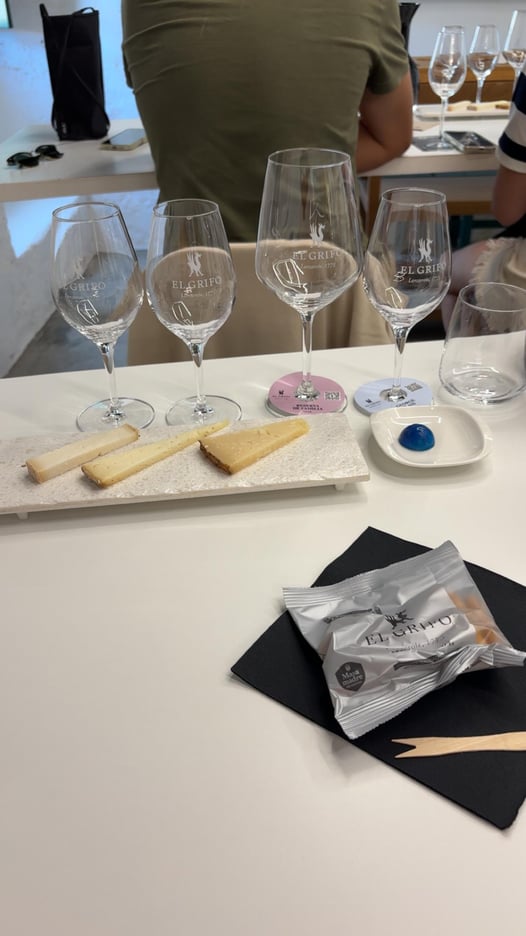
Read the guideA sommelier-led cellar tour with six wines and cheese, inside the Canary Islands' oldest working winery.
Read the guideLanzarote's volcanic wine comes in two shapes. One path covers tastings scattered across the island's vineyards; the other sticks with El Grifo, the oldest estate in the Canaries. Compare pours if you are browsing; pick El Grifo for one deep, sommelier-led visit.
Both end with a glass in hand. They differ in how much of La Geria's wine country you cover before the first pour.
Chocolate, cheese and Malvasía pairings at bodegas and vineyards across the island
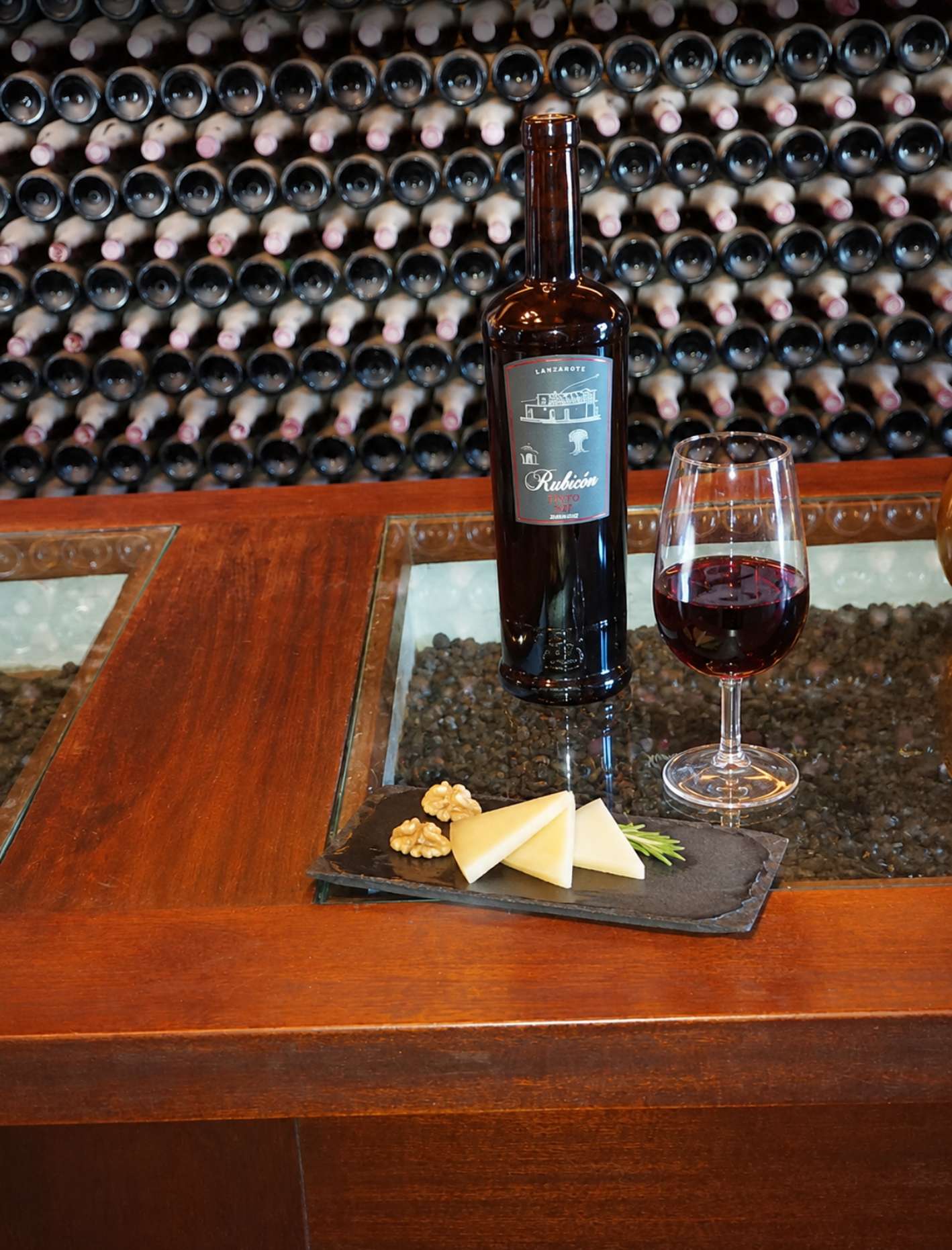
A glass of Lanzarote wine rarely arrives alone. At Finca Testeina, two organic wines come with chocolate bonbons made on the island; on the vineyard hikes, dry Malvasía pairs with local cheese. The dry whites are crisp, fresh and un-oaked, best served cool.
Book a visit with hotel transfers if you want to drink freely: Spain's drink-driving limits bite on the winding wine roads. Wear closed-toe shoes on any walk over the black ash, because sandals get turned away at the start, refund gone.
Valid 1 day · ★ 5.0 (3)Wine and volcan private tourFrom $357 4 hours · ★ 4.9 (219)Hiking through La Geria: where volcanoes become vineyards.From $52 2 hours · ★ 4.9 (375)Wine Lovers: Wine Tasting Tour at El Grifo Bodega LanzaroteFrom $55 3.5 hours · ★ 4.8 (14)Lanzarote: Trekking in La Geria with winery visit and wine tastingFrom $45 /group The Canary Islands' oldest winery: 1775 cellars, a museum and a sommelier-led tasting
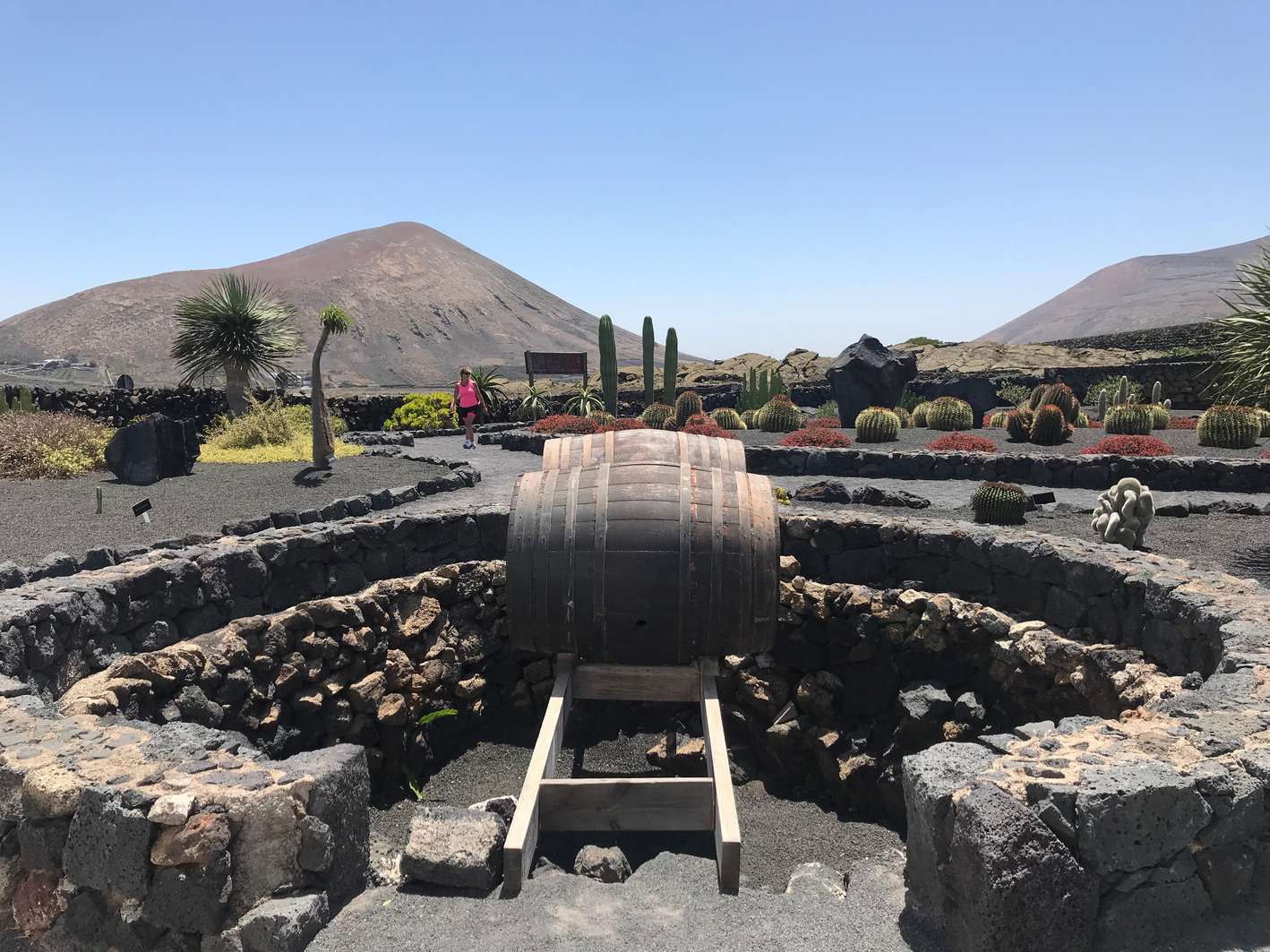
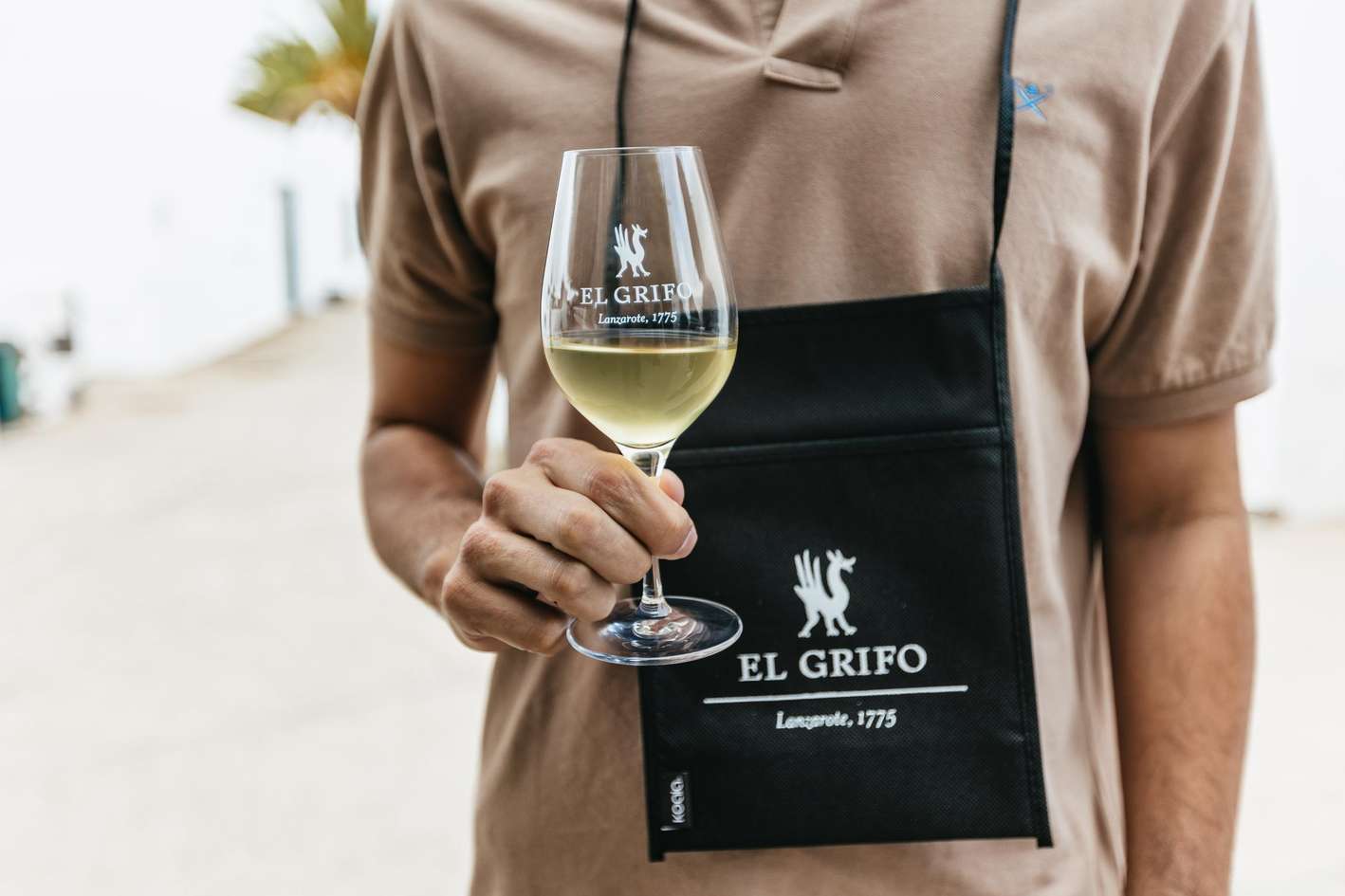
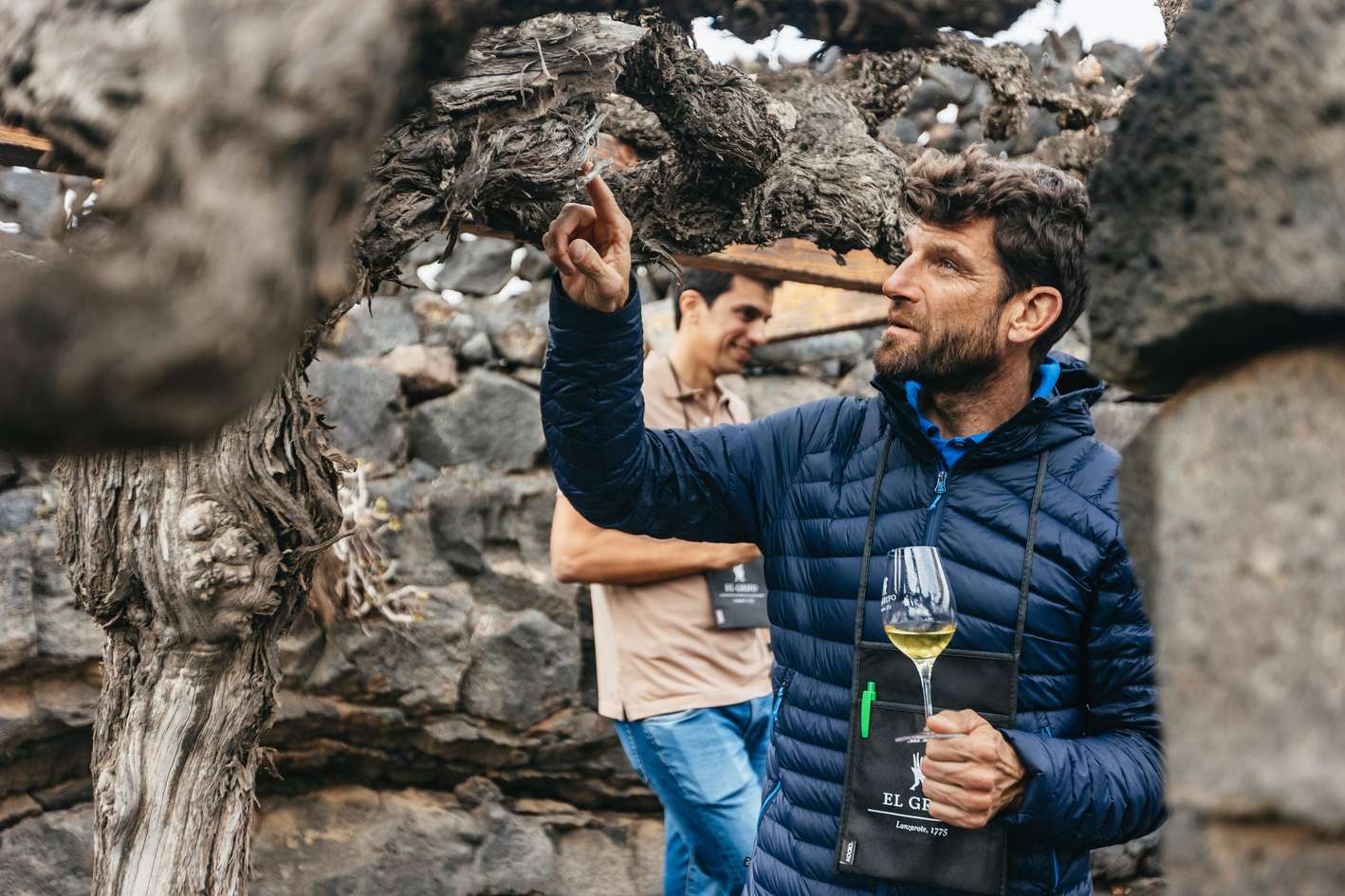
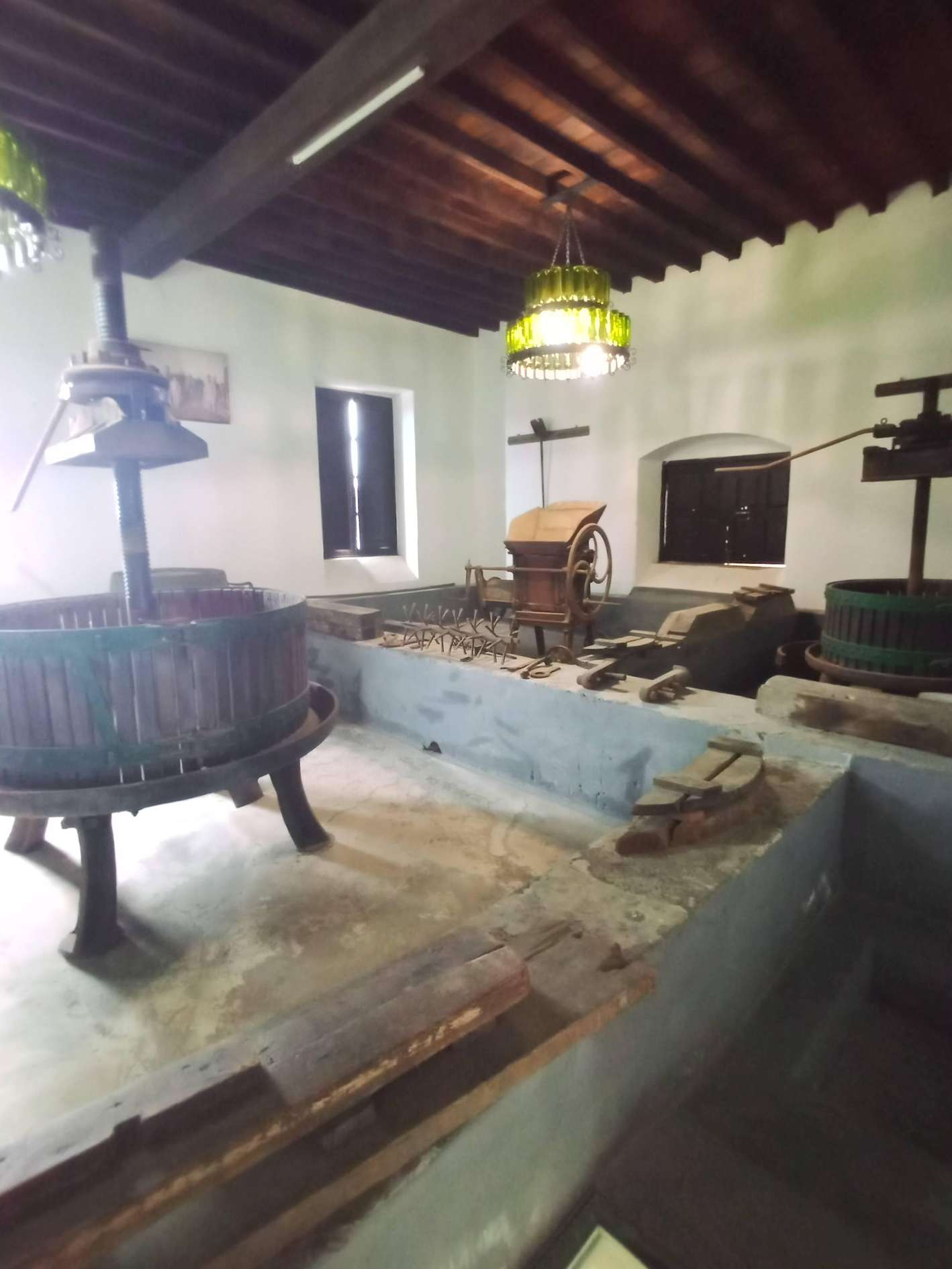
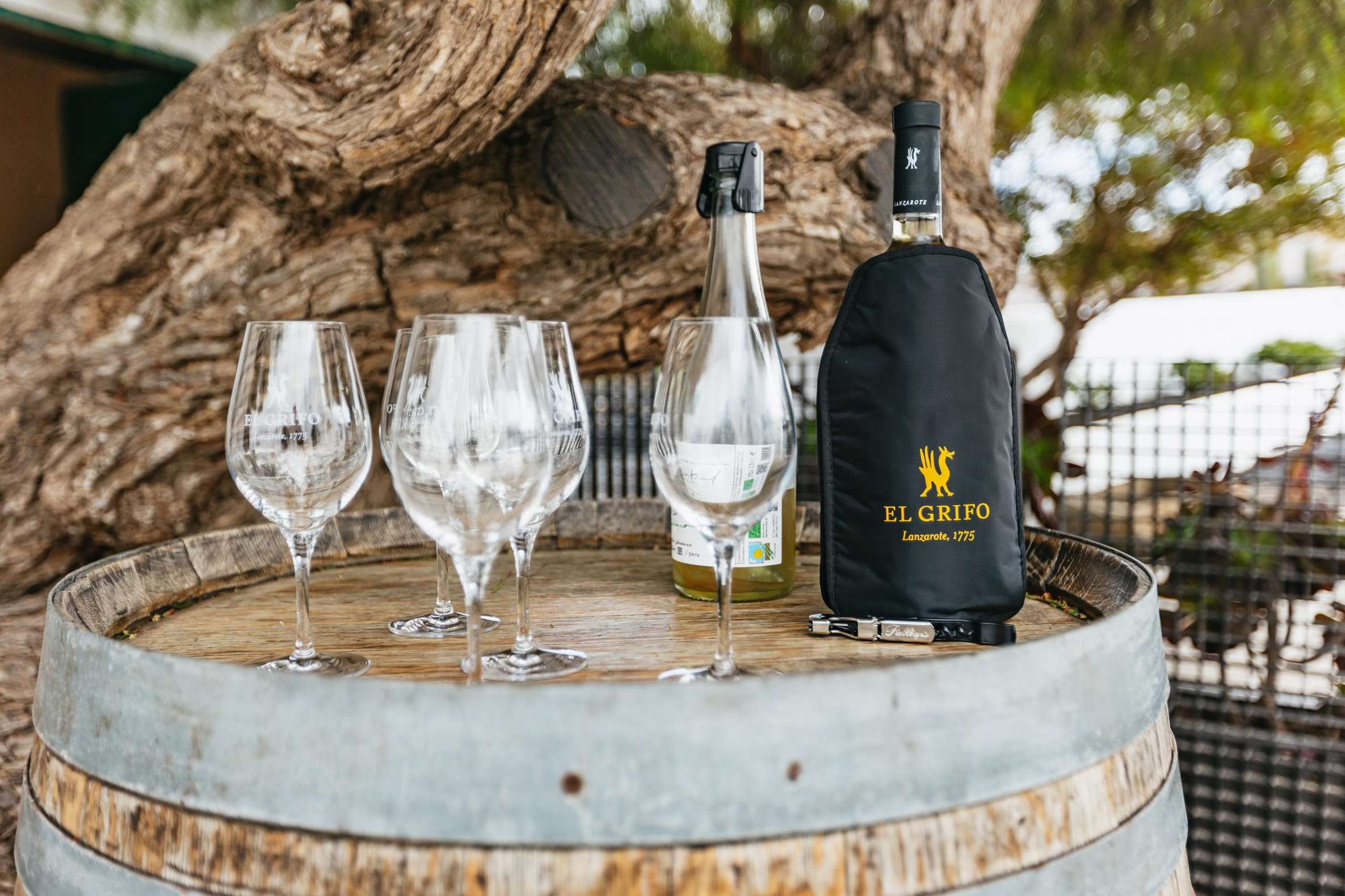
The vines at El Grifo grow inside volcanic caves and semicircular stone zocos, and the cellars below date to 1775. Its museum keeps the original stone treading vat, old presses and an 1870 corking machine, all built over black lava.
The sommelier tour brings six wines with cheese, and late afternoon, from 3:30 pm on, is when the coach crowds thin out. Without a booking, a 45-minute audio route covers the museum, winery and vineyards, ending with two wines at the bar. Under-17s go free, and non-drinkers swap the tasting for a soft drink.
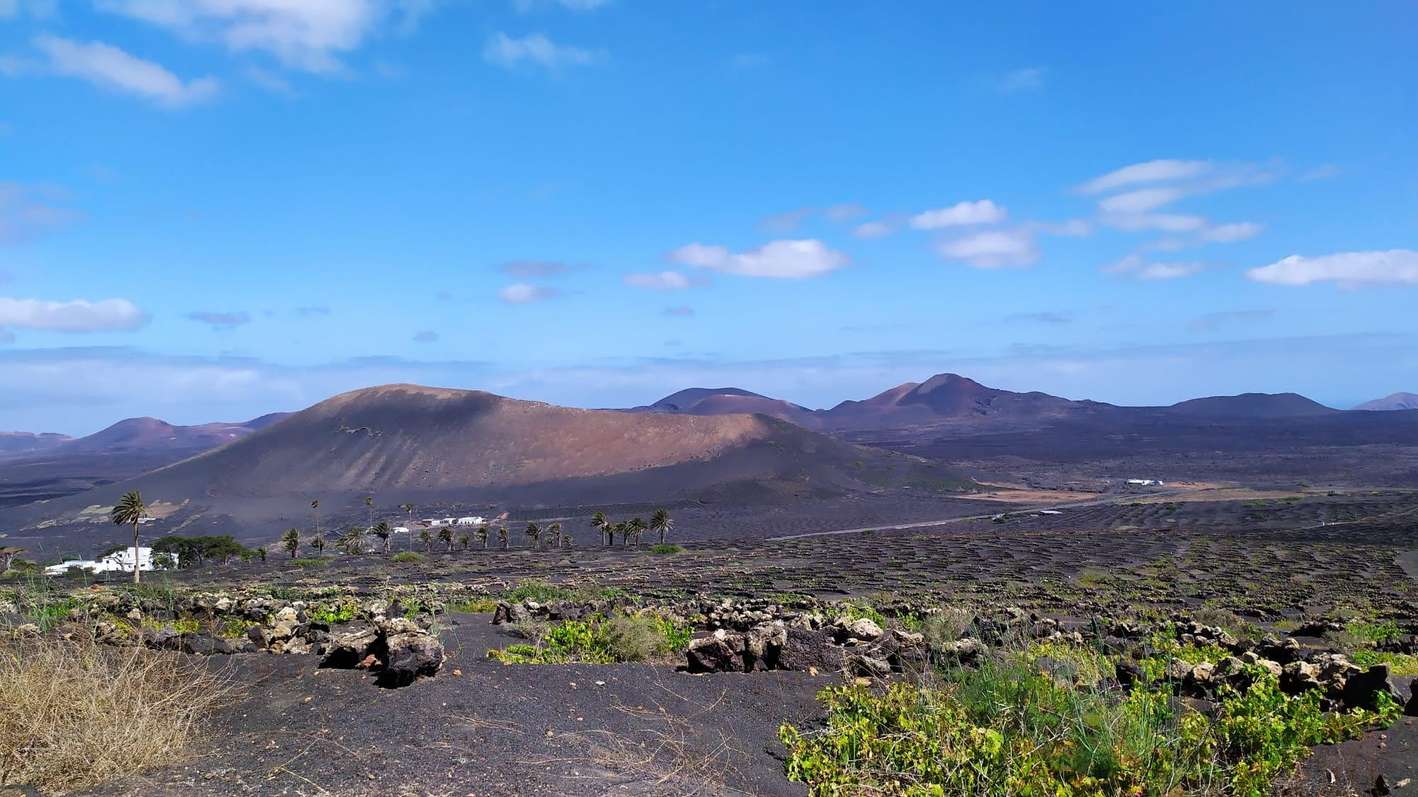
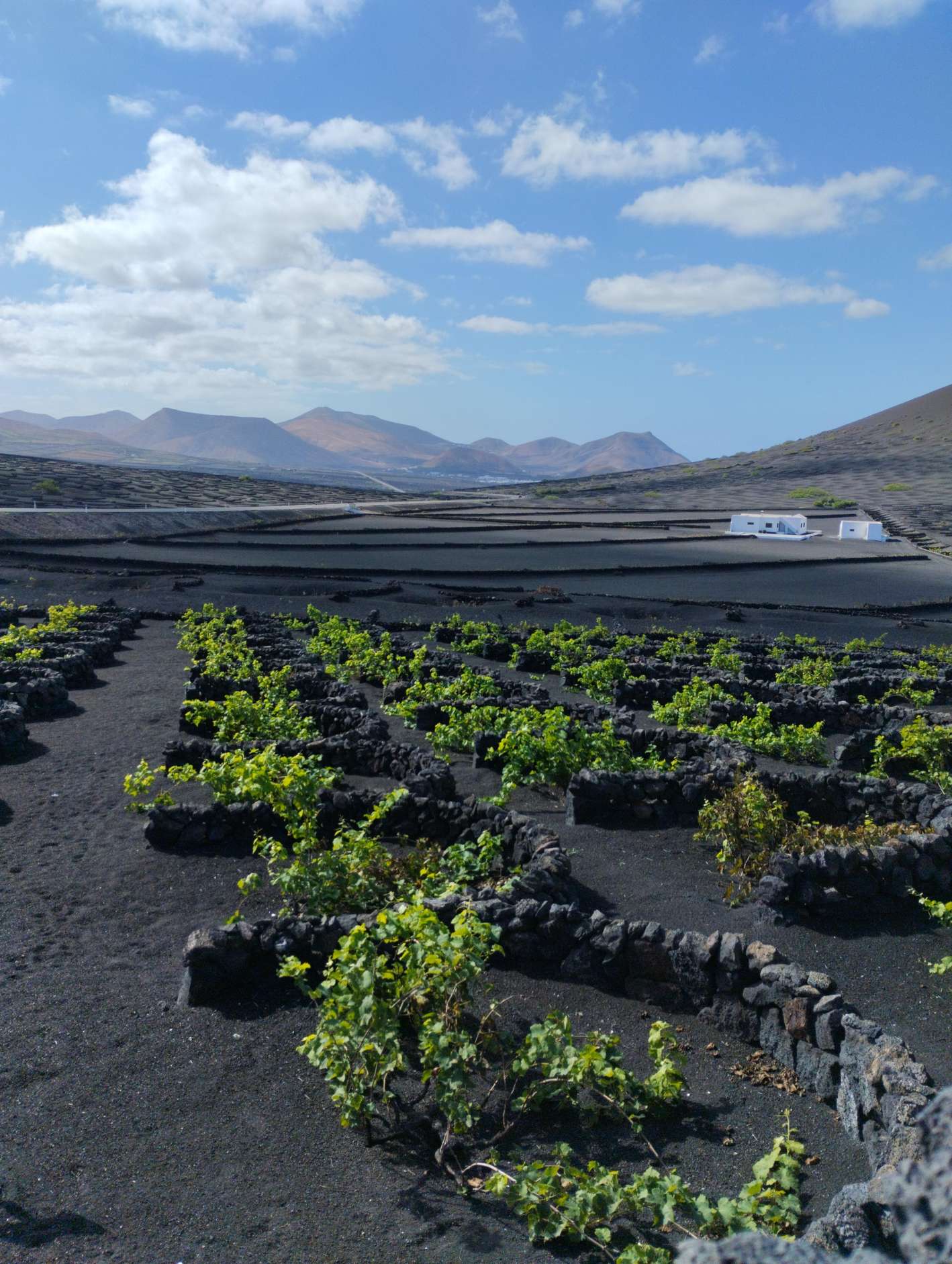
Lanzarote's vines grow inside hand-dug ash pits, fed by dew the black picón soaks up, with no irrigation in sight. What that means for your day: which tasting to book, how to reach the valley, and when to walk it.
The dry whites are crisp, fresh and un-oaked; ask for vino blanco seco and chill young island reds lightly.
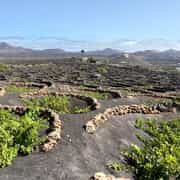
Vines survive with no irrigation: picón ash traps dew, and hand-dug hoyo pits with stone zocos shield each vine from the trade winds.
Book the El Grifo sommelier tasting ahead; without a reservation, a 45-minute audio route through the 1775 winery ends with two wines at the bar.
Public buses barely reach La Geria, a resort taxi round trip outcosts a tasting excursion, so a tour with transfers keeps every glass legal.
The vendimia hand harvest runs mid-July to September, and closed-toe shoes are mandatory on any vineyard trail.
Wear sturdy trainers or hiking boots in darker colours, paired with high-ankle socks, because the loose black volcanic ash gravel shifts underfoot, stains light fabric permanently, and grits its way into open shoe collars.
Half the pleasure of a bodega afternoon here is what arrives beside the glass. On the vineyard hikes, dry volcanic Malvasía comes paired with local cheese. At Finca Testeina, two organic wines are poured with chocolate bonbons made on the island, and the vineyard tastings with cheese and chocolate page follows that trail in detail.
Children and non-drinkers are not an afterthought. Under-18s on the sunset vineyard visit get juice and the same chocolate, so a family shares the walk and the view and nobody sits empty-handed.
This is an afternoon for casual sippers more than collectors: an hour at a tasting bar, a slow look at the vines, and the beach still fits in the day.
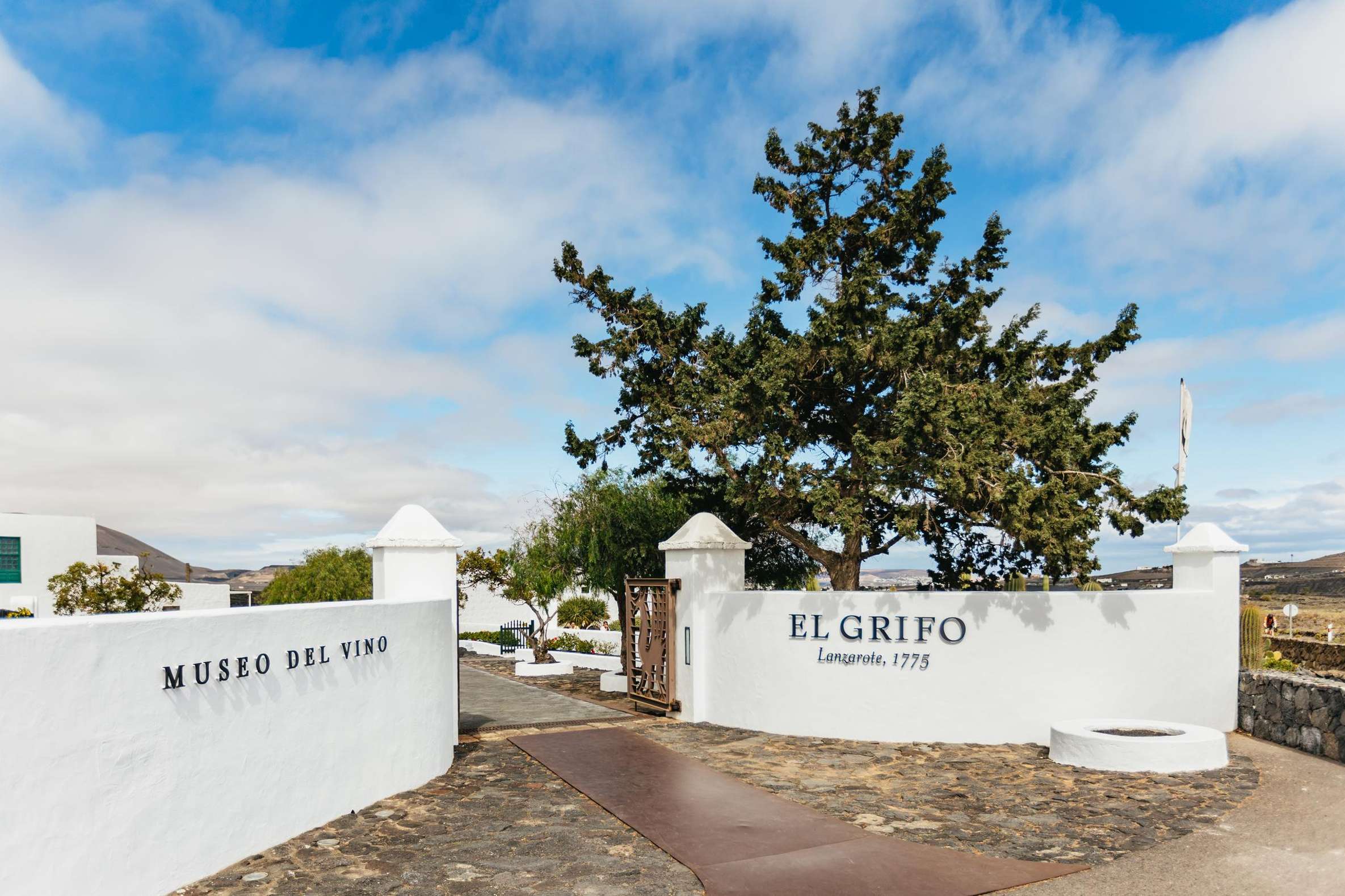
Black lava underfoot, and above it cellars that have worked since 1775. El Grifo is the oldest winery in the Canary Islands, and its vines grow inside volcanic caves and semicircular stone zocos, sheltered the way they have been for centuries.
The bodega keeps a museum to match, given over to the island's centuries of winemaking. It is the detail people bring home: not only a tasting, but the whole story of how wine survived on this rock.
Two ways in. The 'Wine Lovers: Wine Tasting Tour at El Grifo Bodega Lanzarote' runs two hours with the head sommelier: six wines and a cheese board, covering malvasía, listán negro and syrah from the family plot, in English or Spanish.
None of this locks you out if the booking is full, the group is mixed or you arrive late.
| If this happens | What happens then |
|---|---|
| You arrive without a reservation | the self-guided audio route runs about 45 minutes through the museum, the 1775 winery and the vineyards, ending with two wines poured for you at the wine bar |
| Someone in the group is under 18 | the sommelier tasting is strictly adults only, so keep El Grifo for the grown-ups and take a family-friendly vineyard visit instead |
| You do not drink alcohol | you can swap the tasting pour for a soft drink and stay at the table |
However you enter, the ground under the glass is the same: black lava, old stone, and grapes that grew out of both.
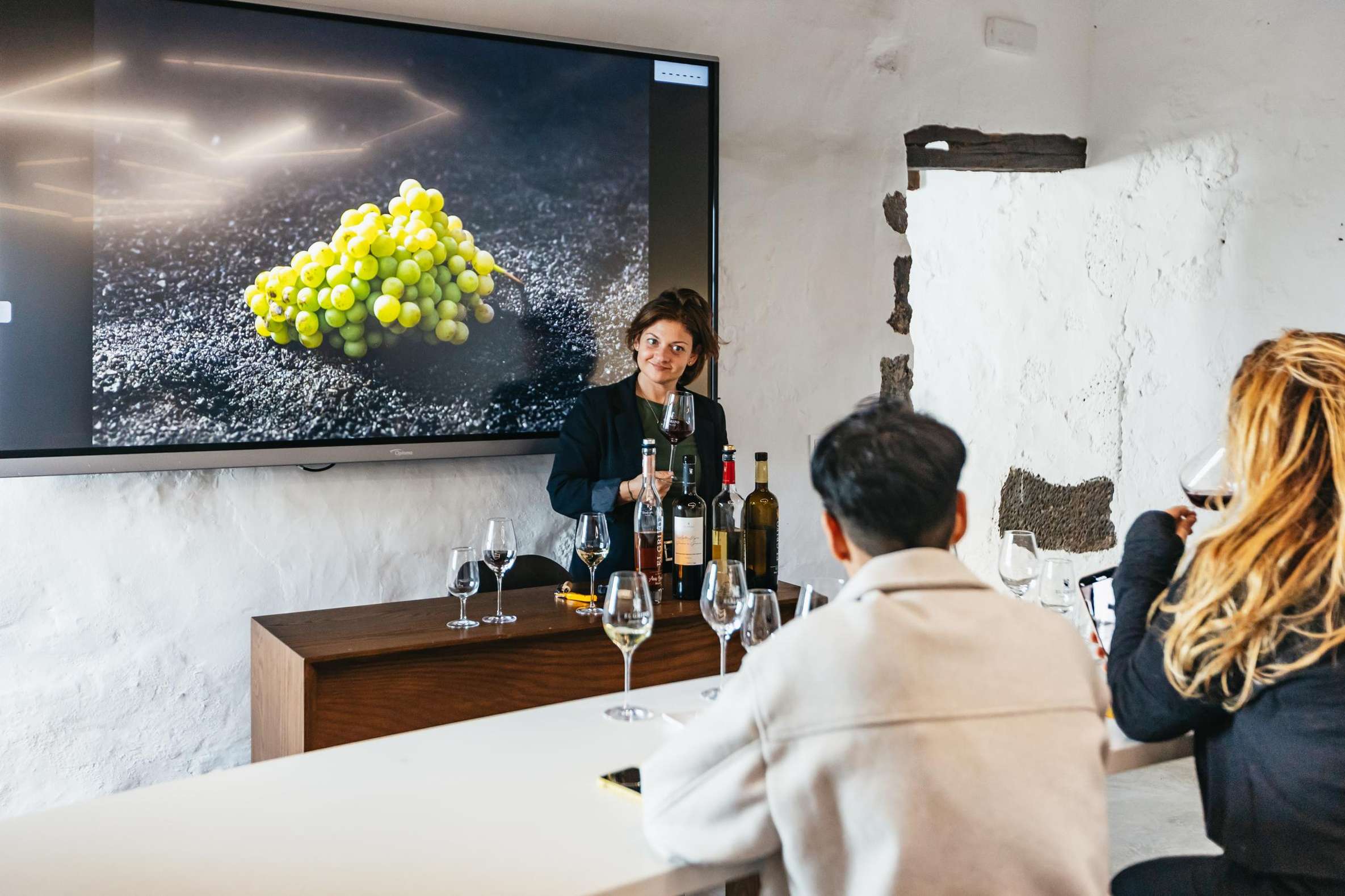
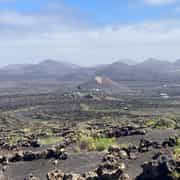
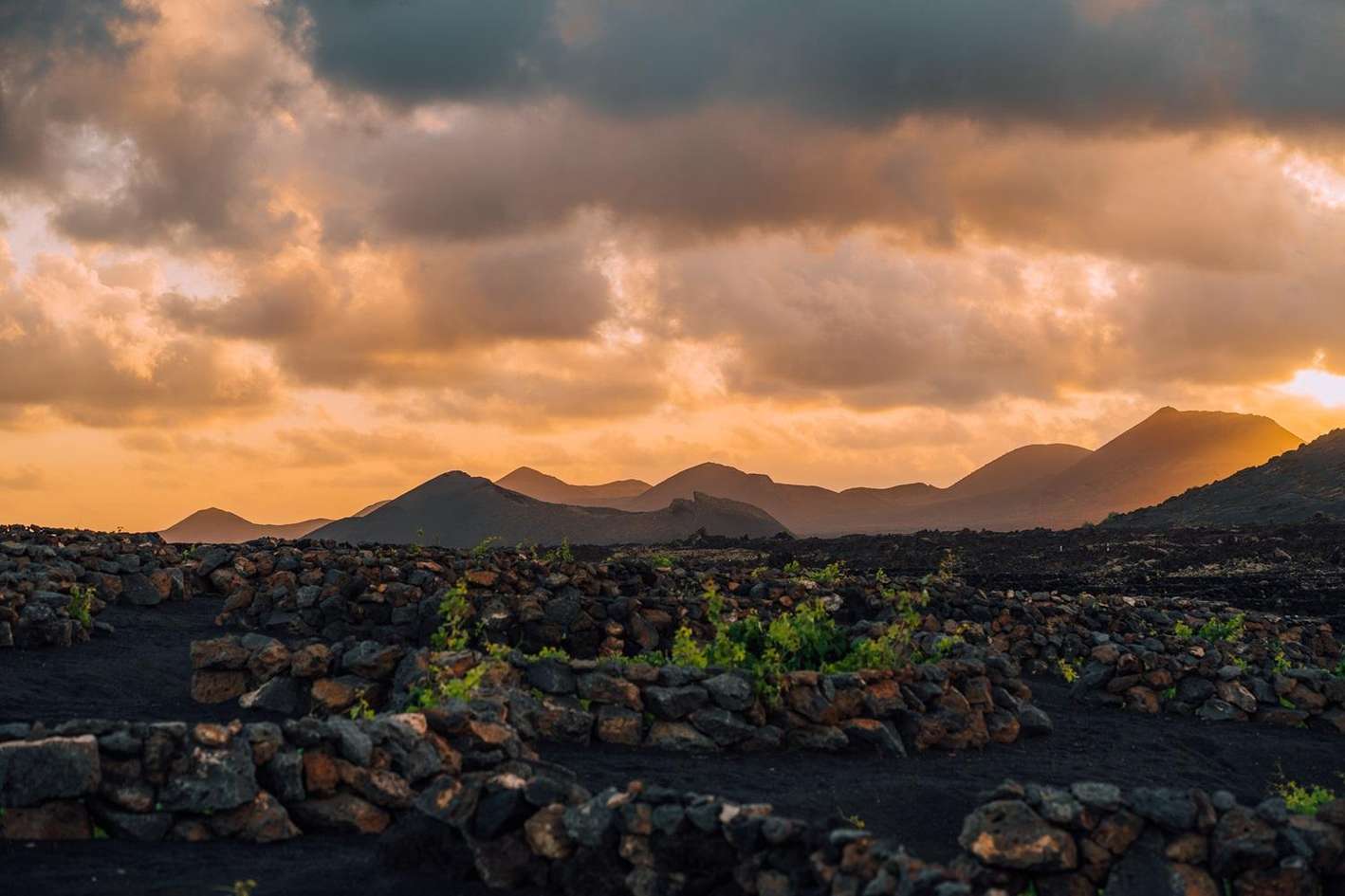
Blame the eruptions. Between 1730 and 1736 the Timanfaya eruptions buried the island's fertile valleys under black ash and lapilli, and by any sensible reckoning the vines were finished. Instead, islanders noticed that the ash, called picón, behaves like a sponge.
It soaks up moisture from the Atlantic trade winds and the night dew, passes it down to the soil, and keeps the sun from evaporating it back out. No irrigation anywhere.
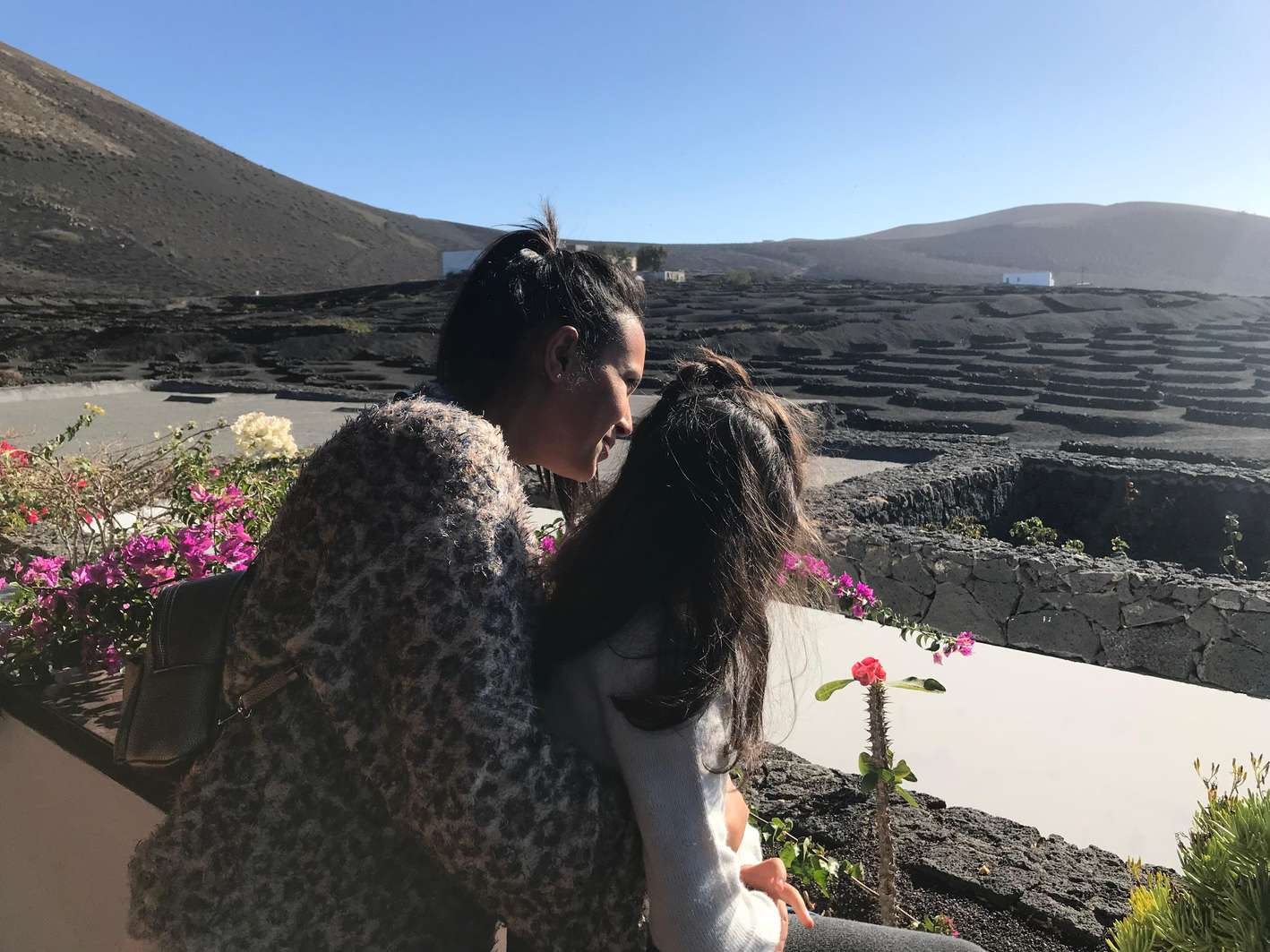
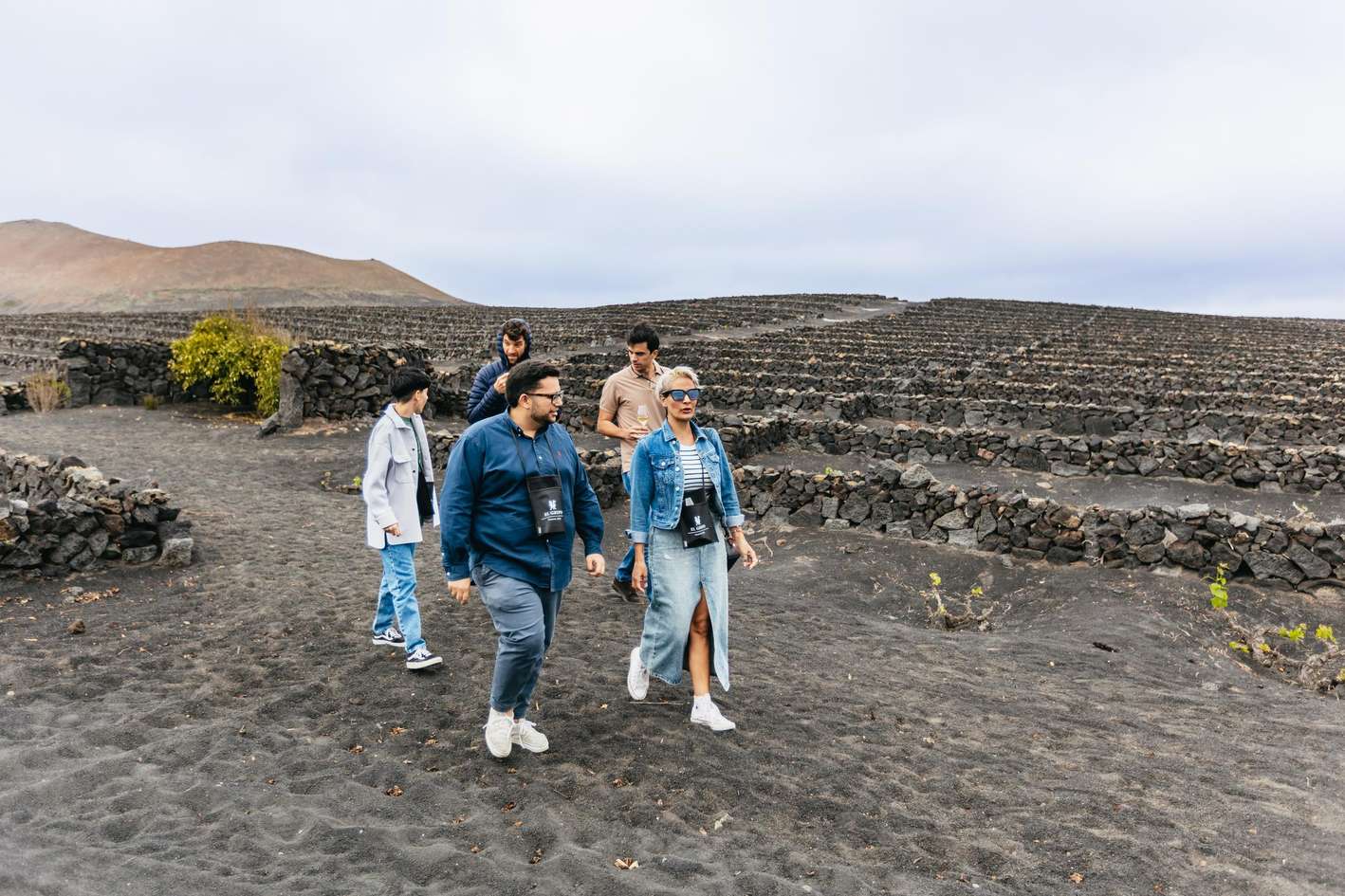
Growers dug conical pits by hand through the ash, each about three metres across and two and a half metres deep, wide enough to stand in.
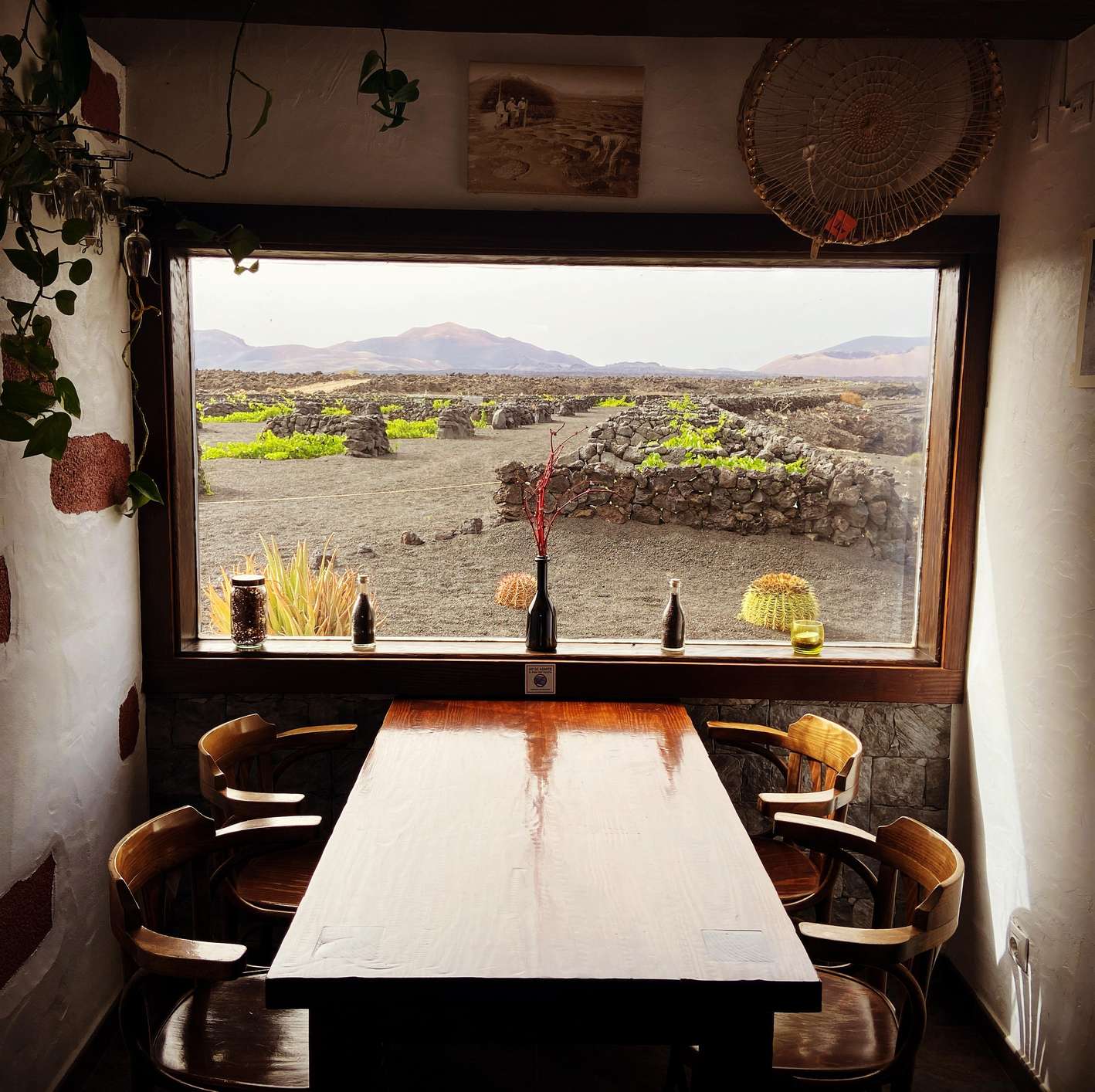
A vine went in at the bottom, and a low semicircular dry-stone wall, the zoco, rose on the windward side to break the wind and feed moisture down to the roots.
Drive the LZ-30 with that in mind and the fields read differently: every wall is a windbreak, every pit a dew trap, and the wind that sounds like a hardship is the system working as designed.

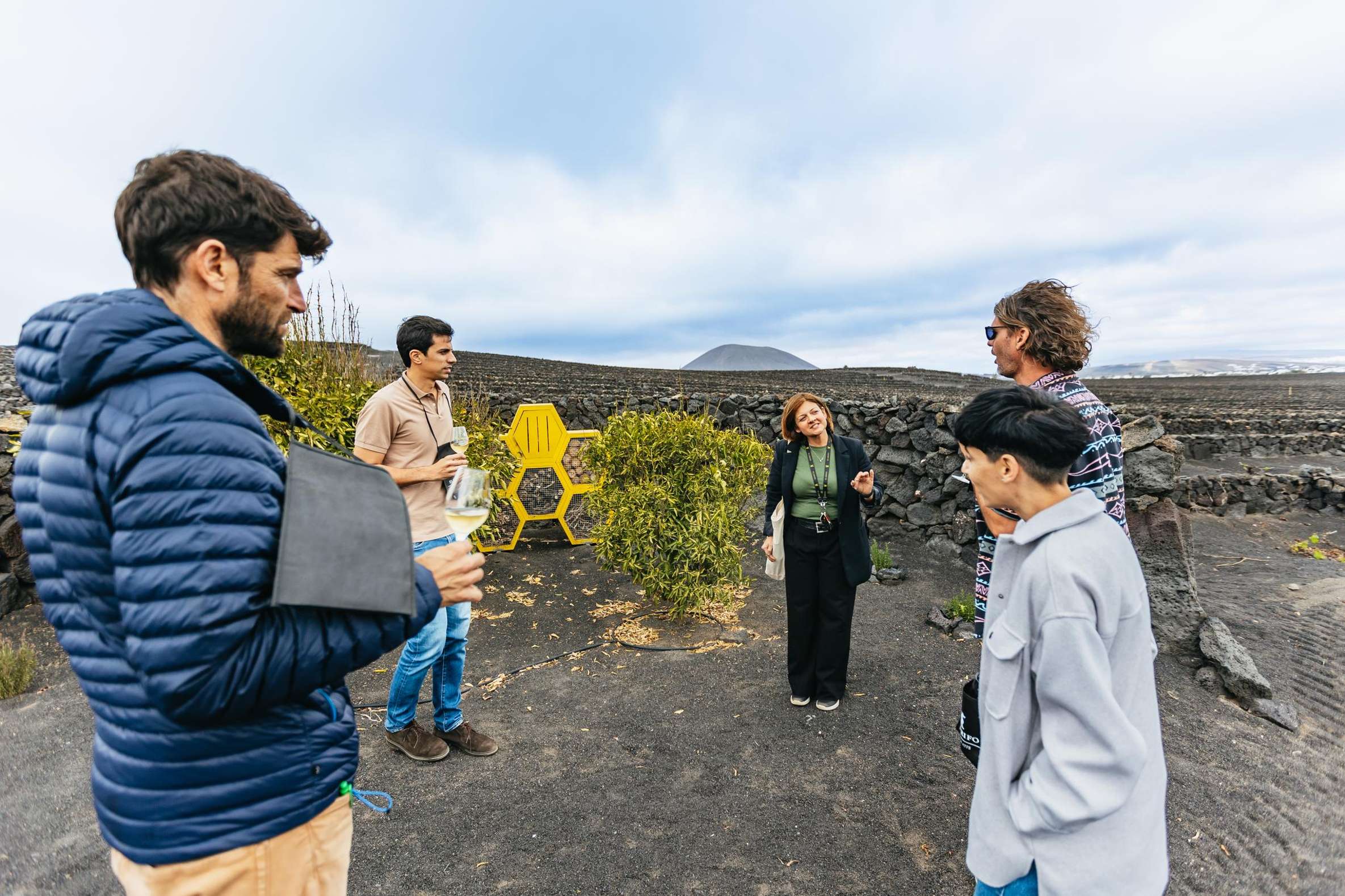
Order a glass here and expect crunch over weight. The dry whites are un-oaked, crisp and fresh, with none of the heaviness of a buttery oaked chardonnay, and the minerality climbs straight up through the ash. The phrase to use is vino blanco seco.
Listán Negro is the red grape to know. Its rosado balances fresh red fruit with smoke and a grapefruit-pith edge, and young island reds reward a light chill, which lets that mineral streak show.
One expectation to reset before the bill arrives: island bottles carry a clear premium over mainland Spanish imports, whatever the shelf they sit on.
a plain request for white wine can land you anything; the dry white is the island's signature style
a slight chill lets the volcanic minerality come through instead of hiding behind warmth
the island now leads with crisp dry whites, rosés and experimental reds; the sweet bottles are the old story
Order with those in mind and the tasting list stops being a puzzle: you know what to ask for, how to serve it and why the bottle carries its premium.

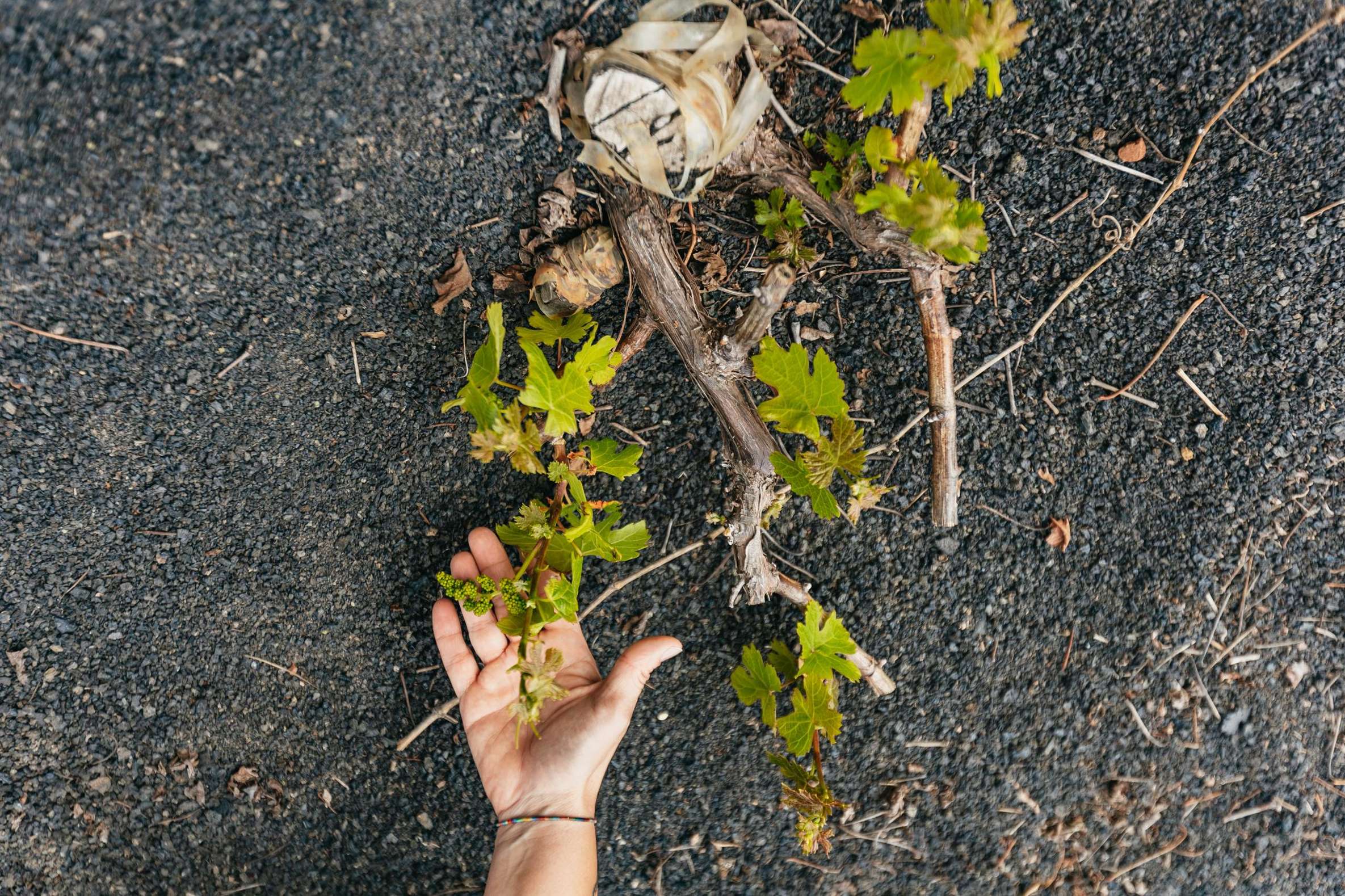
Spain's drink-driving limits apply in full on the LZ-30, the winding road that strings the bodegas together. Somebody in the car has to stay under them, all afternoon.
The public bus is a trap. Routes through the valley are thin, and betting on one can leave you stranded between bodegas. A taxi works better, but a round trip from a resort such as Costa Teguise costs well beyond what a dedicated tasting excursion does, and the return has to be arranged in advance.
An organized tour with transfers settles the whole argument: nobody sits out the tasting as the designated driver, and the winding road becomes somebody else's job.
The 'Lanzarote: Timanfaya National Park & La Geria Tour' pairs the island's geothermal park with a stop in the wine valley over five and a half hours, transport and official guide included.

Cellar doors here are not pub doors. Guided cellar tastings run to fixed schedules, so a drop-in couple without a reservation may find that day's tour already gone. What stays open without booking is simpler: Bodega La Geria keeps multilingual boards on the barrels, explaining volcanic viticulture in English, Spanish and German.
The valley is compact in a useful way. Bodega Stratvs and Bodega Rubicón sit barely 100 metres apart, and Bodega La Geria stands opposite Rubicón beside a small chapel, so two or three stops fold into one unhurried loop.
Allow about an hour for a guided bodega visit, or two to four hours for a casual self-guided drift through the area.
| Drop-in bar pour | General coach tour stop | Dedicated small-group wine excursion | |
|---|---|---|---|
| Time | an hour or two on your own clock | about 20 minutes, mostly for photographs | half a morning or more, unrushed |
| Depth | whatever the boards on the barrels explain | a guide's one-line summary on the move | a local guide walks you through the viticulture |
| Tasting | a glass at the bar, nothing paired | rarely a proper tasting | several wines paired with cheese or chocolate |
| Small family bodegas | possible if you know the names | almost never on the itinerary | small husband-and-wife wineries sit on the route |
Read across those columns and the trade-off is depth versus freedom: the drop-in glass is easy but shallow, the coach stop is neither, and the dedicated excursion buys the story and the pour together. Match it to how much of your day wine deserves.
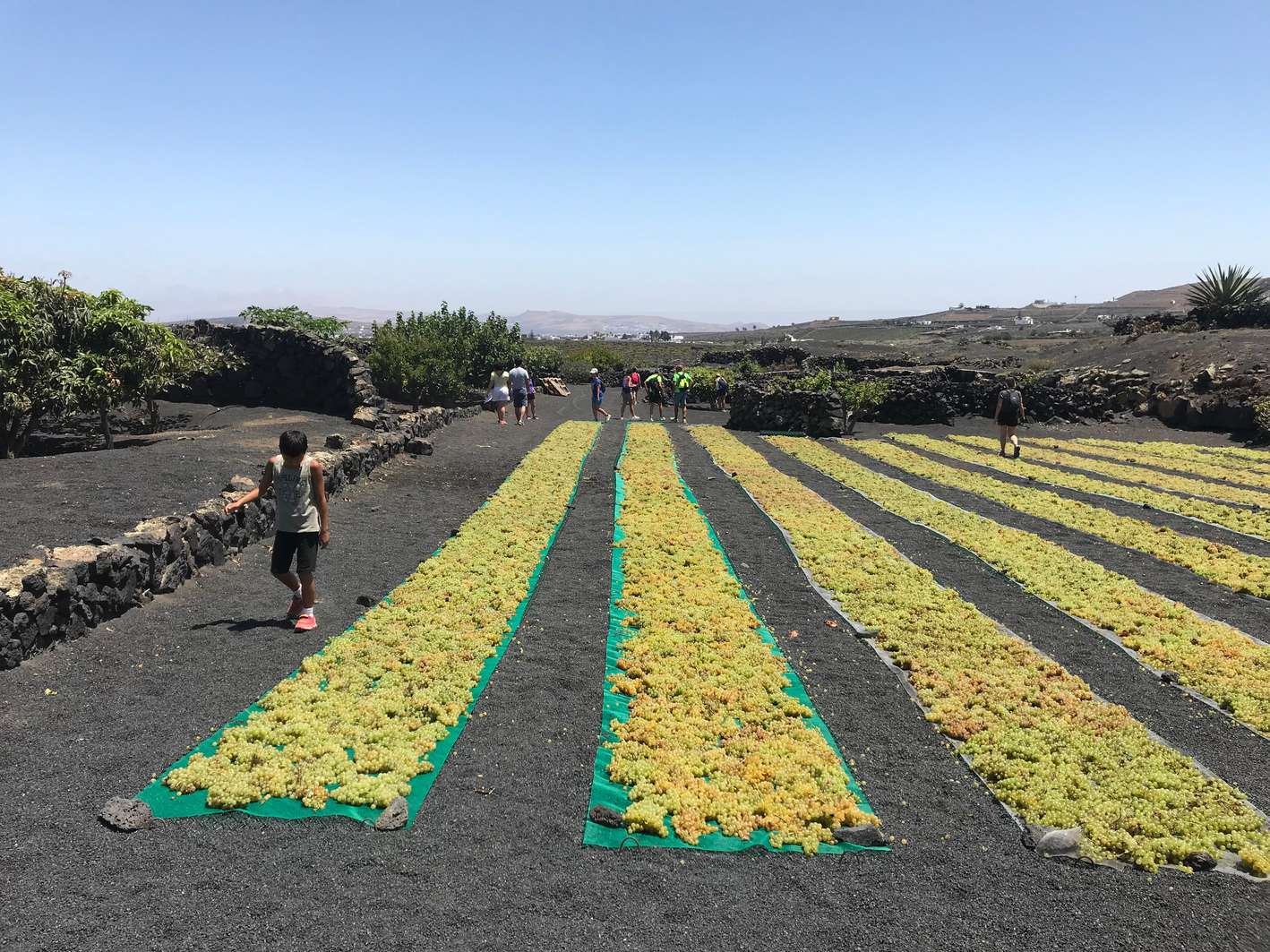
Mid-July, and the valley turns into a workplace. The vendimia, the island's hand-picked grape harvest, runs from July through September, kicking off around mid-July and peaking through August, one of the earliest harvests in Europe.
Machines are impossible between the sunken hoyos and the stone walls, so everything is picked by hand into small baskets, usually at first light while the air is still cool. Pick-up trucks shuttle the fruit, the wineries run at full tilt, and the sleepy valley briefly becomes a work site.
August: 5 out of 5 for how busy it gets. This is the busiest month of the year, pairing peak manual harvest activity with hot, dry weather.
Tap a month to read it.
March: wine grape seen 1 times. Visitor traffic remains steady as spring pruning gets underway in mild, breezy weather.
Tap a month to read it.
August is the month the tasting bars feel it, standing a clear step above every other month, while most of the year holds steady in the middle and June dips lowest. For harvest energy with the coach pressure easing, early September is the window.
The Protected Landscape has rules with teeth. Walking off-trail into the private hoyo craters is prohibited, and taking volcanic rocks or lapilli, or disturbing the stone zocos, is an offence that brings fines and an order to put back what you moved. Stay behind the signposts.
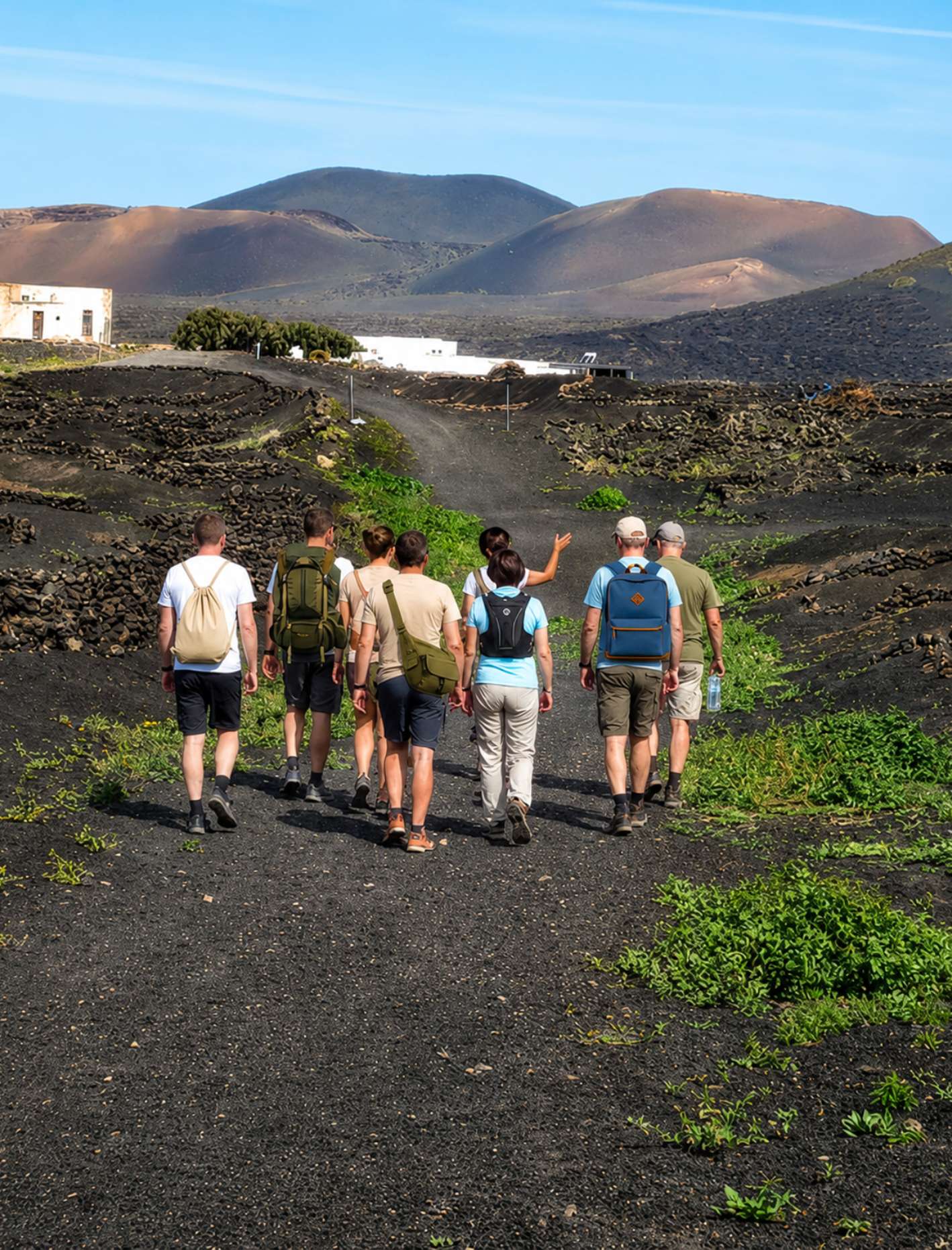
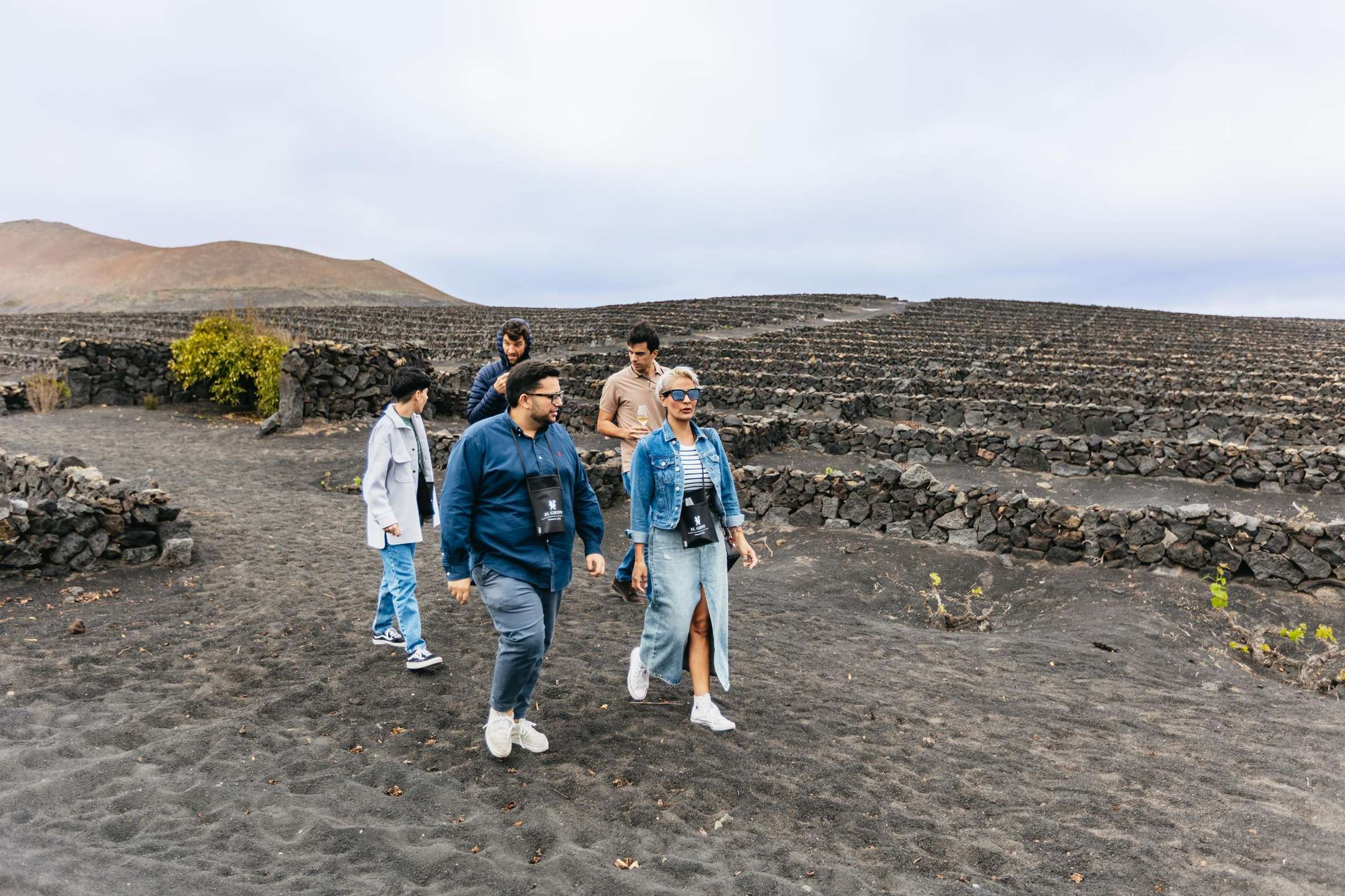
With a guide, the rules fade into the background. The circular trekking route climbs Guardilama, one of the island's highest peaks, and from the top the national park's volcanoes and the whole valley spread out below.
Underfoot is the catch: loose black picón gravel over sharp stone, and closed-toe shoes are mandatory. Operators turn sandals and flip-flops away at the trailhead, refund gone. Dark shoes and high-ankle socks earn their place, because the fine black dust stains light fabric permanently and coarse grit works into low collars.
Tick that list before you book and nothing at the trailhead can stop you. The 'Lanzarote: Trekking in La Geria with winery visit and wine tasting' runs three and a half hours, with the guide, the circular route and the Rubicón tasting all included.
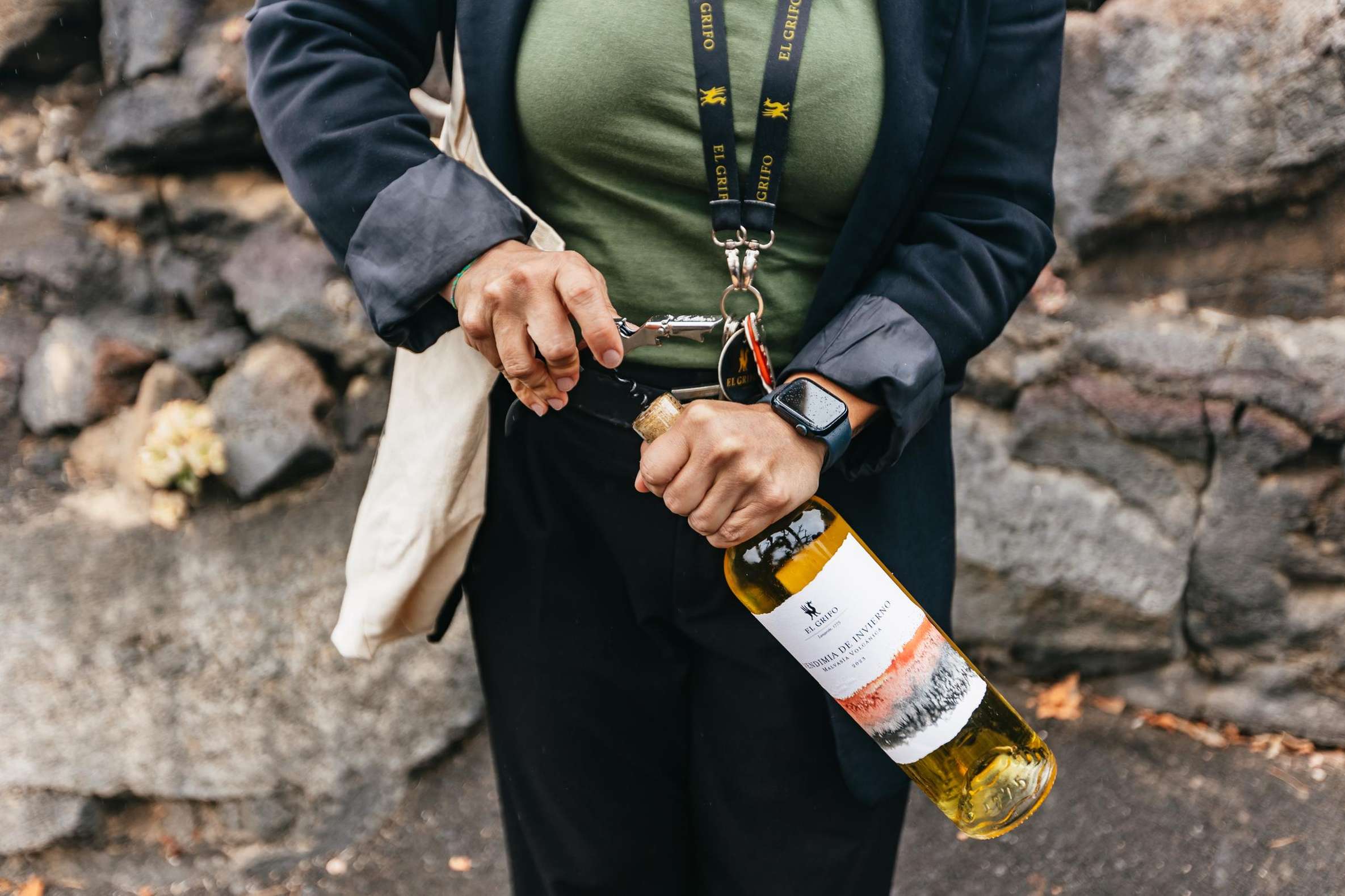
Buy at the estate, not the resort. Bottles from working estate shops such as Bodega Los Bermejos or Bodegas Vega de Yuco at Finca Testeina cost less than the same wine in a resort supermarket, and the Monumento al Campesino gift shop stocks the local DO wines too.
Set the budget expectation before the checkout: island bottles carry a premium over mainland Spanish imports even at the cellar door. Pay it for a wine you tasted where it grew, and it reads as money well spent afterwards.
Packing is the surprise. The bottles have distinctive silhouettes and pronounced lips, which makes them hard to wedge securely into a suitcase. Wrap them like cargo you care about, or use the shipping discount to European countries that comes with the El Grifo tasting.
One visitor's verdict after a guided vineyard day:
That is the case for the whole day in a sentence: the bottle tastes different once you have stood in the pit it came from.
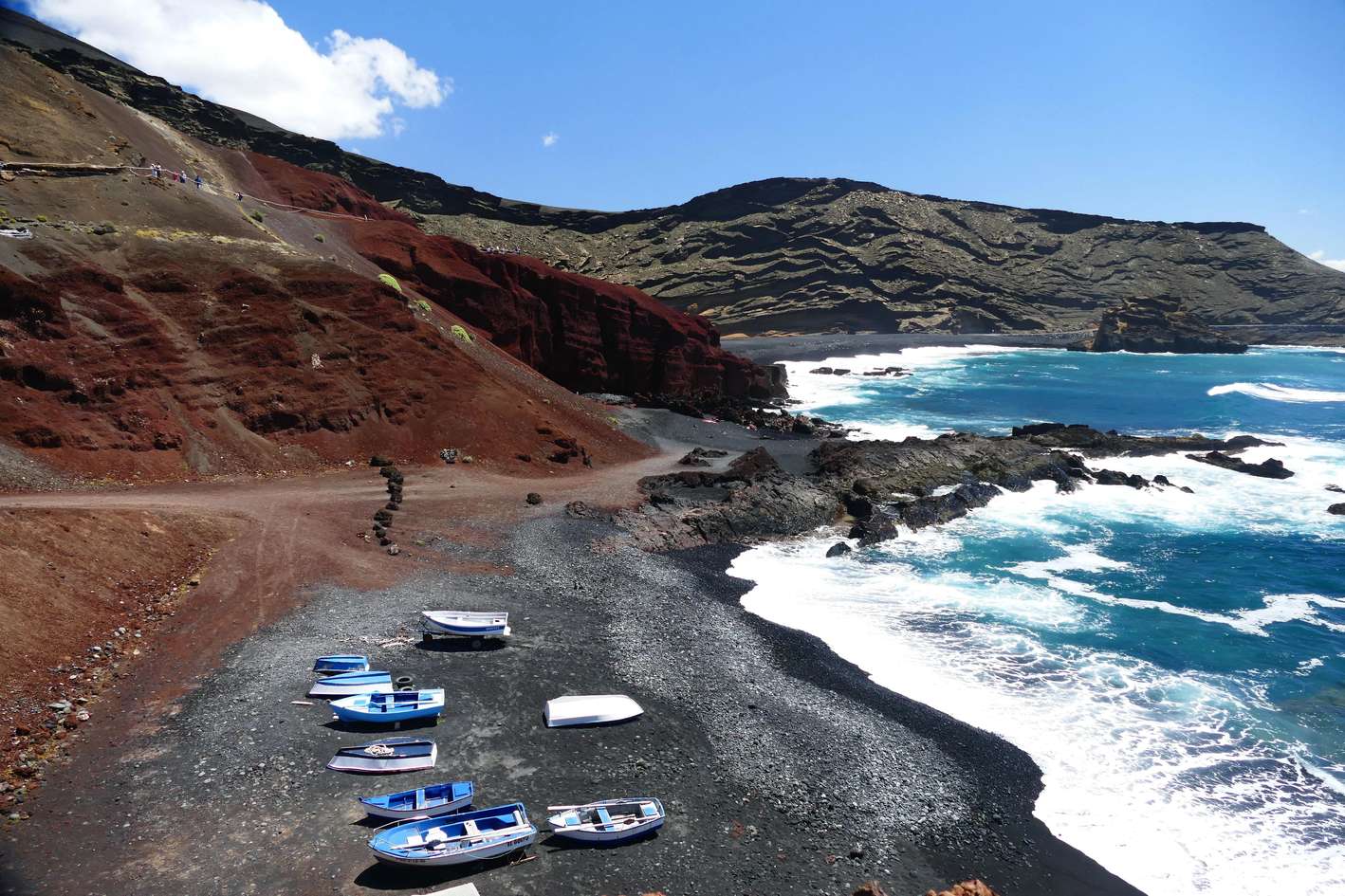
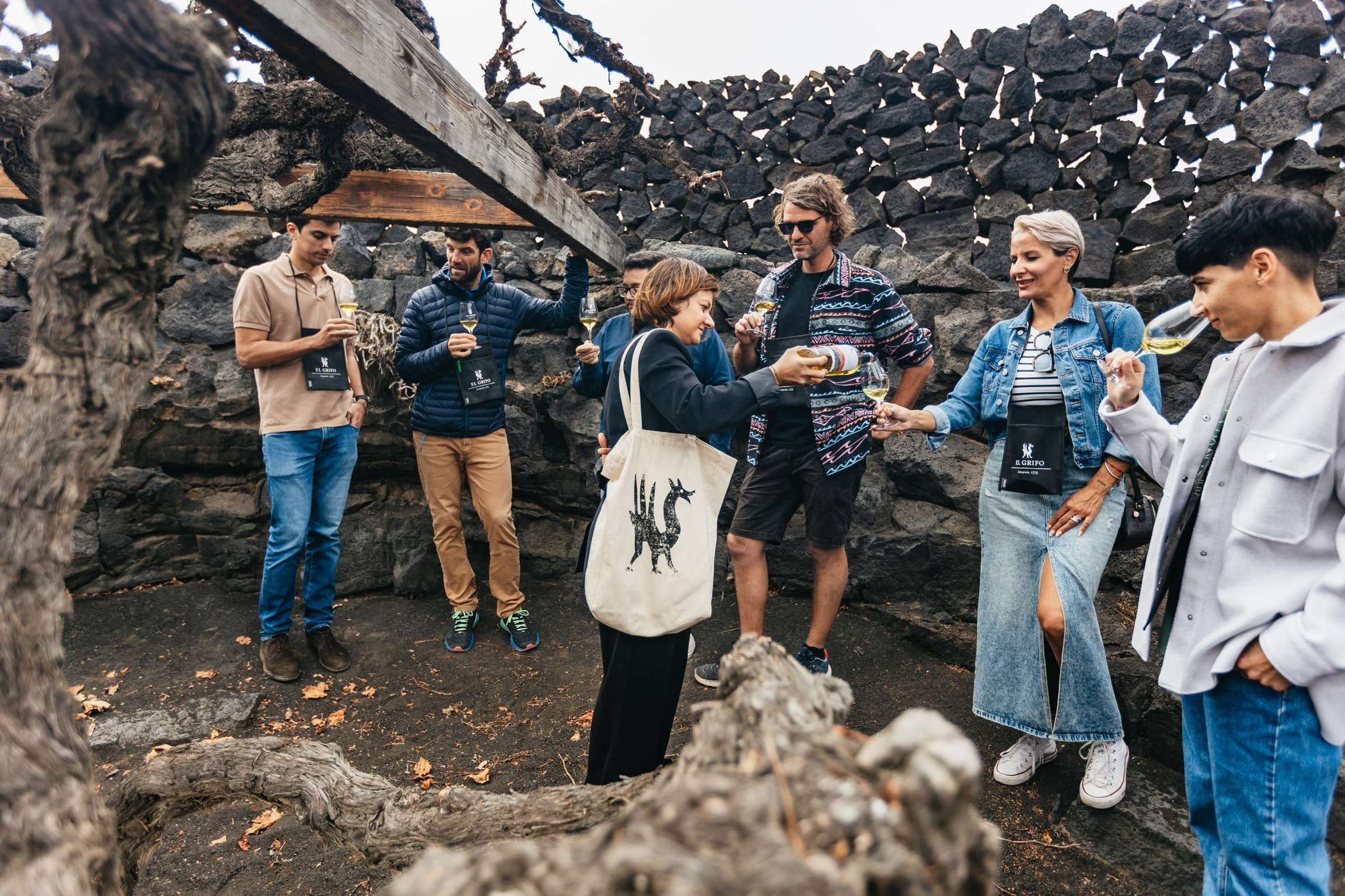
Treat La Geria as a day, not a stop. Book a guided tasting or the Rubicón trek, let transfers keep every glass legal, come between July and September if the harvest energy appeals, and buy your bottles at the estate on the way out.

Timanfaya National Park takes you to the island's steaming volcanic heart and its famous crater route.
Timanfaya tickets explains entrance fees, where to buy, and how far ahead to book for the crater road.

Getting to Timanfaya sorts out the car and bus question, including why no public bus reaches the park itself.

Volcano trekking puts you on a guided walk through lava fields and craters, the way to see them on foot.
The evening volcano tour shows Timanfaya after the coach crowds, with a Canarian dinner afterwards.

A half day volcano tour fits Timanfaya into a morning or afternoon, an express option without the full day.

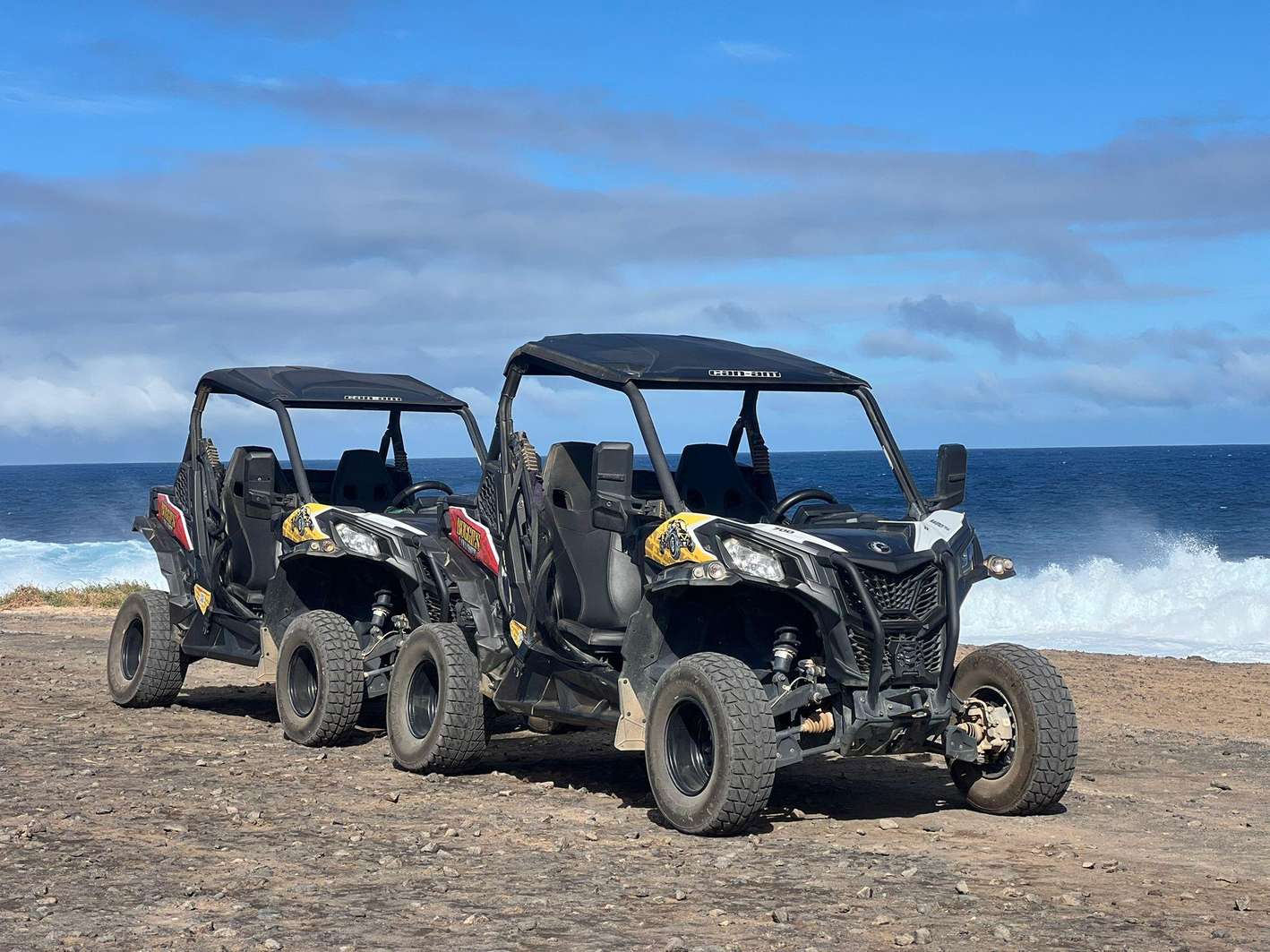
Buggy trips let you drive Lanzarote's volcanic roads yourself, with guided convoys and routes to compare.
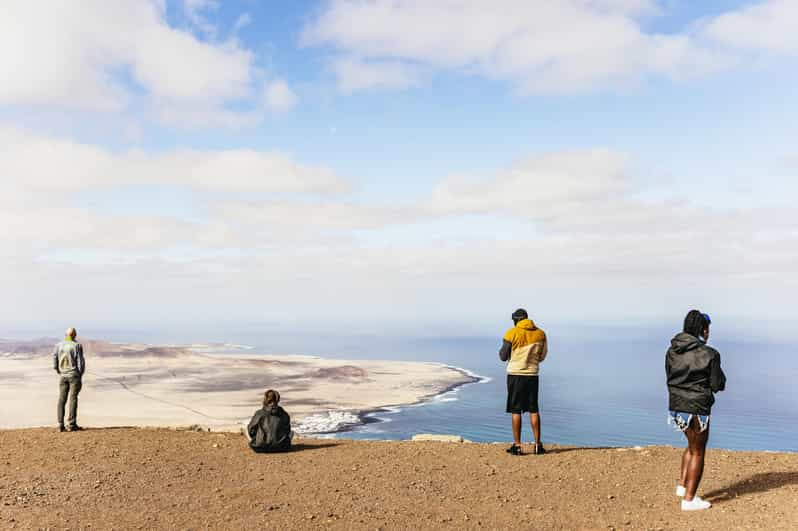
The off road buggy guide covers the dirt track tours, what to wear against the dust, and which tracks they run.
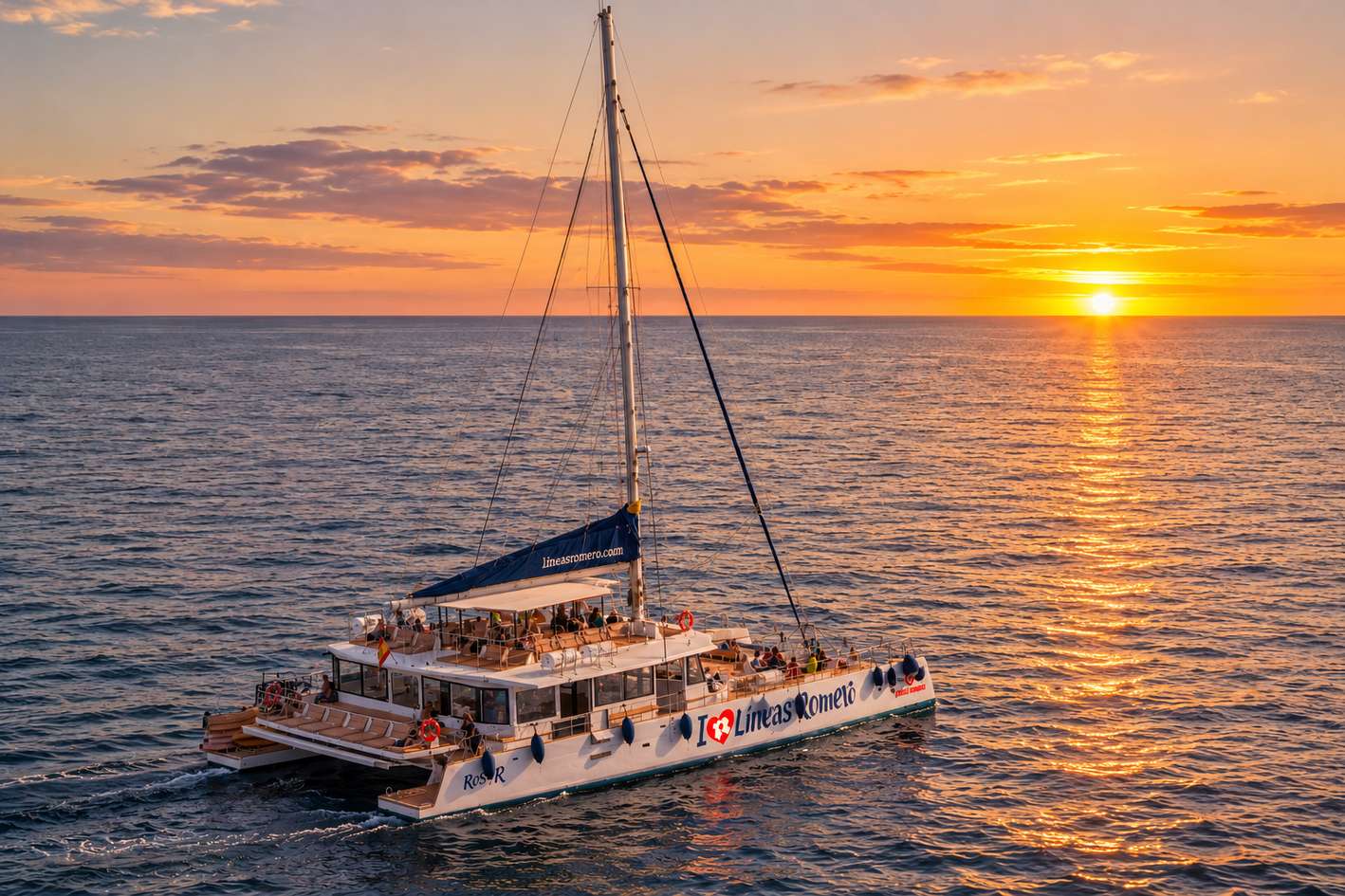
Boat tours set out the coastal cruises and day trips, so you can pick the right vessel for your day.
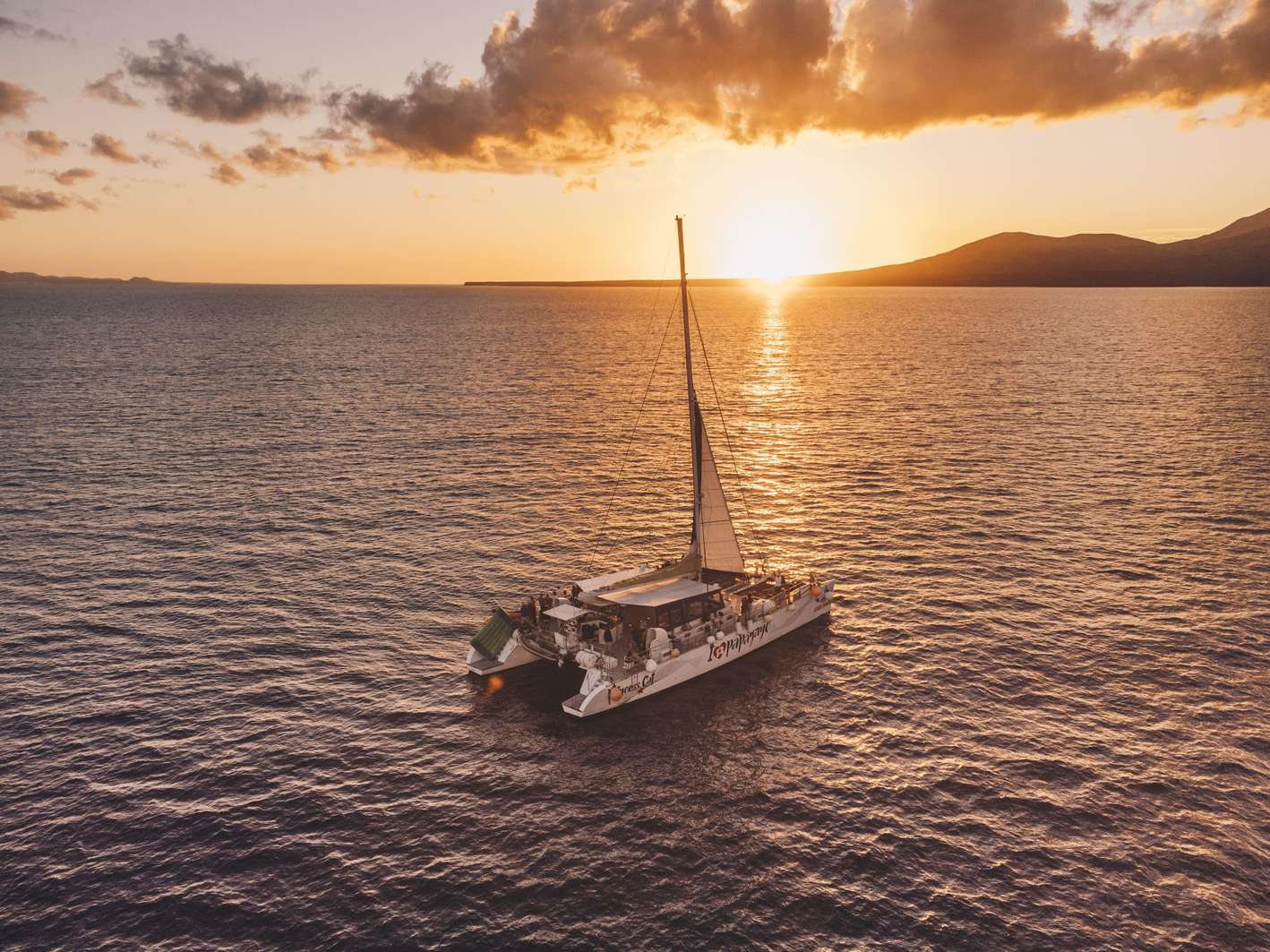
Sunset dolphin watching is an evening cruise with hotel transfers, timed to the light going down over the sea.
Dolphin tours from Puerto del Carmen explains the boat trips, how sightings work and what a cruise includes.

The catamaran page is a day sail to the Papagayo beaches, with swim stops, lunch on board and an open bar.
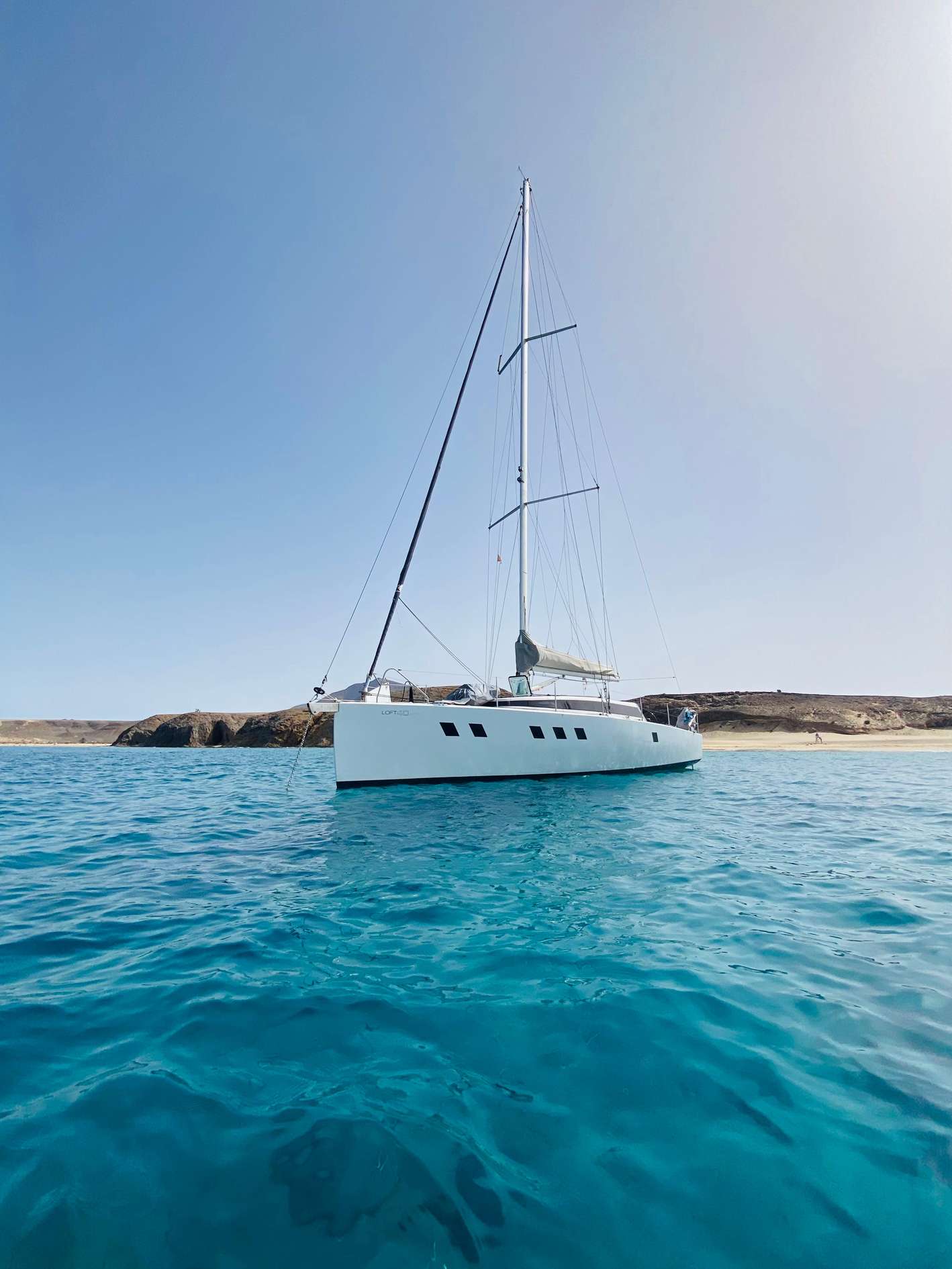
Private boat tours cover yacht charters and hire without a licence, if your group wants the boat to itself.
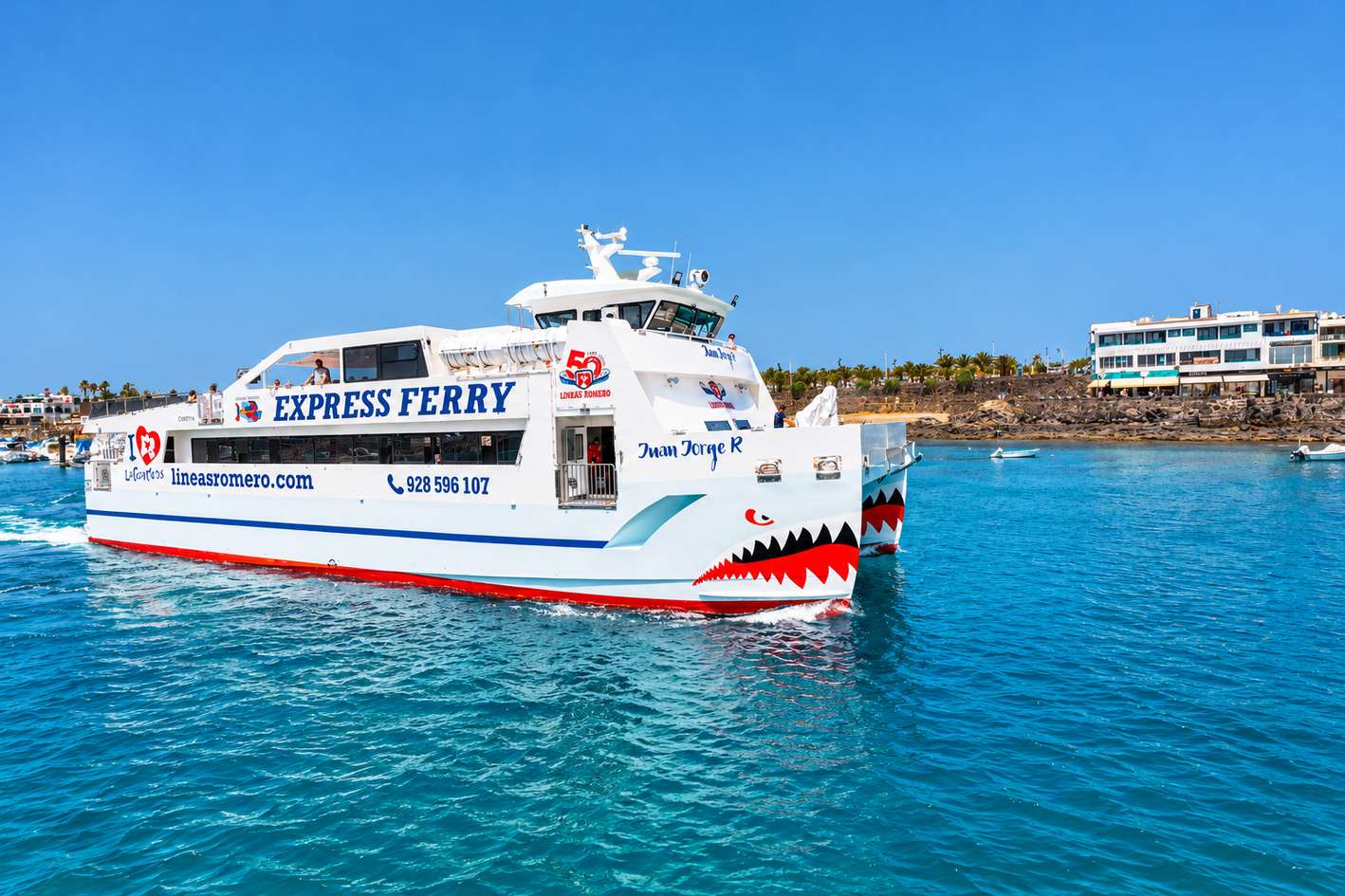
Ferry trips lists every island you can reach from Lanzarote, plus the seasonal boats to Lobos.
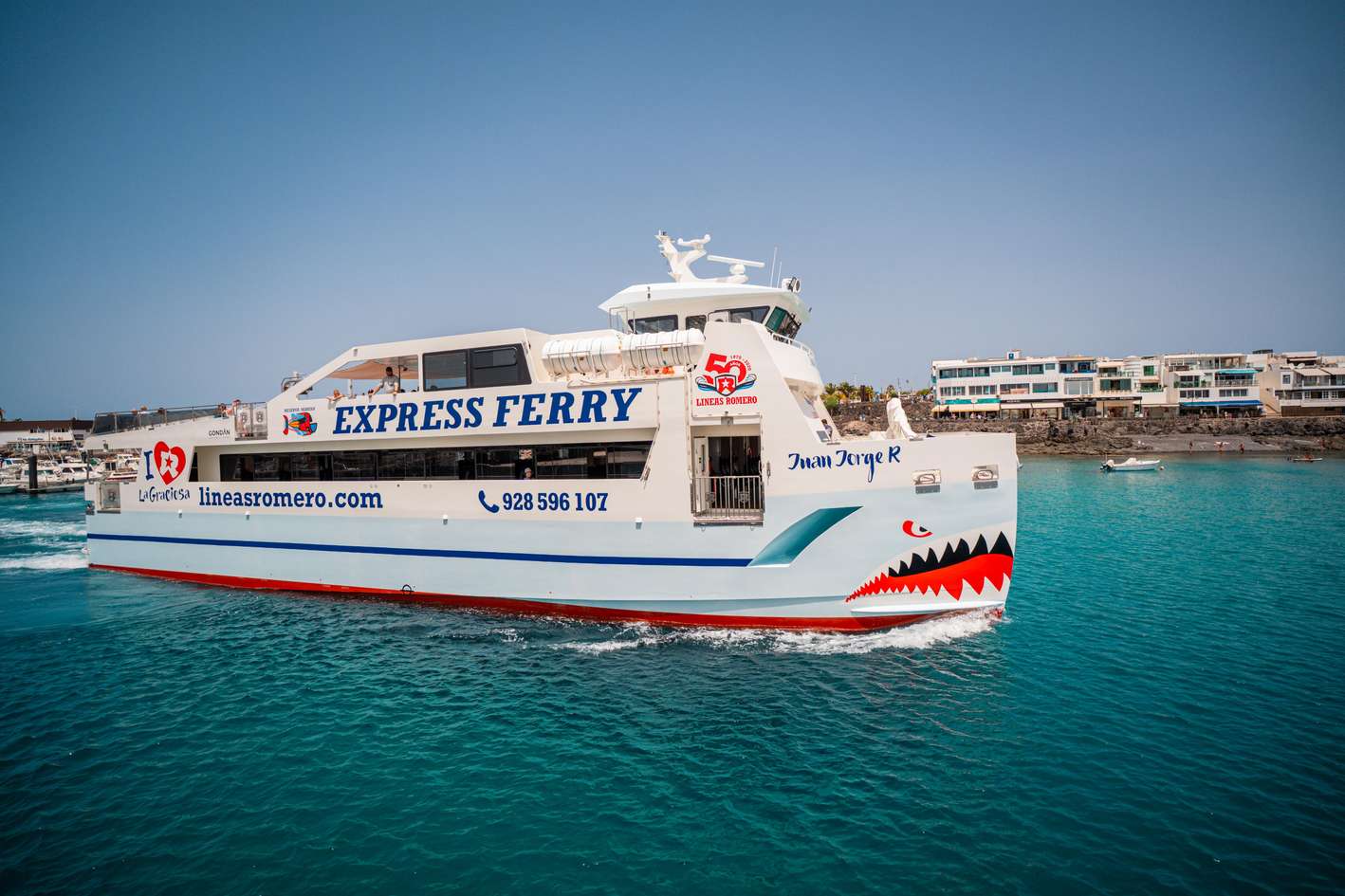
The Fuerteventura ferry page gives the Playa Blanca to Corralejo timetable, check-in times and ticket options.
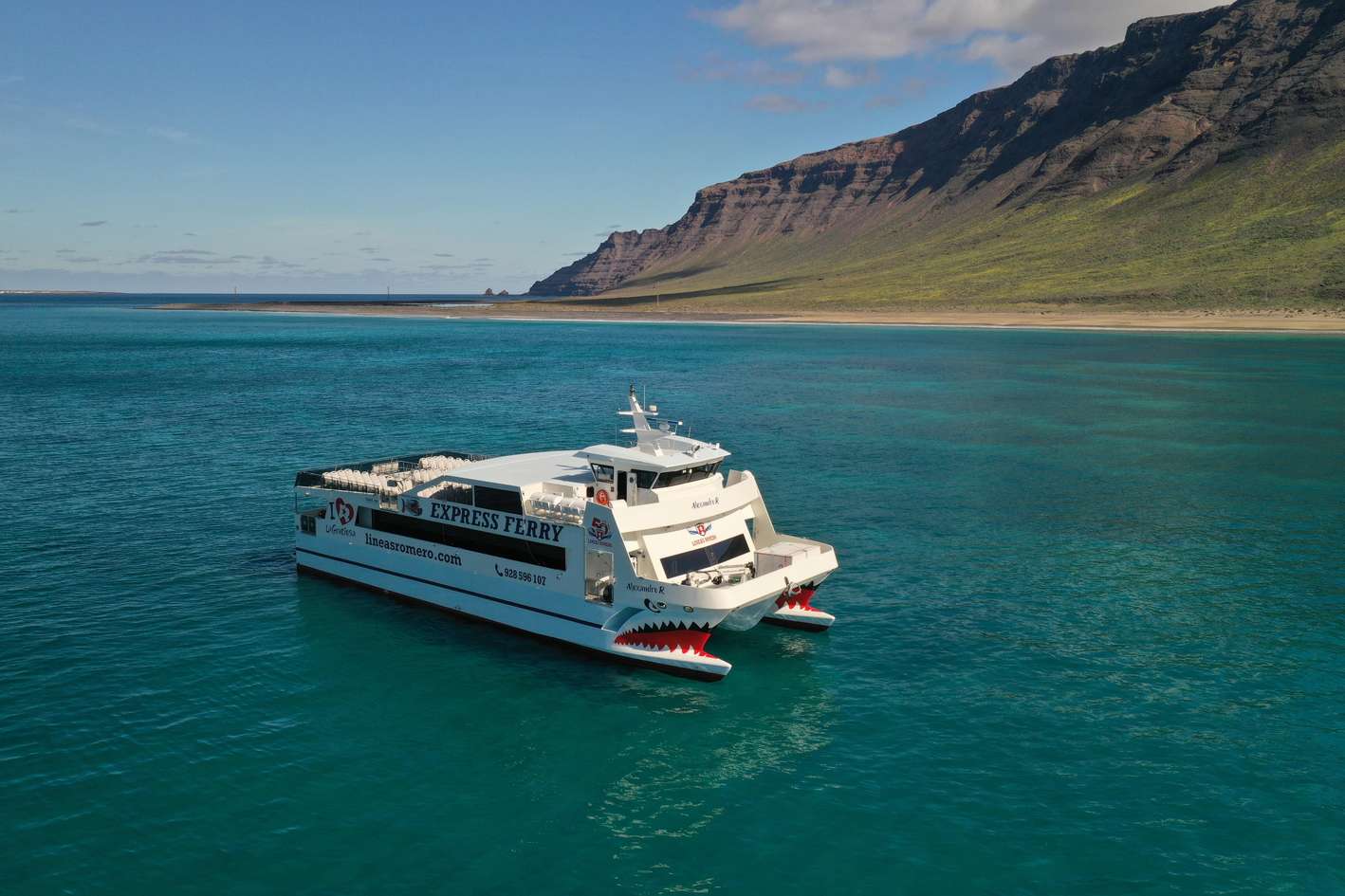
The La Graciosa page covers departures from Orzola, the crossing itself and how to time a day on the island.
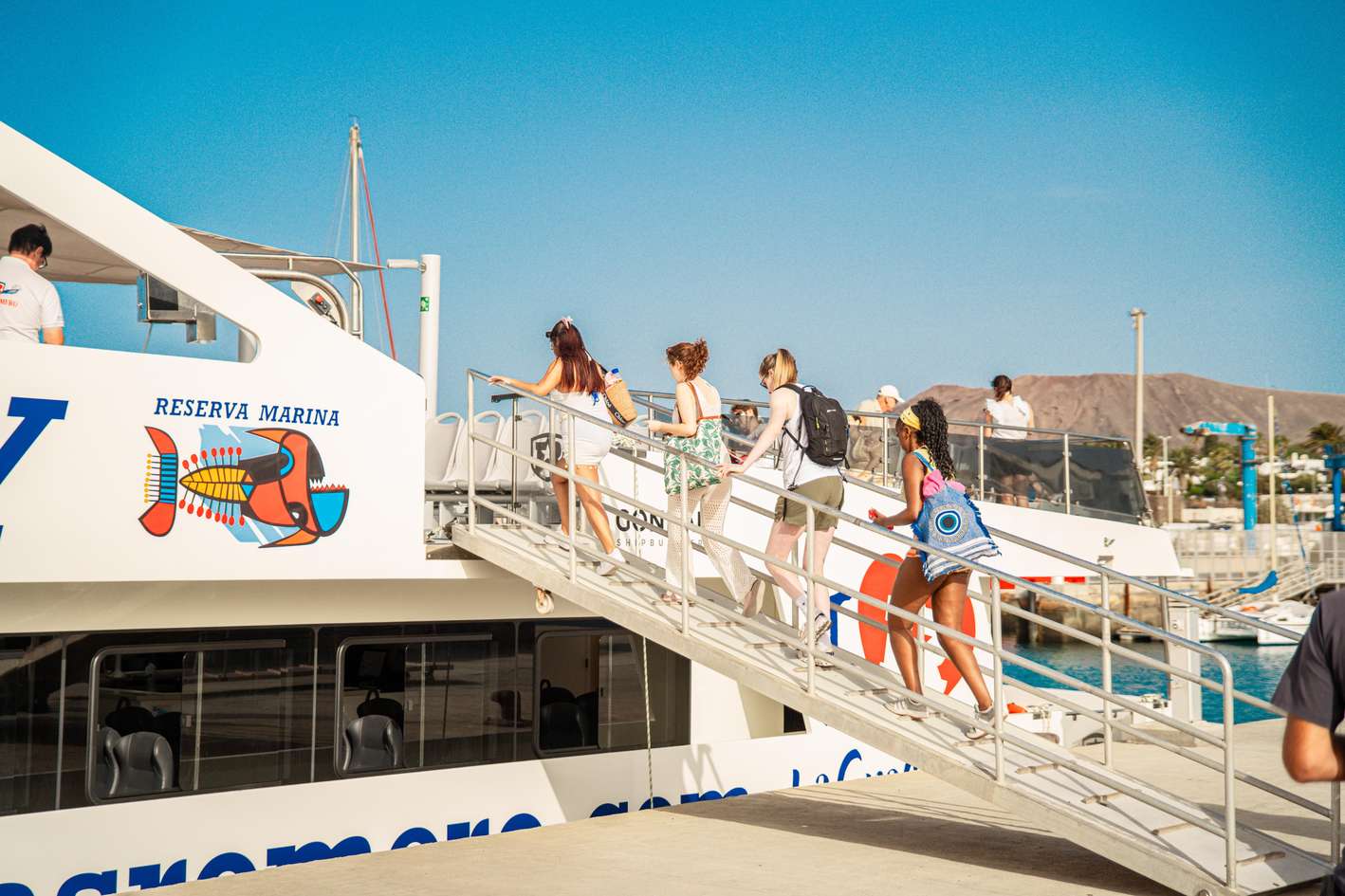
Boat trips to Gran Canaria explains the open-sea distance and why the crossing eats most of a day.
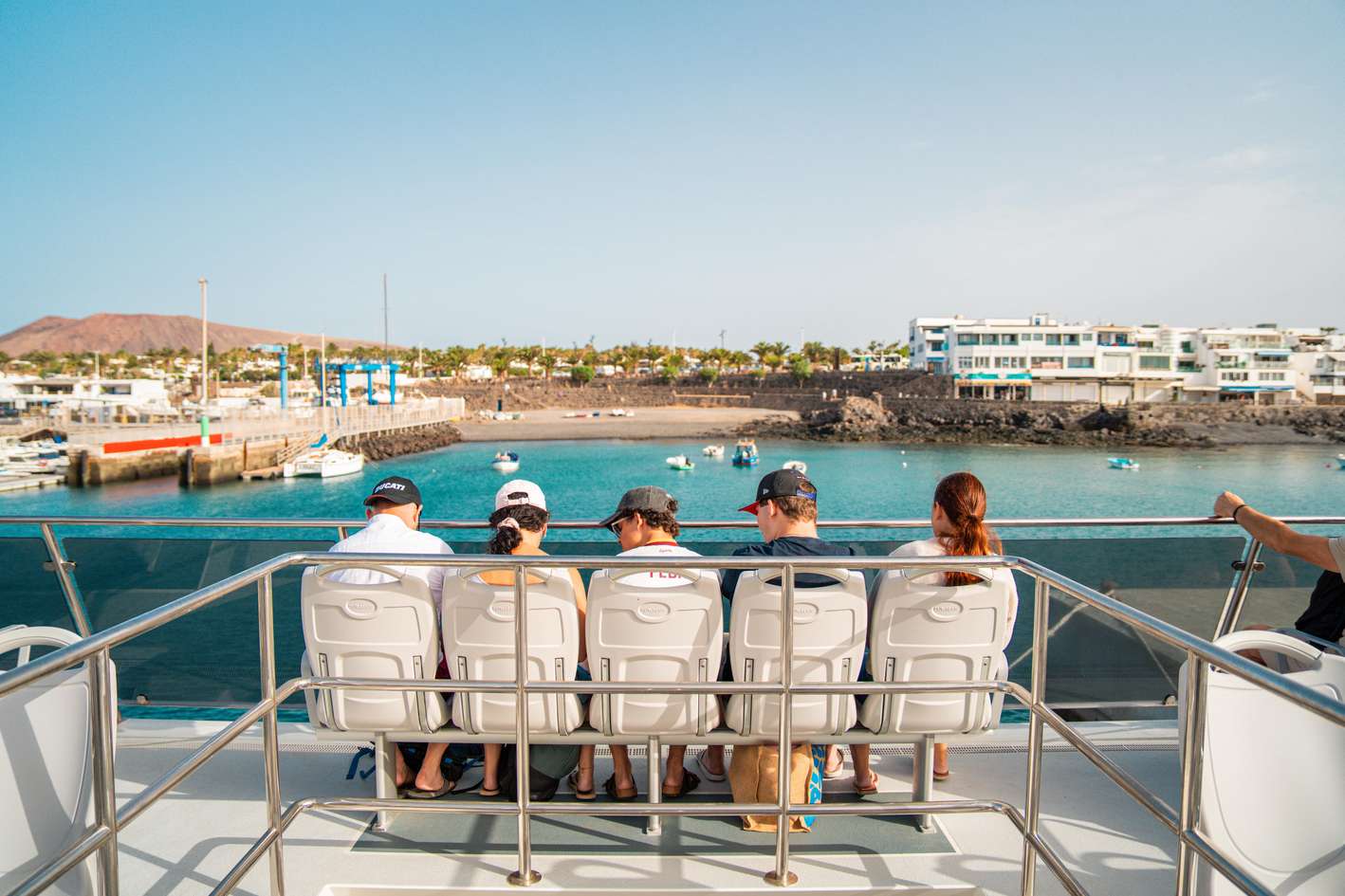
Boat trips to Tenerife lays out the sea distance and crossing times, so you can plan realistically.

Jet ski hire explains rates, licence rules and age limits before you book a ride on the water.
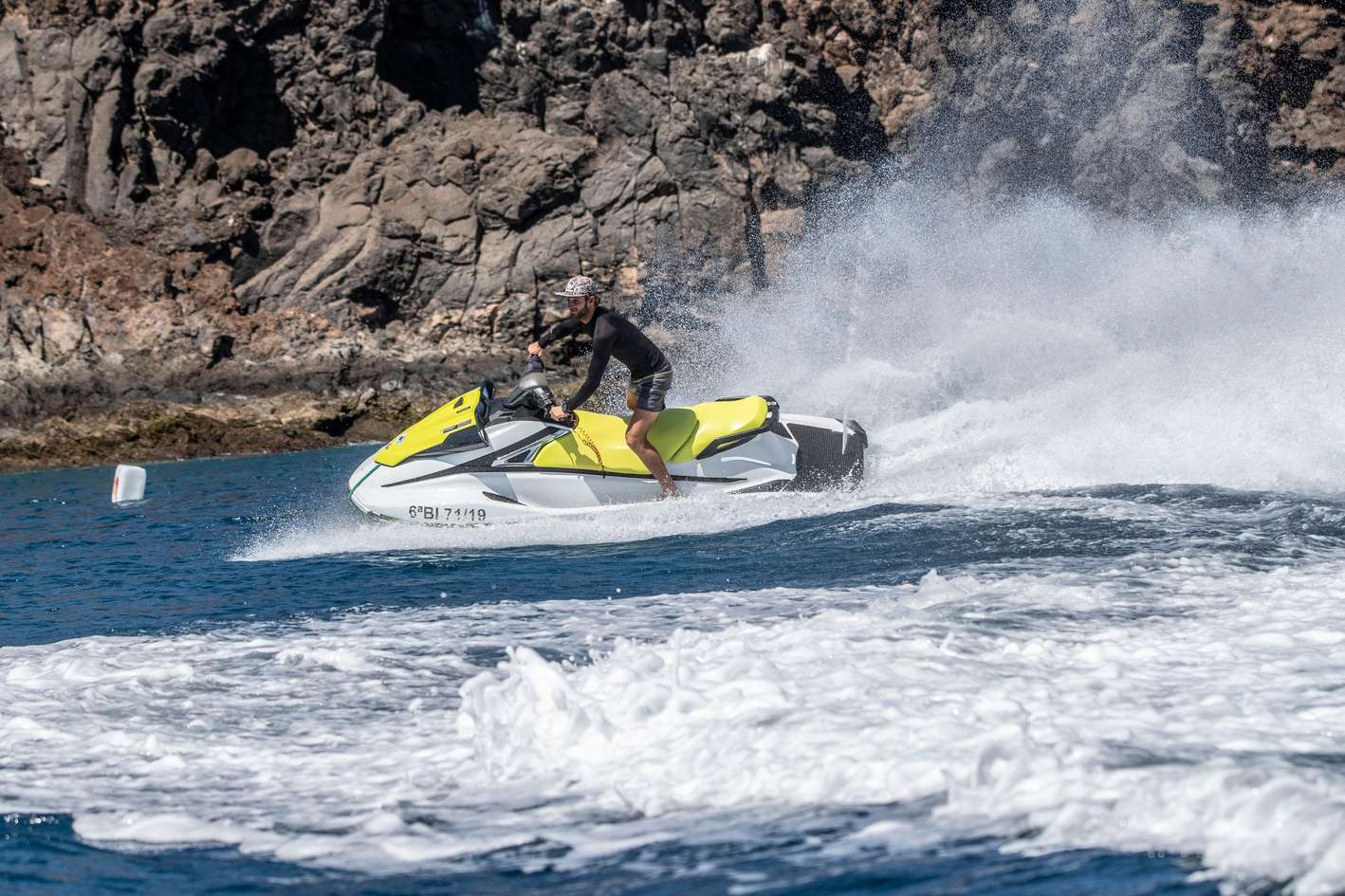
Jet ski hire at Puerto del Carmen covers rentals at Playa Chica and the coastal routes leaving the resort.

Jet ski hire in Playa Blanca takes you to the Playa Dorada and Playa Flamingo stands and their calm southern water.
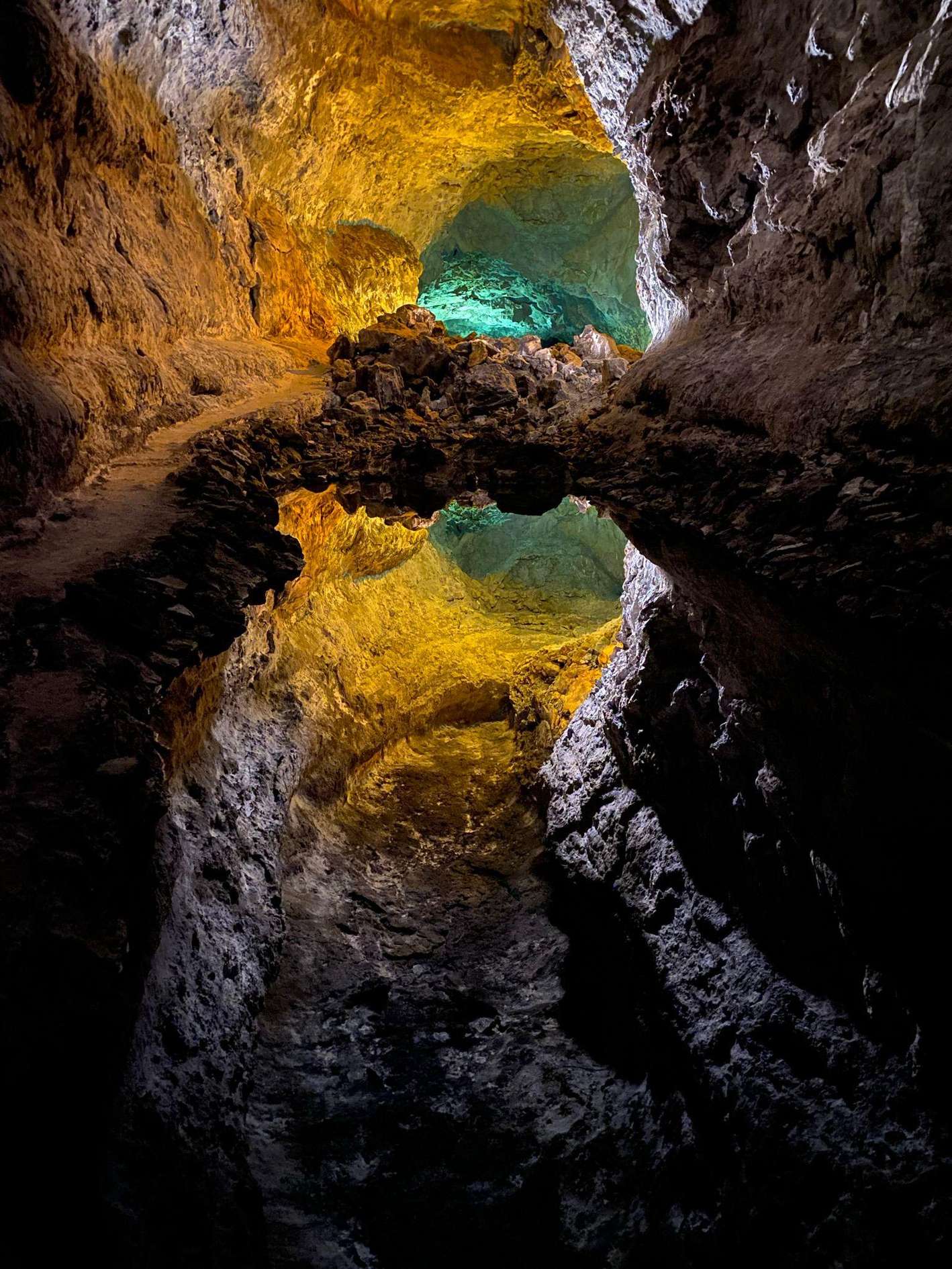
The volcanic caves page gathers the lava tube tours, half day and full day, with what each visit involves.
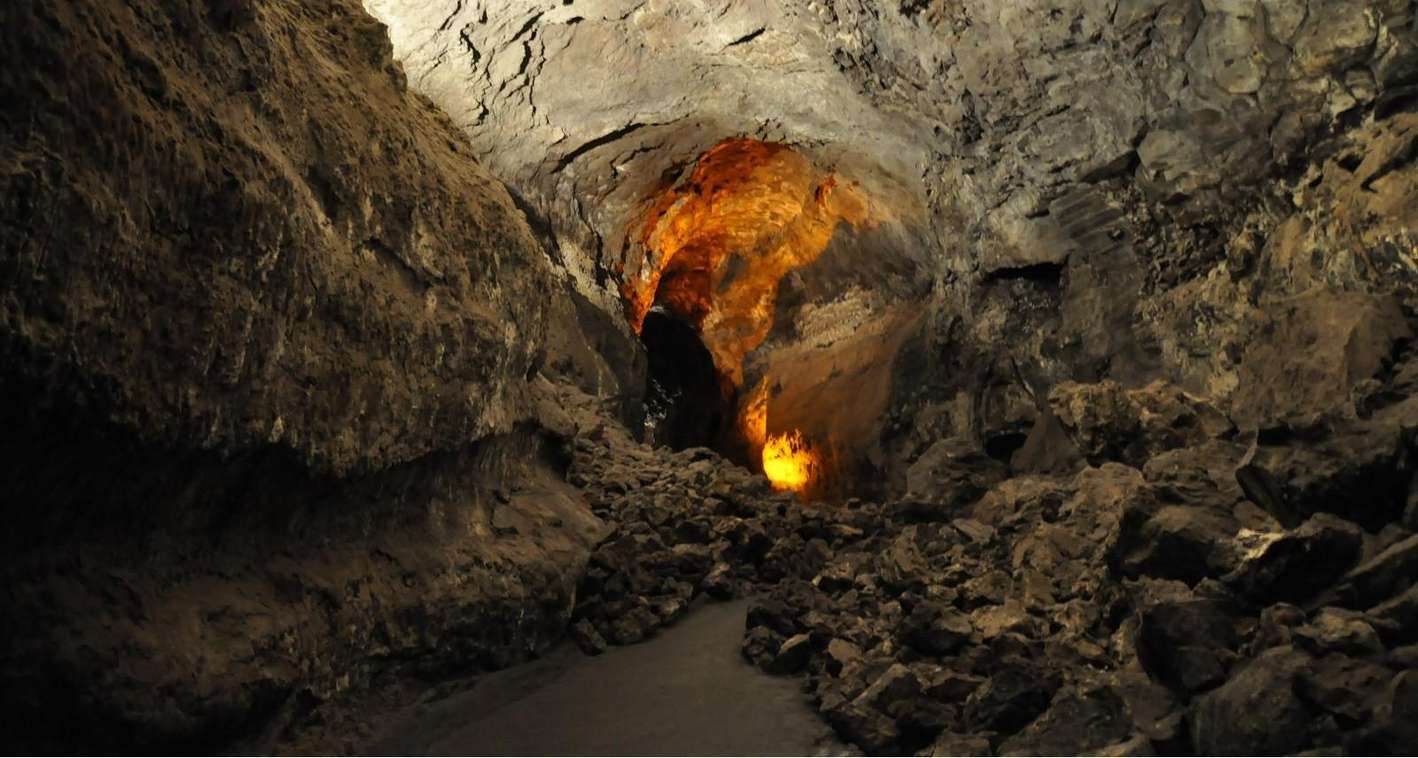
The Green Caves page has tickets, opening times and driving directions for Cueva de los Verdes.

Jameos del Agua covers the subterranean lake, the blind white crabs and the walk through Manrique's cave design.
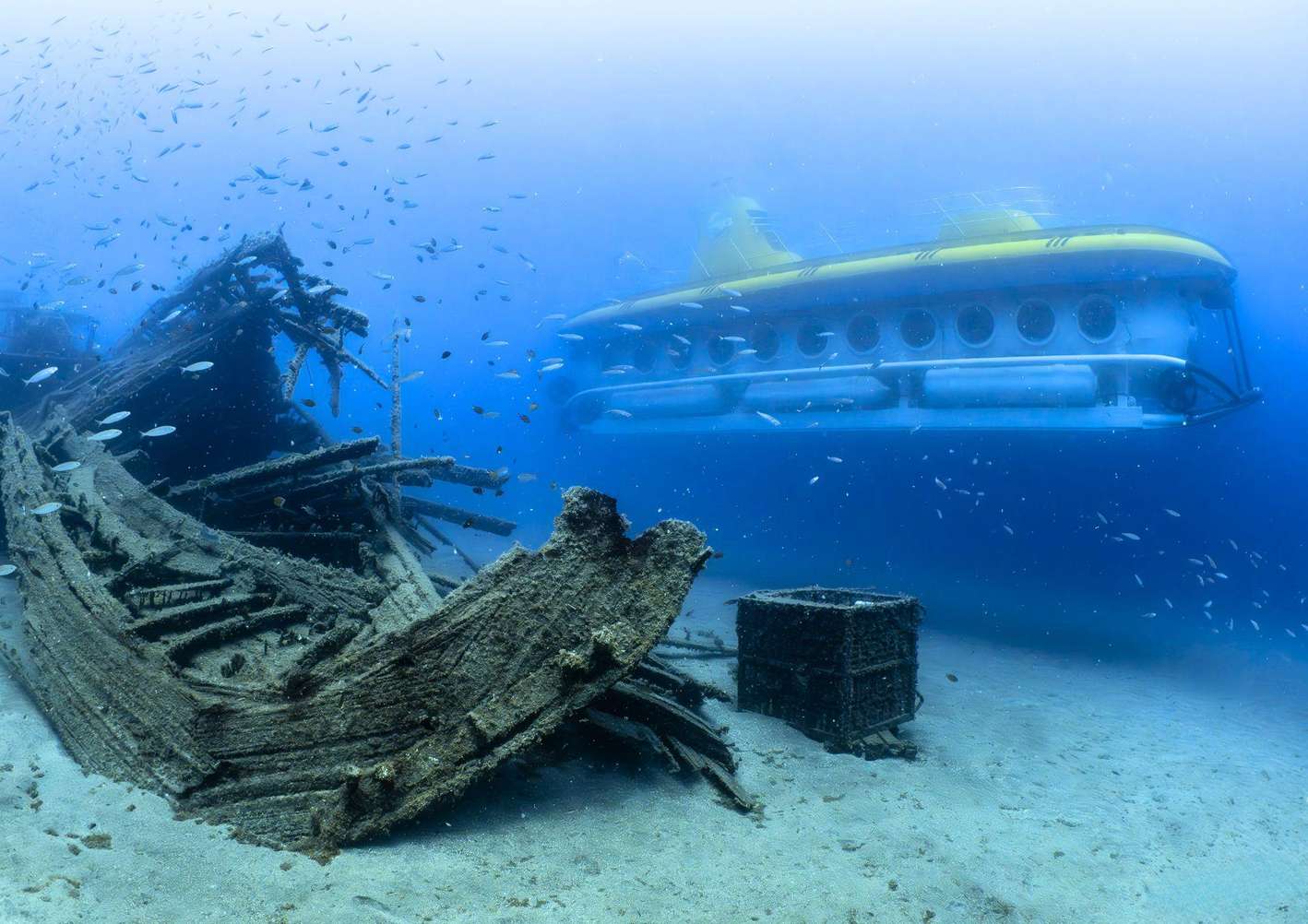
The submarine safari takes you under the water off Puerto Calero in a real passenger submarine.
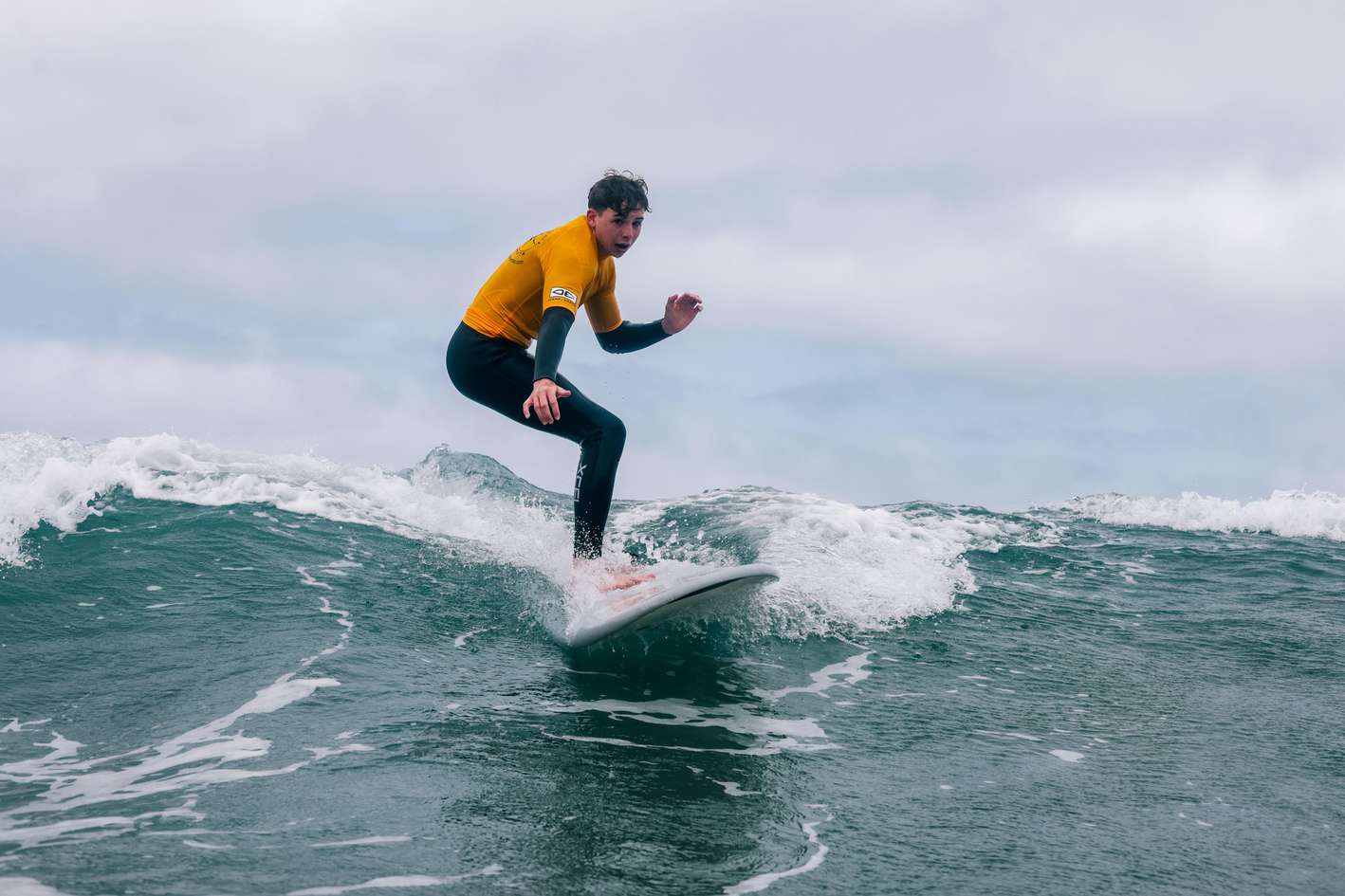
Surf lessons at Famara take beginners out in small groups, with boards, wetsuits and hands-on instruction.
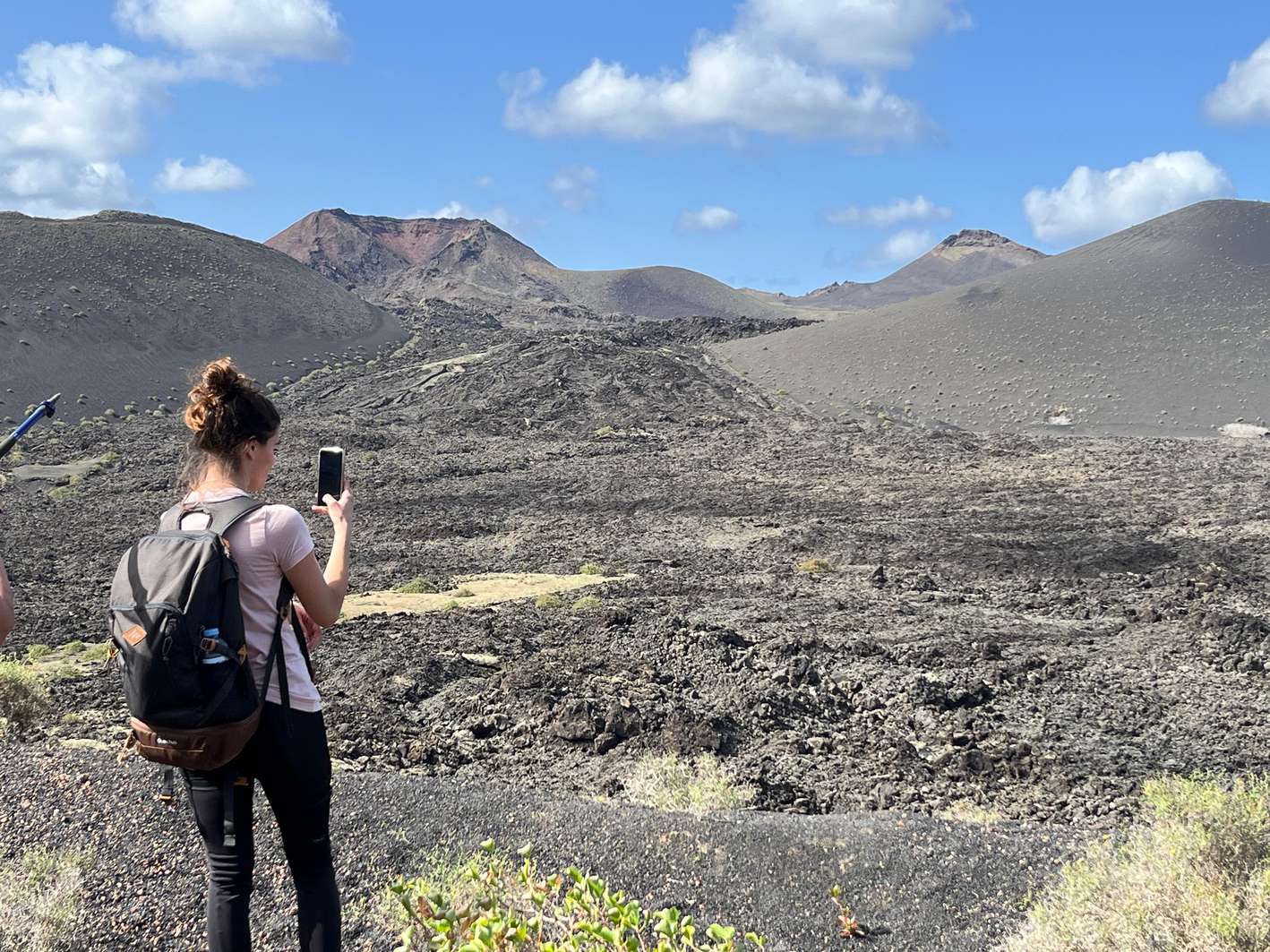
Guided crater walks take you across the island's lava fields on foot, with routes graded by distance and effort.

The Manrique tour links the house museum, LagOmar and his viewpoints into a single day of design and volcanoes.
Tours from the cruise port match short shore excursions to your all-aboard time, with pickup at Arrecife.

The Fuerteventura page reverses the trip, with day excursions from Corralejo into Lanzarote's volcanic sights.
Short answers to the questions travelers ask before they book a tasting in La Geria's black ash vineyards.
 San Bartolomé2026
The vines root in porous black ash called picón, which soaks up moisture from Atlantic trade winds and night dew. Low stone walls around each pit create tiny microclimates, and that combination gives the grapes their distinctive mineral character.
Growers dig wide conical pits, the hoyos, by hand through the ash down to the fertile soil, usually about 3 meters across and up to 2.5 meters deep. A low semicircle of dry stone, the zoco, stands on the windward side and channels moisture straight to the roots.
Plan ahead if you want the cellar tour. Guided tastings follow set schedules, so arriving without a reservation may leave you standing at the counter while the guided cellar tour is already full.
Public buses through the valley are limited, and relying on them can leave you stranded. An organized tour handles the drive and lets everyone taste freely. Taxis from the coastal resorts work too, but a round trip quickly costs more than a dedicated tasting excursion.
Spain's drink-driving limits apply in full on the winding LZ-30 wine road. If you plan to taste, join a guided tour or hand the keys to a designated driver who skips the cellar.
At Finca Testeina, guests under 18 receive juice and artisan chocolate in place of wine, so families can join the vineyard walk and sit down to the tasting together.
The dry whites go un-oaked, so they taste crisp, fresh and quietly mineral. The Listán Negro rosé brings red fruit, a whiff of smoke and a savory grapefruit-pith bite.
A guided tour of one bodega runs about an hour. If you are wandering the valley on your own, set aside two to four hours for a casual visit with a stop or two.
A small-group wine excursion covers several wineries in a morning or afternoon without rushing, and nobody has to count drinks before driving. A twenty-minute bodega stop on a general island coach rarely leaves time to taste properly.
Local cheese pairs with dry volcanic Malvasía on the La Geria hikes, and the Finca Testeina tours serve their wines with artisan chocolate bonbons made on the island.
Working estate shops sell the wines directly, including Bodega Los Bermejos and Bodegas Vega de Yuco at Finca Testeina, and the Monumento al Campesino gift shop stocks them too. Pack bottles with care, because the pronounced lips on Lanzarote bottles make them awkward to secure in luggage.
Bodega Stratvs and Bodega Rubicón sit barely 100 meters apart, and Bodega La Geria stands across from Rubicón beside a small chapel. Inside Bodega La Geria, multilingual boards on the barrels explain volcanic viticulture in English, Spanish and German.
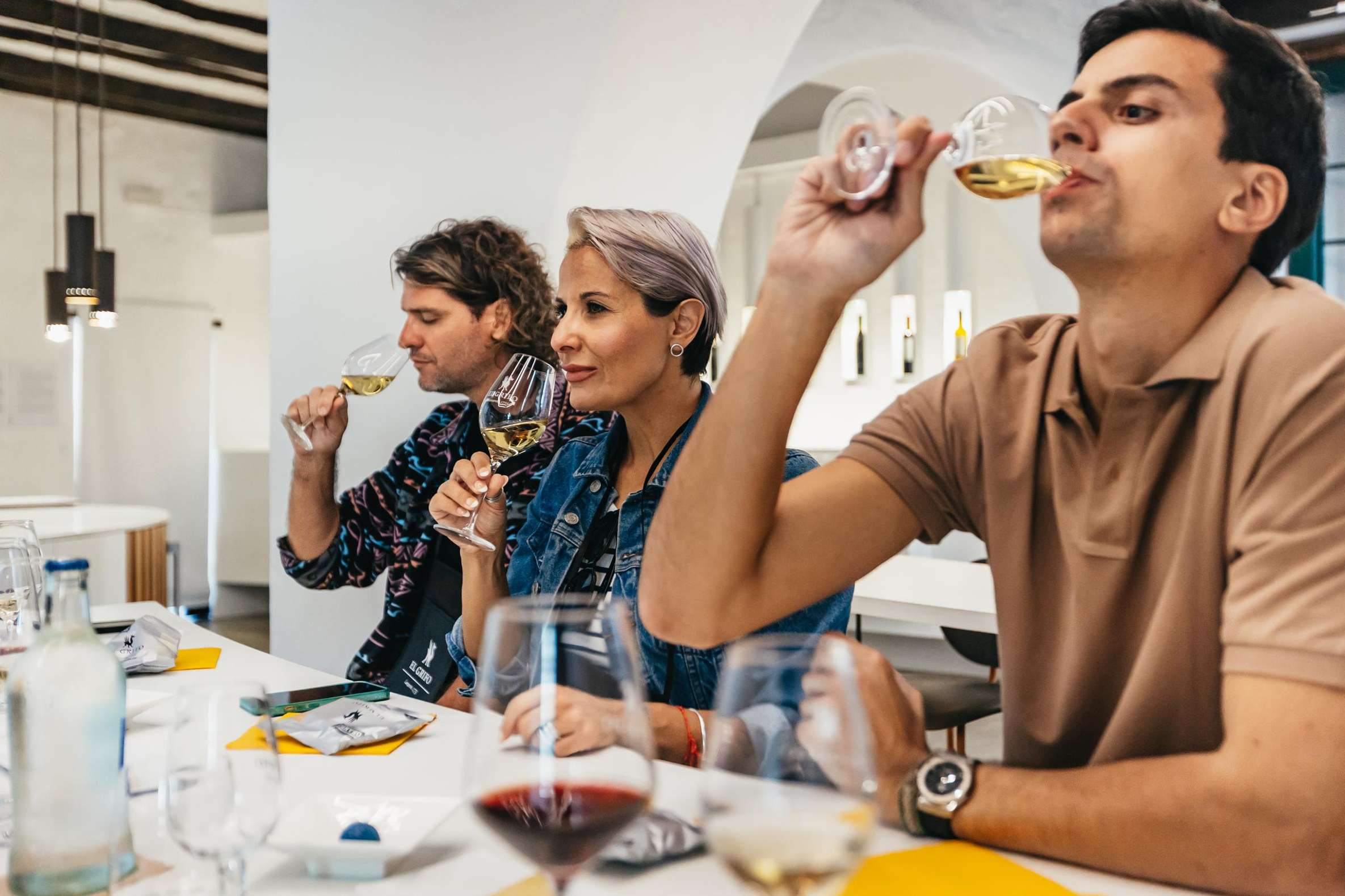
Six volcanic wines with the head sommelier at a bodega dating to 1775, and free cancellation up to 24 hours in advance.