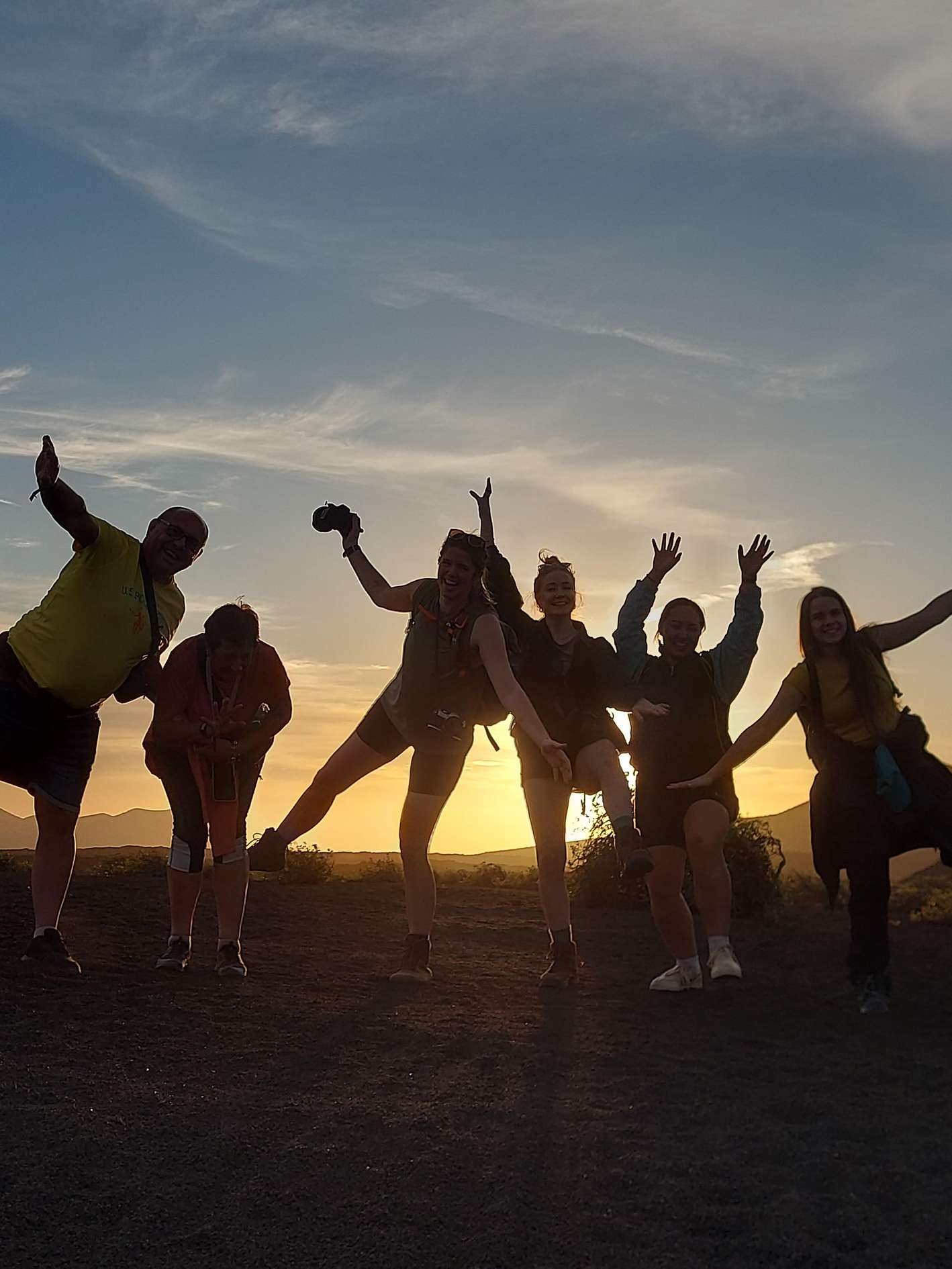
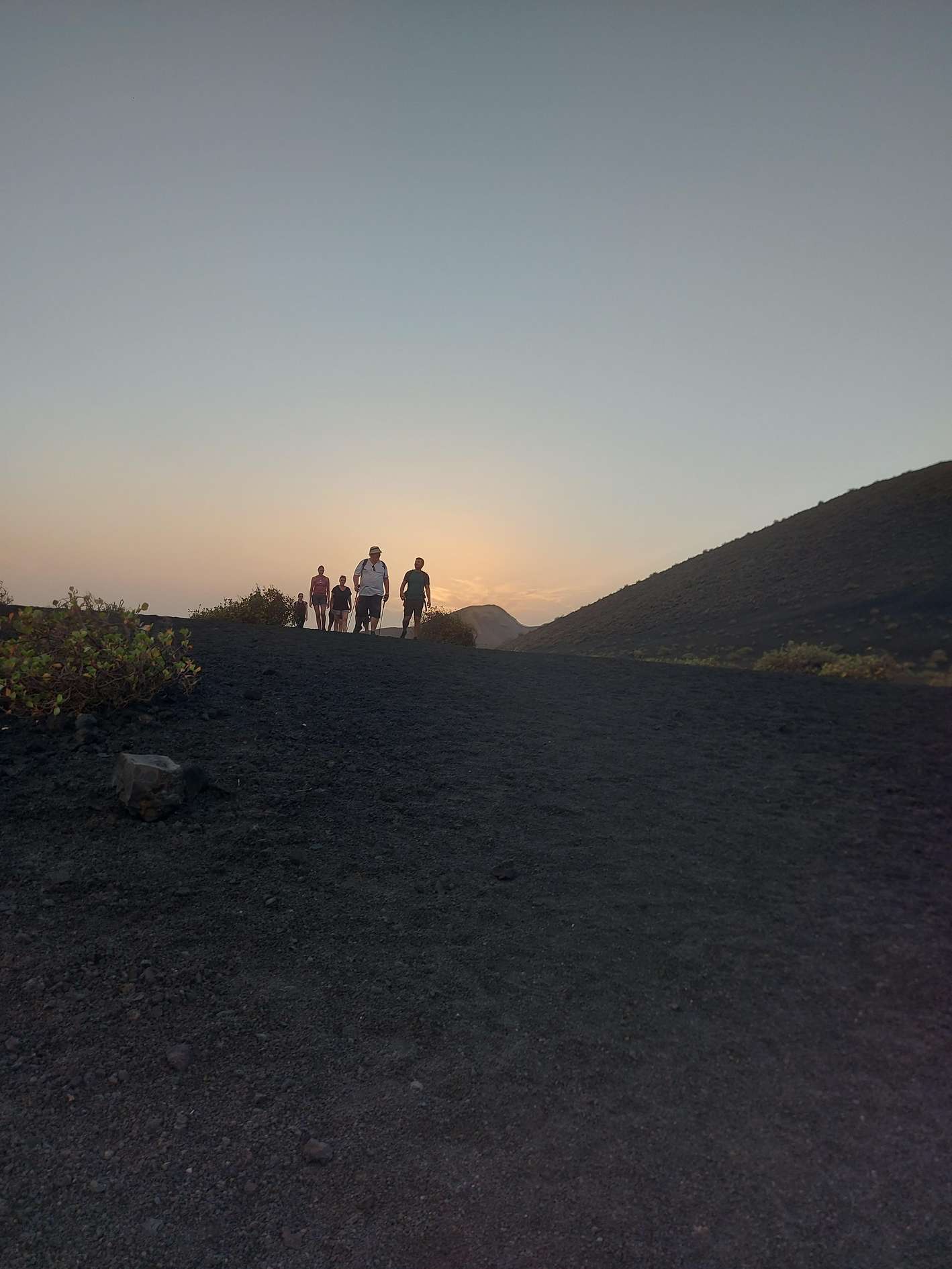
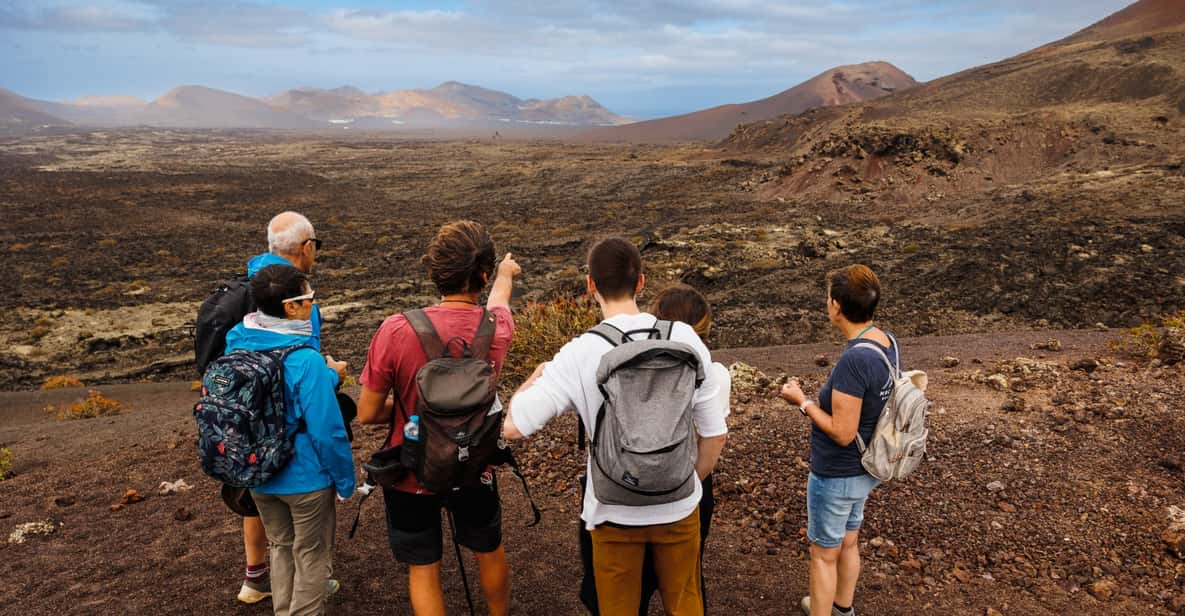
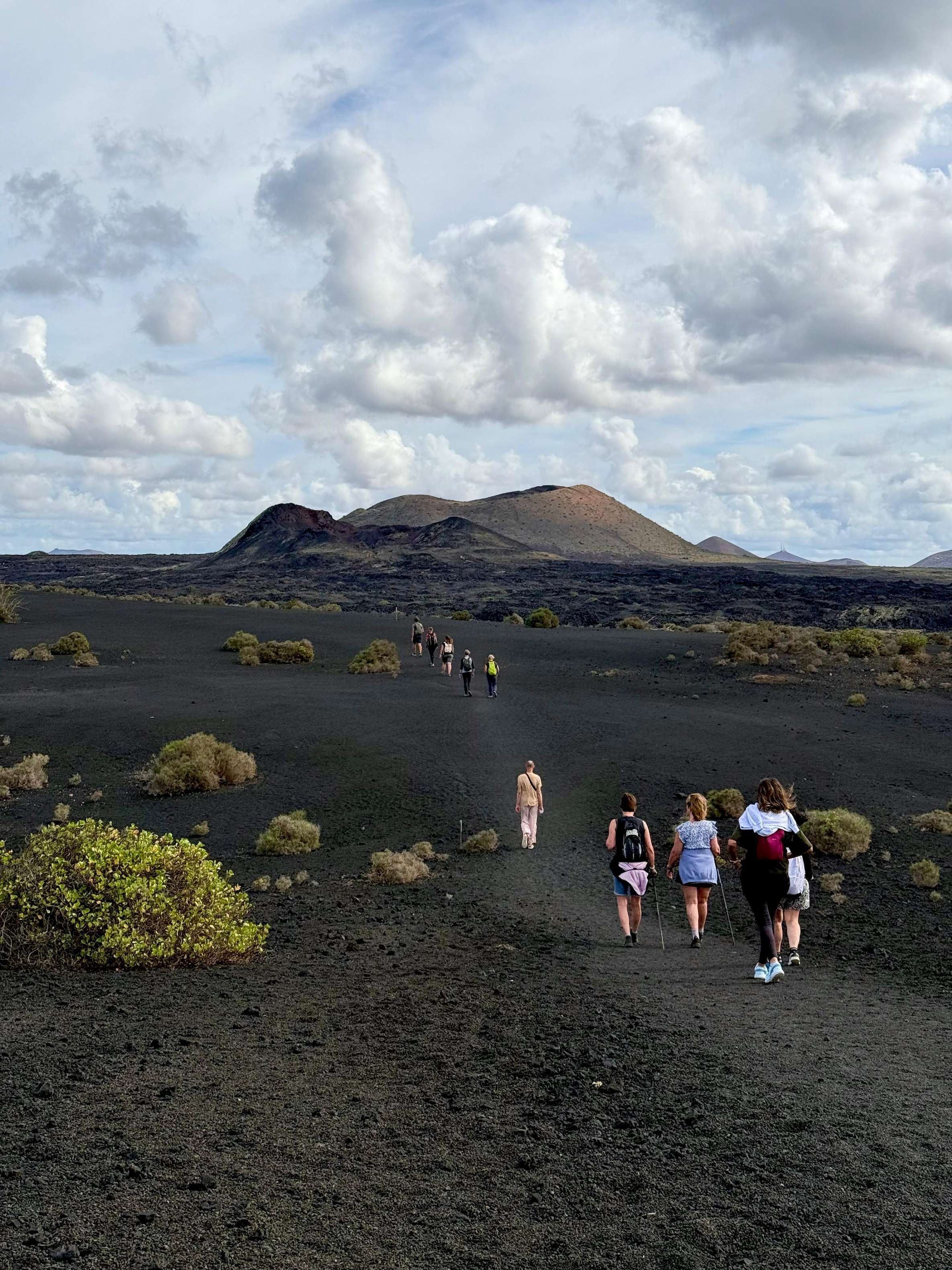
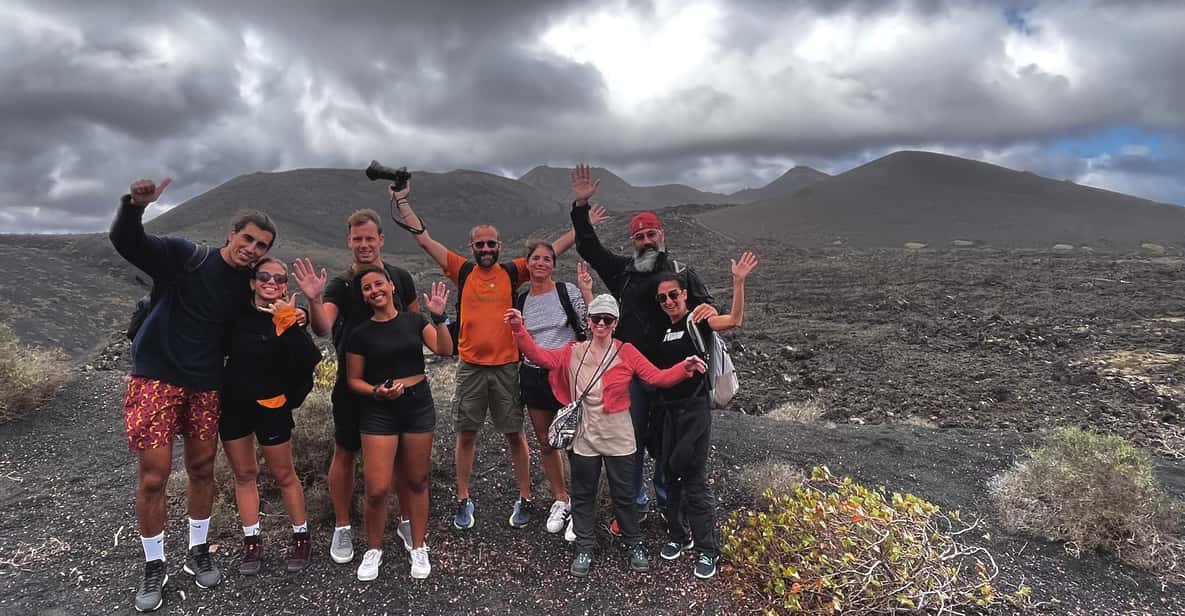
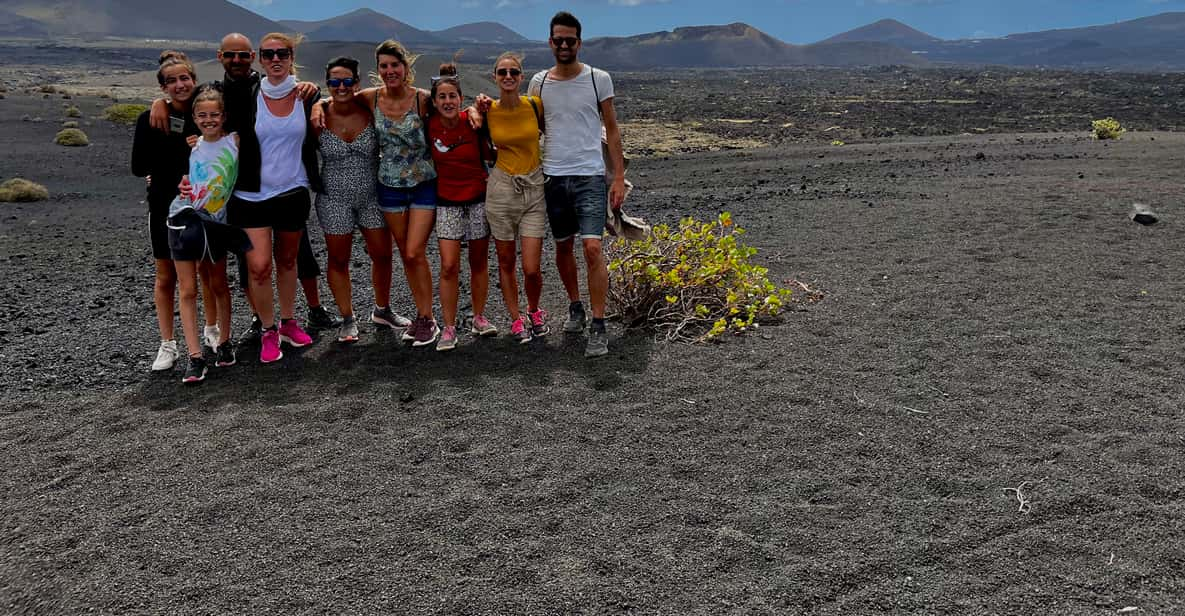
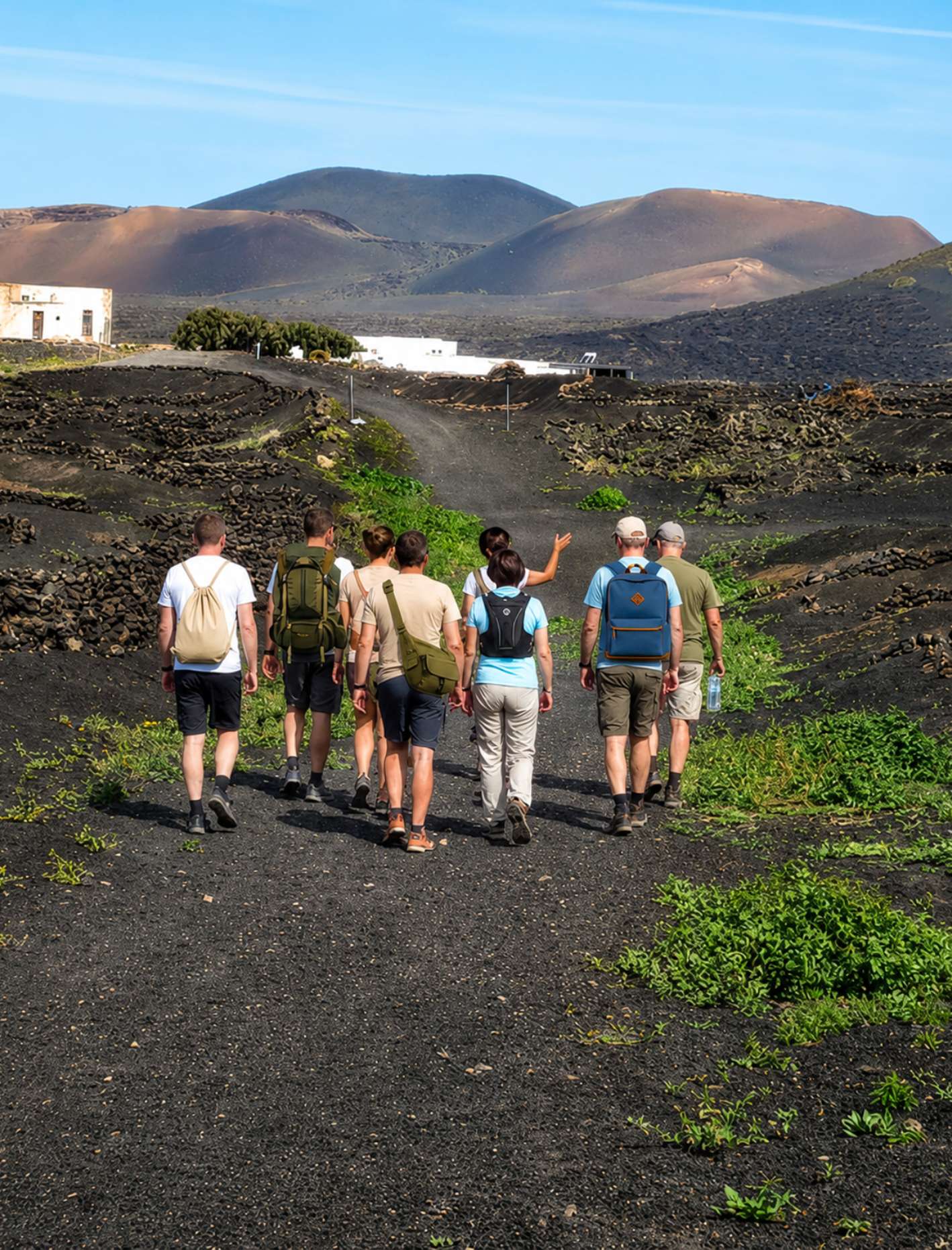
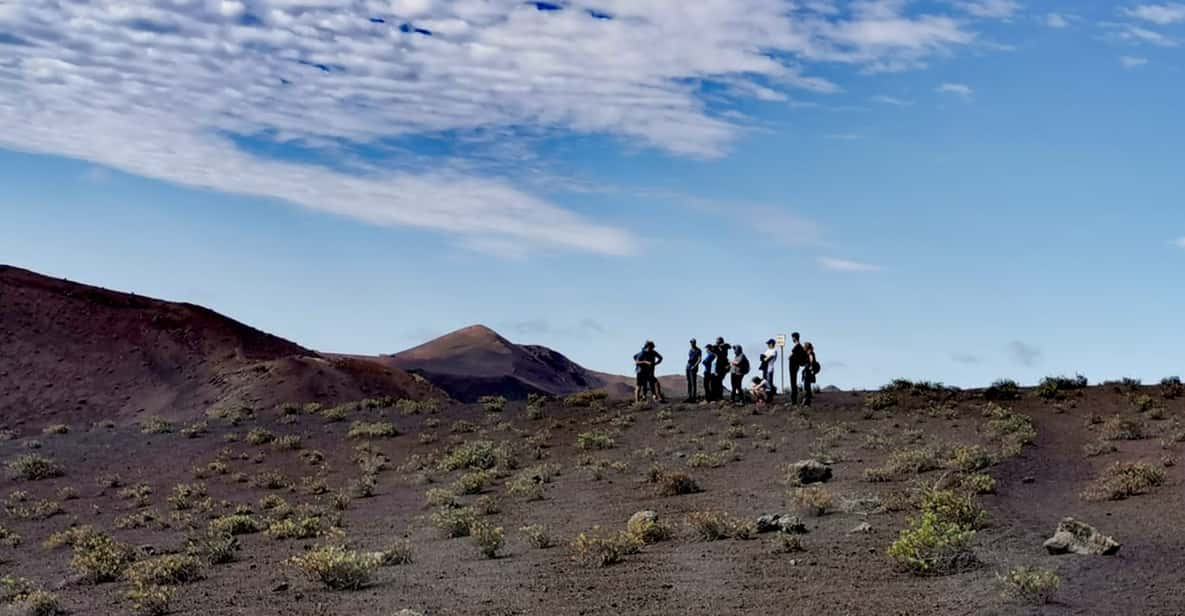
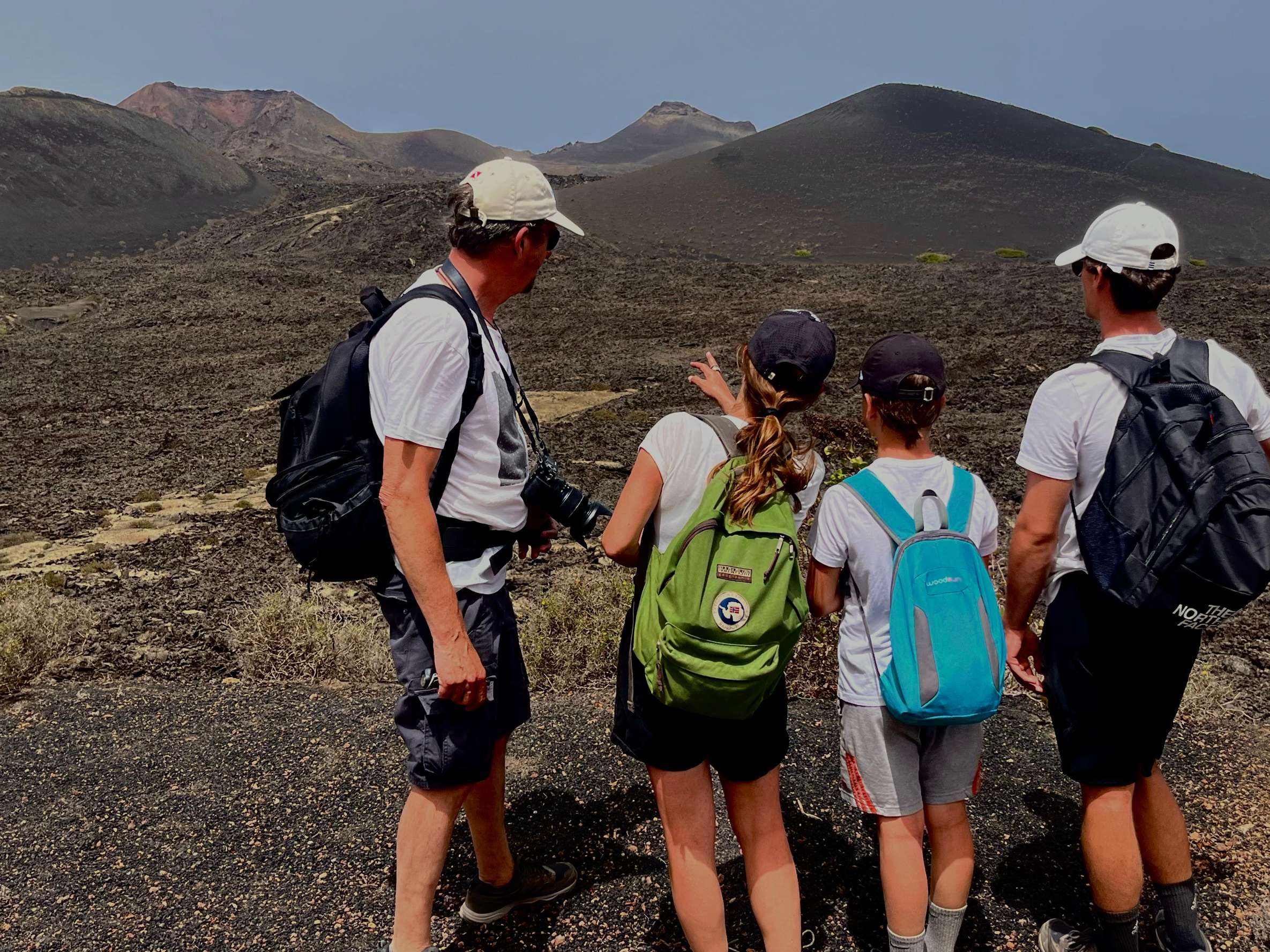
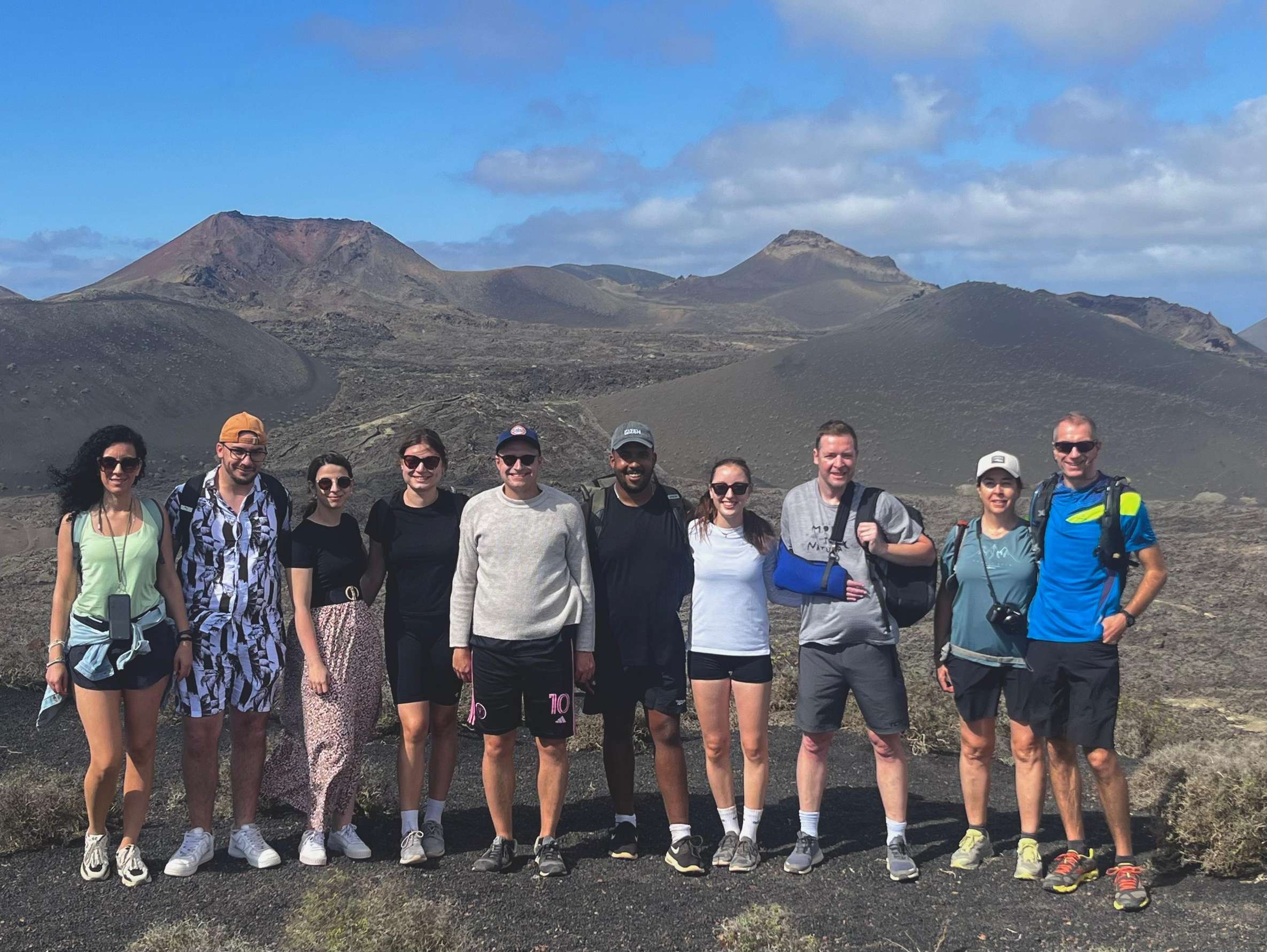
Step off the coach and onto the lava. Book a small-group volcano hike with a licensed local guide, hotel transfers included, and walk straight into craters most visitors only see from a bus window.
Lanzarote has craters you can walk into for free and a national park you cannot walk in at all. Which ground is open decides the whole trip, along with the shoes on your feet and the lift to the trailhead.
If you only remember five things
1
Timanfaya National Park bans unescorted walking, so you see its craters from a coach or book a ranger trek months ahead.
2
Caldera de los Cuervos, Caldera Blanca, La Geria and Montaña Roja are all free to walk without a permit.
3
The Caldera Blanca loop covers 9.5 km with 400 m of climbing; Famara's ridge asks for 670 m of ascent.
4
Lava fields have no shade and no water points, so carry 1.5 to 2 litres and SPF 50, and wear closed-toe shoes.
5
No public bus reaches any volcano trailhead, which makes a rental car or a tour with hotel pickup the real choice.
importantVolcanic hiking trails in Lanzarote have no shade and no water points, and the black lava reflects the sun's heat all around you.
Carry at least 1.5 to 2 litres of water per person for a three-hour hike, and pack SPF 50 sunscreen, a wide-brimmed hat and UV-filtering sunglasses. There is nowhere to buy supplies once you leave the trailhead.
Is Lanzarote good for hiking?
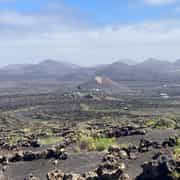
A flat, beachy island the size of a weekend drive seems an odd place for serious walking. Then you round a bend on the LZ-67 and the road disappears into black ash that runs to the horizon. Here the volcanoes are the ground itself, and the trails go straight across them.
Pro tipStart with the 15-minute trail into Caldera de los Cuervos to test whether crater walking is for you.
The island's walks fall into a few families: crater loops like Caldera Blanca, lava tunnels at Volcán El Cuervo, the red cone above Playa Blanca, and vineyard paths through La Geria. None of them need mountaineering legs. Guided volcano hikes are described by regulars as gentle, approachable and manageable for beginners, non-hikers and children.
Most first-timers worry about access long before they worry about fitness. Half the questions travelers ask come down to whether you can simply walk up a volcano here. Mostly you can, and the exceptions are worth knowing before you plan a day around one.
What people wrongly assume about Lanzarote
MythIt is only a beach island, walking would be dull
Reality
The trails cross craters, lava fields and ash plains, with walks into crater interiors
MythEvery volcano is fenced off or ticketed
Reality
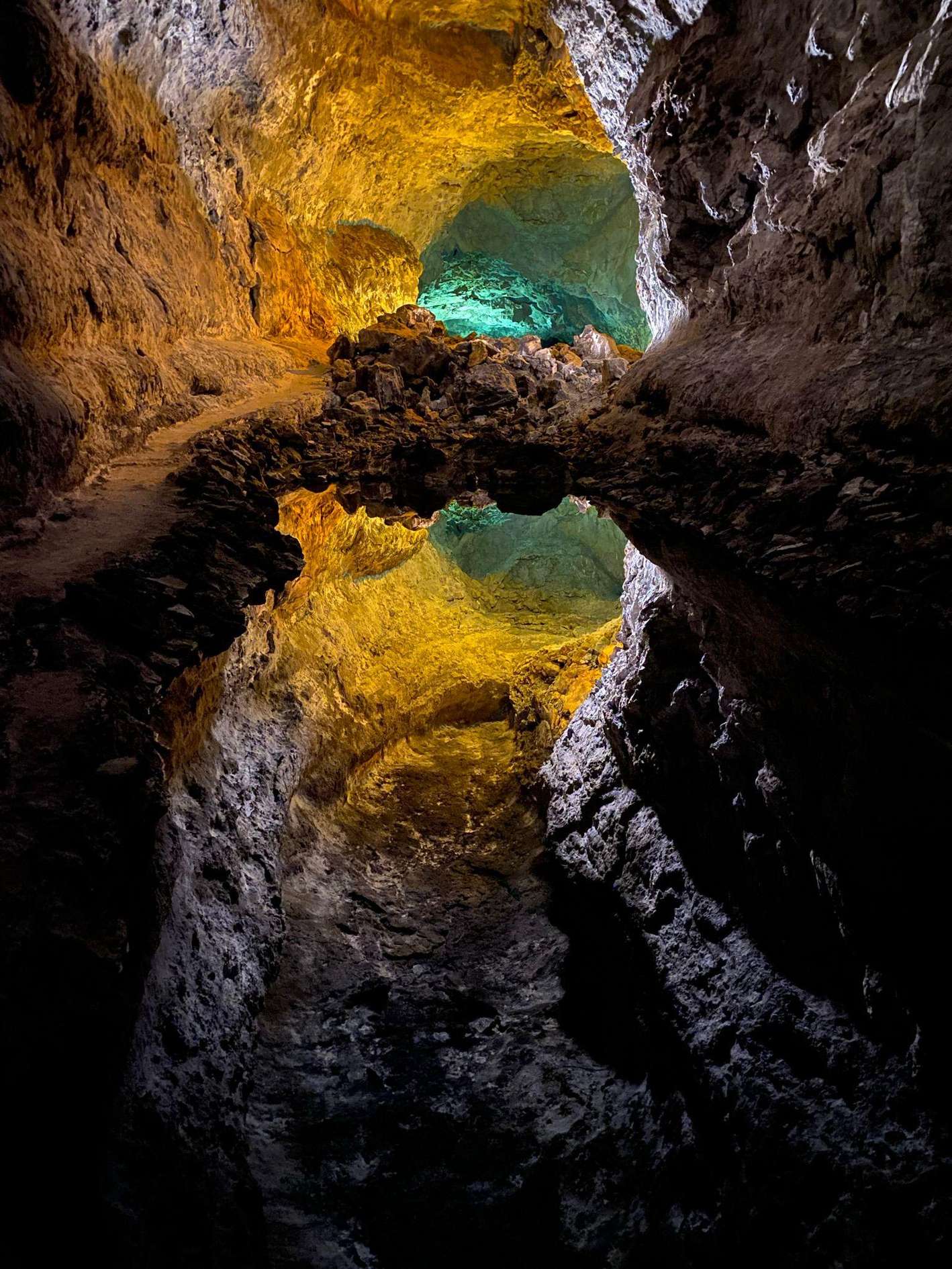
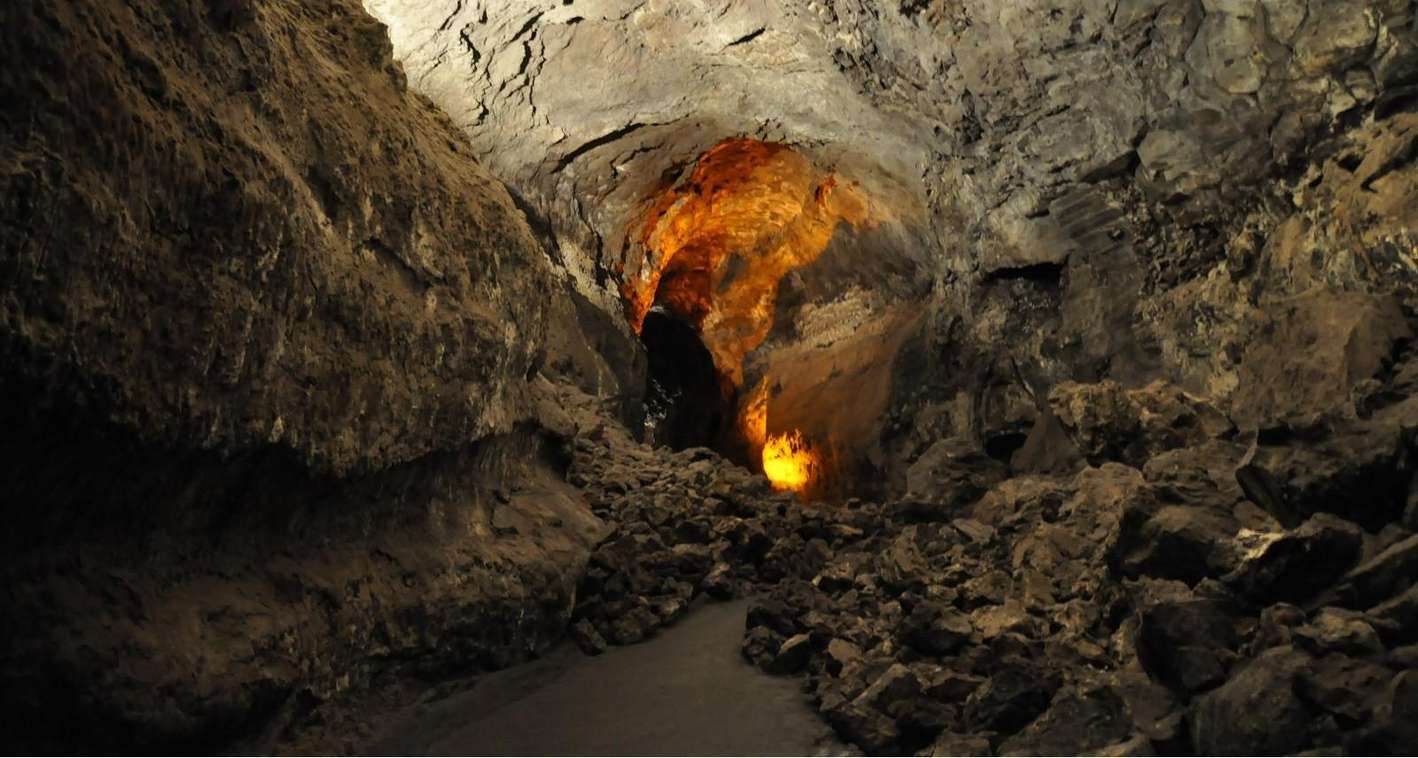
Volcán El Cuervo can be entered on foot for free, no tour or permit
MythCrater walks demand serious fitness
Reality
Guided volcano hikes suit beginners and children who can handle a long walk
The legal map is simple once someone draws it. Across the boundary of Timanfaya National Park, unescorted walking stops.
Common mistakeAssuming a park entrance ticket lets you leave the coach and walk the lava fields. It does not.
On foot you are confined to the Islote de Hilario visitor complex; the craters themselves are viewed from an official coach, or from the free Tremesana ranger trek, capped at 16 walkers a day and booked out months in advance. Show up hoping to hike and you will be turned away at the boundary.
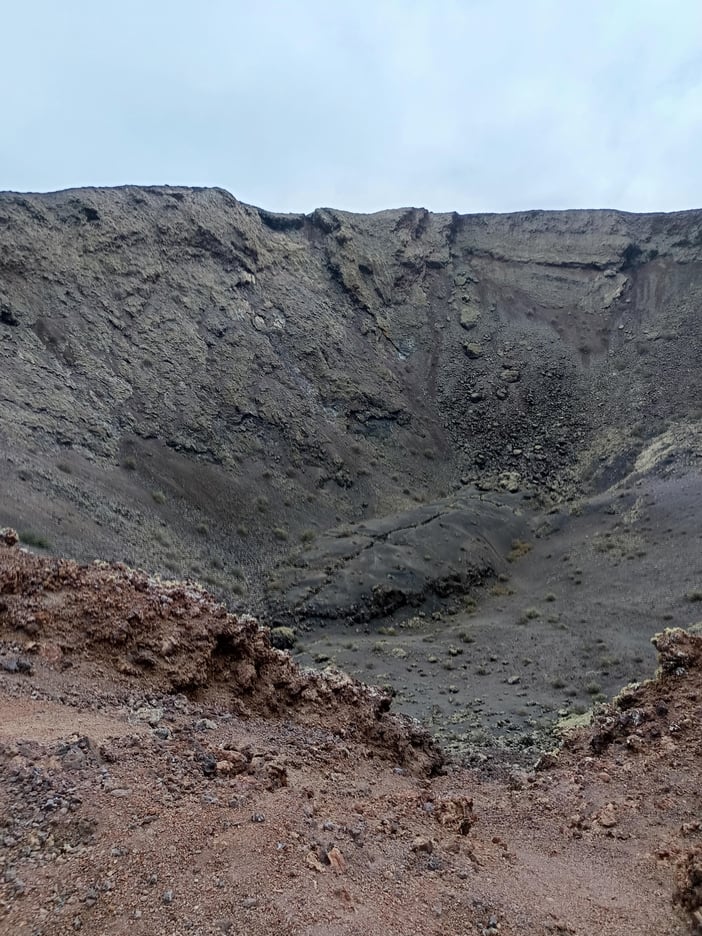
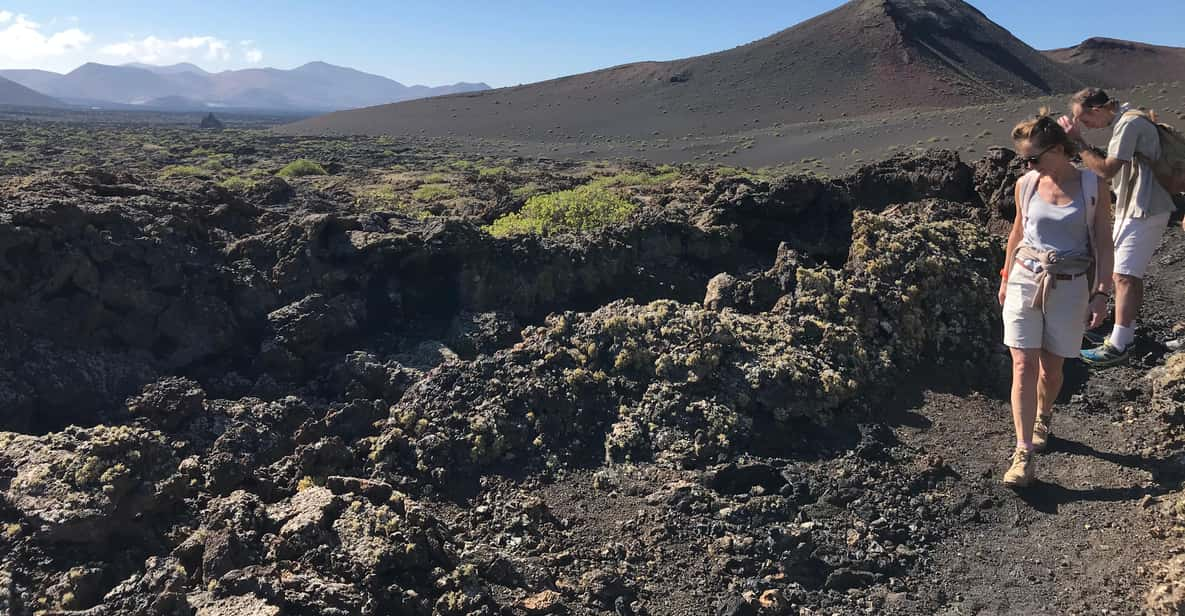
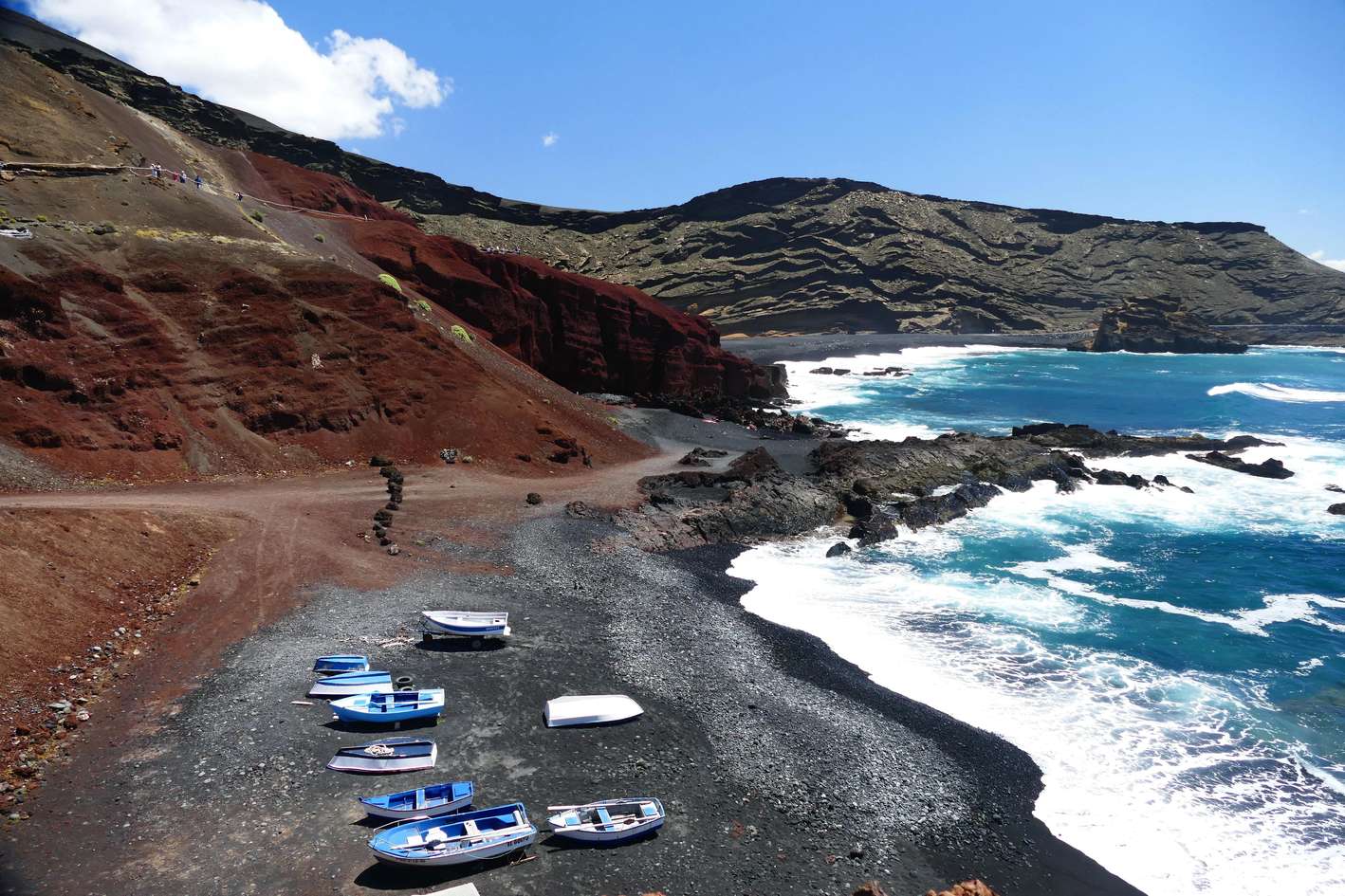
Next door in Los Volcanes Natural Park, the rules flip. Caldera de los Cuervos and Caldera Blanca are free, open and marked, and you walk straight into the craters. Montaña Roja in Playa Blanca takes independent walkers too. La Geria and the Famara cliffs need no permit either, just marked paths.
For the terrain you cannot legally cross alone, a guided trek is the way in. One option is the Hike Across Timanfaya's Volcanic Landscapes, a 3-hour guided walk of about 9 km through the eruptions' landscapes with a guide, snacks and optional hotel pickup.
The rule that can end the day
Unescorted walking inside Timanfaya National Park is prohibited Book the free Tremesana ranger trek far ahead, or walk the free craters of Los Volcanes Natural Park instead
Tour for this
Lanzarote: Hike Across Timanfaya's Volcanic Landscapes4.8★ (1,565) · 3 hours · Hotel pickup · Free cancellation
Four walks, each on a very different side of the island
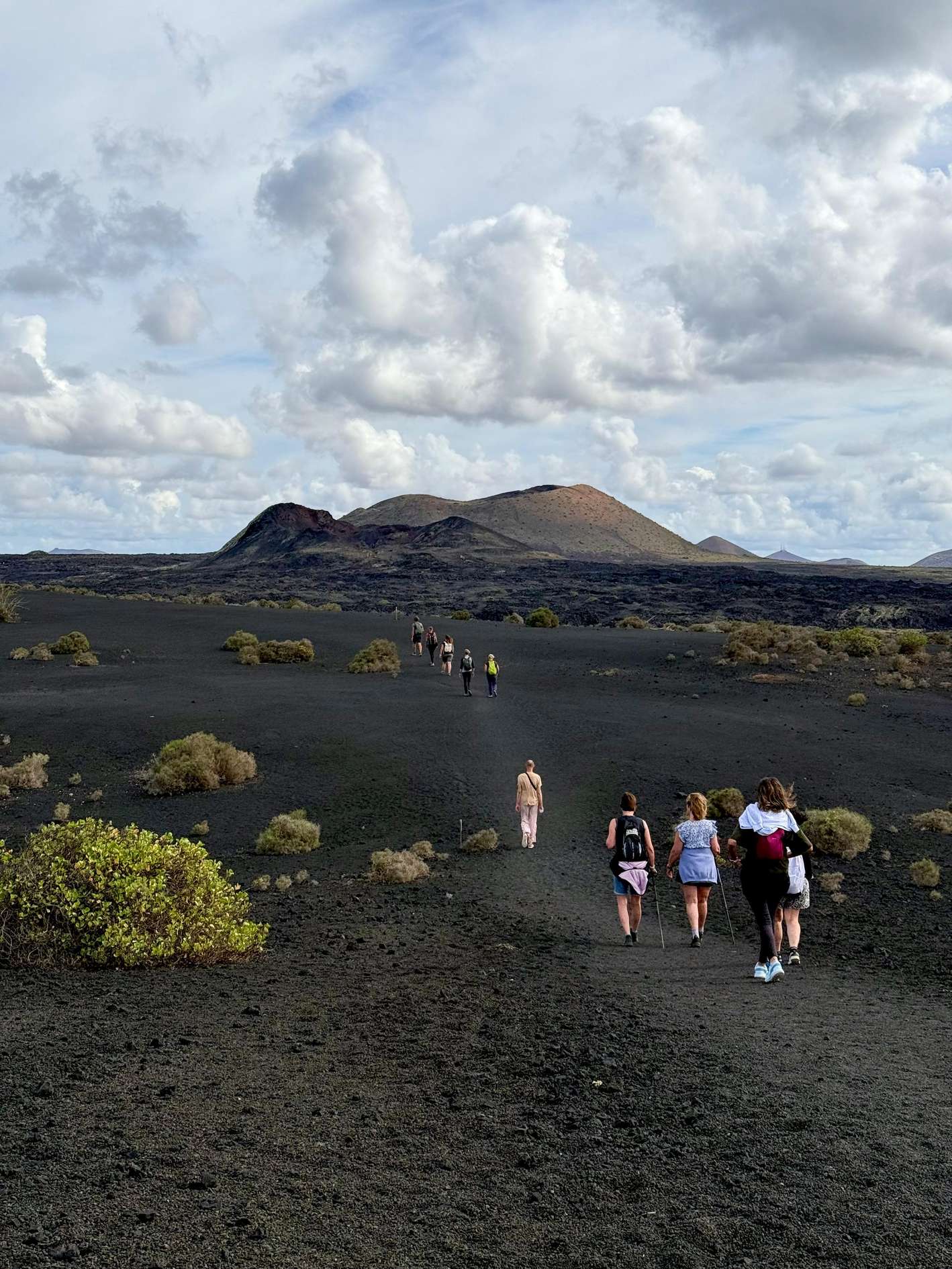
Choose the kind of ground first and the volcano follows. Timanfaya's interior is the spectacle, the geysers and the heat, experienced by coach or ranger trek. Los Volcanes is the walker's park: sharp lava underfoot, loose stone, and the Caldera Blanca loop of about 9 km along the crater rims to the summit.
Pro tipOn Caldera Blanca the ridge at the top is exposed; save it for a calm morning.
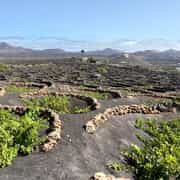
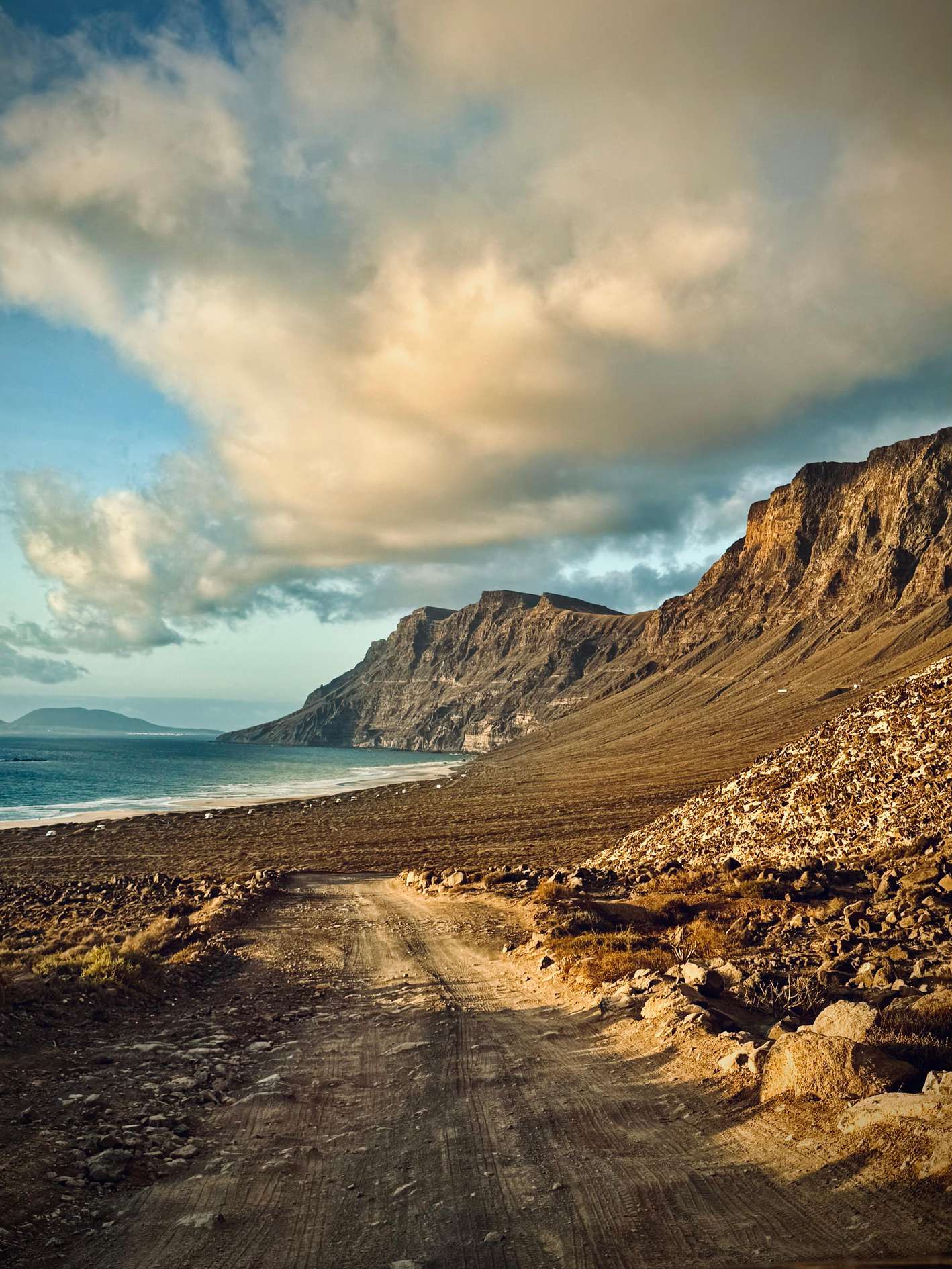
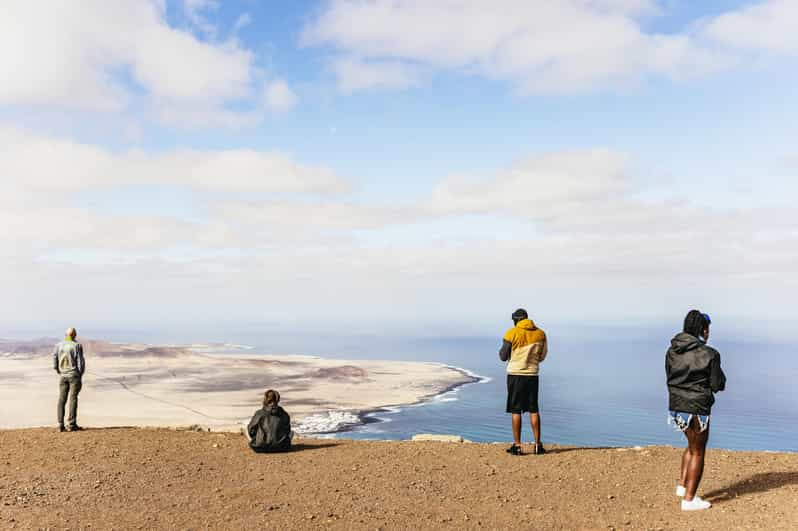
La Geria trades geology for farming. The path runs between vines planted in hollows dug into black ash, each sheltered by a semicircular basalt wall, and the walking is gentler than the crater fields. The Famara cliffs are the dramatic end: cliff-edge stretches, slippery loose stones, and ocean panoramas the whole way.
Pick the ground to fit the day. A first crater walk points at El Cuervo or Caldera Blanca. Photographers and anyone after a softer walk with a story behind every wall choose La Geria. Fit walkers chasing height and views head for Famara, and they check the wind before committing.
Numbers first, so you can place yourself. The Caldera Blanca loop runs 9.5 to 11 km with 400 to 446 m of gain and takes around 3 to 3.5 hours, which puts it at a solid half-day effort on uneven lava.
Common mistakeBooking Famara's ridge on a windy day. The cliff-edge stretches with loose stones are exposed.
Climbing the Risco de Famara from Caleta de Famara covers 9 to 10.8 km with about 670 m of continuous ascent, 3.5 to 5 hours, and it is the most demanding walk on the island.
Those two Caldera Blanca figures count different things. The roughly 9 km you see quoted elsewhere is the loop around the craters as guides describe it; the 9.5 to 11 km count adds the approach track to and from the trailhead. Plan on the larger figure and you will never be caught short.
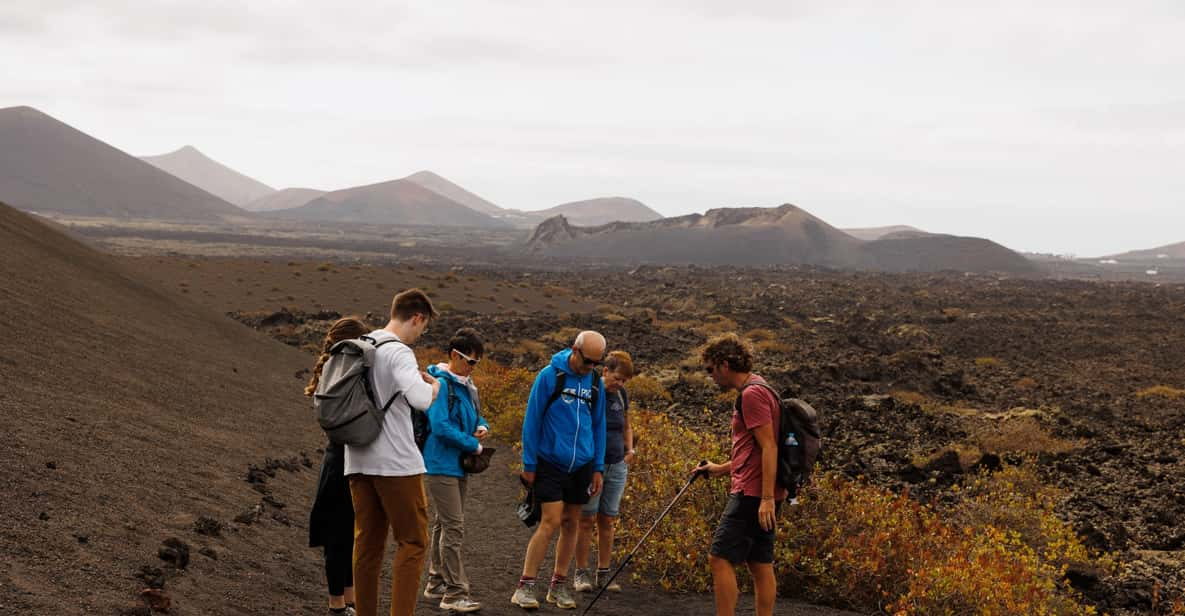
Against that, the guided volcano hikes are deliberately unhurried. Regulars describe them as approachable for beginners and non-hikers, and children handle them when they are ready for a large amount of walking. Groups stay small, typically capped at 8 to 10 walkers, so nobody gets strung out across loose stone.
Hiking stats for Caldera Blanca
9.5 kmtrail distance
3.5 hrwalking time
400 melevation gain
Guides work in English as well as Spanish, French or Italian, so a mixed-language group does not mean a rushed commentary in a language you half follow. If you can walk 9 km on rough ground, you can do this island.
Tour for this
Lanzarote: Guided Volcano Hike with Transfers4.9★ (956) · 3.5 - 4 hours · Hotel pickup · Free cancellation
Timing decides how a walk feels more than the route does. October to May is the safe window: daytime temperatures between 19°C and 25°C and the calmest winds of the year, with October the quietest month of all.
Pro tipBook the demanding walks for the first half of your trip, so a reshuffled calima day still has room.
From June the trade winds build, and summer afternoons push past 24°C over ground that radiates heat back at you.
The daily rule matters more than the monthly one. Start before 11 am and you finish before the winds pick up around midday and the heat peaks. An afternoon departure in July feels like a different sport from a 9 am start on the same trail.
Trekking seasons, heat, and wind in Lanzarote
March sees busy trail activity alongside sunny skies and pleasant 20°C temperatures.
HighestMar, Aug
In betweenApr to May, Jul, Sep, Nov to Feb
LowestJun, Oct
Darker: a higher how busy it gets score, out of 5
Tap a month to read it.
August is the busiest month on the trails, combining peak summer crowds with 25°C heat.
HighestJul to Oct23.7 to 24.9 °C
In betweenMay to Jun, Nov21.3 to 22.9 °C
LowestDec to Apr19.4 to 20.8 °C
Darker months: higher, from 19.4 to 24.9 °C
Tap a month to read it.
March sees busy trail activity alongside sunny skies and pleasant 20°C temperatures.
HighestFeb to Apr, Nov0.6 to 0.8 days
In betweenMay0.4 days
LowestJun to Oct, Dec to Jan0 to 0.2 days
Darker months: higher, from 0 to 0.8 days
Tap a month to read it.
One more thing to watch: the calima. A Saharan dust episode brings two or three days of beige-grey haze, and during those days the distant craters your viewpoints exist for sit behind a veil while the air itself thickens.
If a calima is forecast, shift the big-view walks and save them for the clear day after.
When to go
JJanFFebMMarAAprMMayJJunJJulAAugSSepOOctNNovDDec
Los Volcanes →Mildest winds and 19-25°C from October to May
La Geria →Manual harvest runs July through September
Famara CliffsSafest trekking October to May, mornings before 11 am
At its bestOn
The quieter months do double duty: fewer coaches on the roads to the trailheads and softer light for the crater rims.
Tour for this
Magical Lanzarote: Northern Island Tour4.7★ (180) · 5 hours · Hotel pickup · Free cancellation
There is no shade on any of these trails. No tree, no overhang, and black lava reflects the sun back up at you from below. Water and sunscreen decide the walk here; skip them and there is nowhere on the trail to fix it.
Common mistakeWearing brand-new white trainers. The black ash stains fabric for good.
For a 3-hour walk, plan on 1.5 to 2 litres of water per person, plus SPF 50, a wide-brimmed hat and UV-filtering sunglasses. The glare over open lava plains is severe, and reapplication matters more than the first coat.
Footwear is the rule operators enforce at the trailhead. Closed-toe walking shoes are mandatory on guided volcano trails and vineyard hikes alike; sandals, flip-flops and heels mean you are turned away.
Over loose picón gravel in La Geria, firm soles and higher socks keep the abrasive black ash out of your shoes, and older or darker pairs survive it better than clean white trainers.
What to pack and wear for an unshaded volcano hike
1.5 to 2 litres of waterThere are no natural water sources or refill points on exposed volcanic trails, and radiant ground heat speeds up dehydration.
High-SPF sunscreen (SPF 50)Volcanic terrain has no shade and dark lava reflects intense solar radiation, requiring frequent reapplication.
Wide-brimmed hat or capContinuous direct sun exposure across open craters requires dependable head, face, and neck coverage.
UV-filtering sunglassesDark basalt and high sun angles generate severe glare over open lava plains.
Closed-toe hiking shoesVolcanic ground is rugged, loose, and sharp, making closed footwear essential to avoid slipping or cuts.
Light, breathable clothingCovering layers protect bare skin from prolonged sun exposure while staying ventilated in high heat.
A light covering layer beats bare skin in this sun, and a windbreaker earns its place in the pack the moment you climb above the lava fields, where the gusts on the rims are strong even on clear days.
Pro tipWith a rental car, arrive at Caldera Blanca early; parking sits by the Iglesia de los Dolores in Mancha Blanca and a shuttle covers the last stretch.
The lines reach the surrounding towns only: Line 6 runs Playa Blanca and Puerto del Carmen to Yaiza, Line 16 runs Arrecife to Mancha Blanca, and from there you either walk up to 2.5 km or negotiate a local taxi.
Taxis need planning too. None pass the park regularly, there are no ranks inside it, and a driver will not wait at Islote de Hilario unless you pre-arrange the round trip. Driving yourself works well: 16 to 31 minutes from Puerto del Carmen, around half an hour from Playa Blanca.
Without a car, the simplest answer is a tour that collects you. The Guided Volcano Hike with Transfers runs 3.5 to 4 hours in Los Volcanes Natural Park with a professional guide, and includes water, fruit and biscuits along with pickup and drop-off at your resort, so the trailhead logistics disappear from your morning.
Driving yourself
Rent a car for the driveCompare cars from the rental companies in one search, then pick yours.
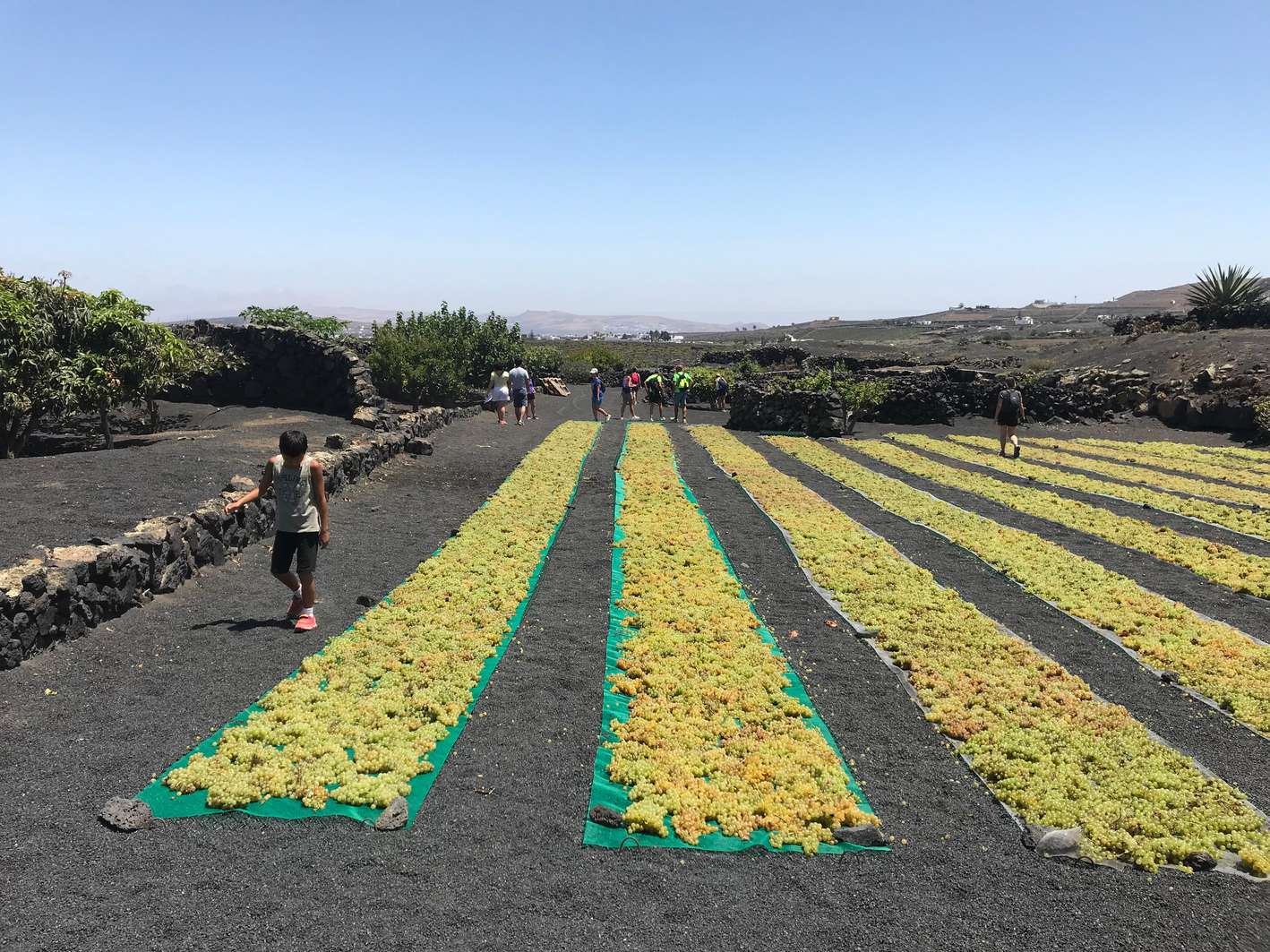
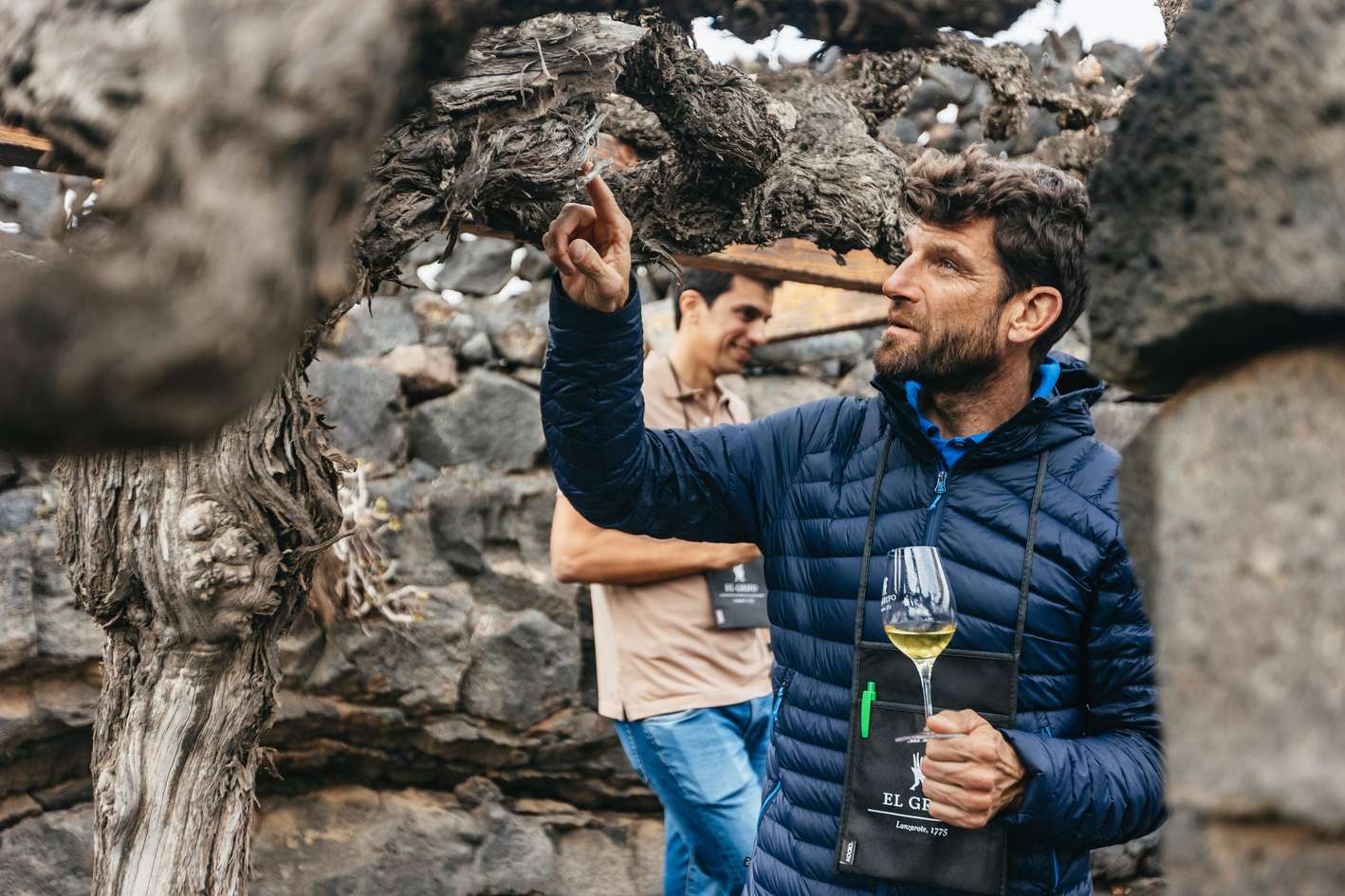
La Geria is a working vineyard, and the walls and pits you walk past are still farmed today.
Common mistakeDriving the LZ-30 yourself on a tasting afternoon. Take the walk that ends at the bodega instead.
After the eruptions of 1730 to 1736 buried the island's fertile valleys, growers discovered the black ash, called picón, works like a sponge: it traps moisture from the Atlantic trade winds and night dew and feeds it down to the roots.
Each vine sits in a hand-dug conical pit, some 3 m across and up to 2.5 m deep, ringed by a low semicircular dry-stone wall called a zoco that blocks the wind.
Walking between the hoyos, you see the whole system at eye level: pit after pit, every wall stacked by hand a century or more ago. The mineral taste in the glass afterwards, dry, crisp, un-oaked Malvasía, comes straight from that ash.
Practicalities shape the day. Bodegas run tastings to set schedules, so drop-ins often find the cellar tour full. The wine road, the LZ-30, is winding, Spanish drink-drive limits apply strictly, and buses through the valley are thin.
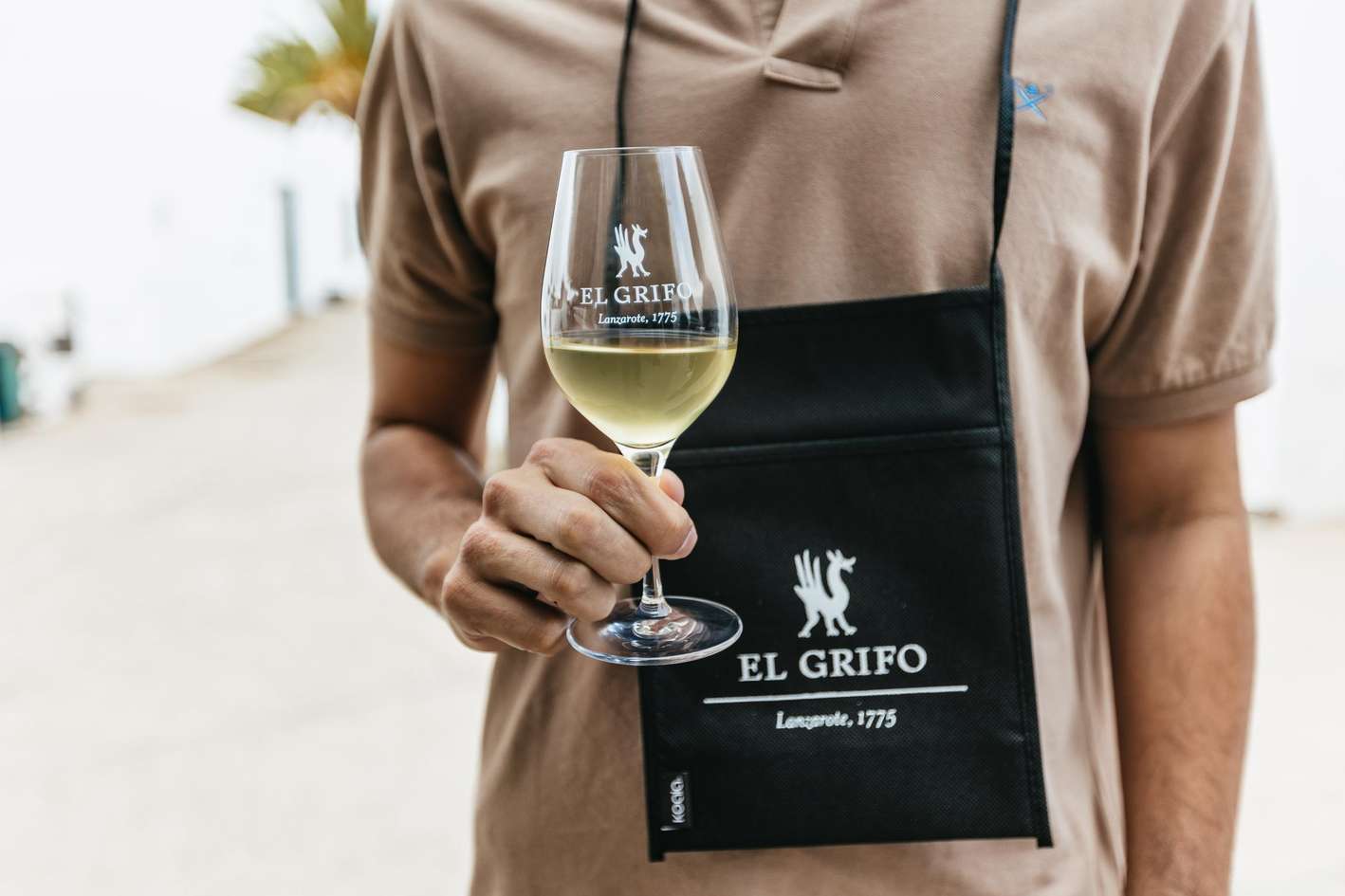
A guided walk solves all three. One option is the Trekking in La Geria with winery visit and wine tasting, a 3.5-hour circular route with a local guide that finishes at Bodega Rubicón with a tasting.
What nobody tells you
The picón layer waters the vines without irrigation
The ash condenses trade-wind moisture and dew and channels it to the roots, which is why no vineyard here is watered
The harvest is entirely by hand, July to September
Slopes of loose ash rule out machines, so the valleys fill with pickers in late summer
Cellar tastings follow pre-booked schedules
Arrive without a reservation and the guided tour is often closed for the day
Tour for this
Lanzarote: Trekking in La Geria with winery visit and wine tasting4.8★ (14) · 3.5 hours · Free cancellation
Children do these walks, with one honest condition: stamina. Dedicated guided volcano hikes accept children from age 7, though some treks set the bar at 8 or 12, and every operator expects kids to be ready for a large amount of walking.
Pro tipDo Cuervos first. If the kids finish it asking for more, book the 3-hour guided trek.
Check the age line on the specific trek before you promise the family a volcano.
The easiest family outing costs nothing and needs no booking. Caldera de los Cuervos has a gentle 15-minute access trail that leads straight onto the crater floor, short enough for small legs and dramatic enough to feel like an expedition.
It is the walk to do first if you are testing whether the children will cope with a longer crater loop.
In La Geria the vineyards themselves hold a child's attention for a while, the pits and walls are almost sculptural, and the tastings make room for them: under-18s get juice and chocolate where the adults get wine.
A vineyard walk of easy intensity plus a bodega stop is a full, gentle family half-day that never feels like a forced march.
Tour for this
Hiking through La Geria: where volcanoes become vineyards.4.9★ (219) · 4 hours · Hotel pickup · Free cancellation
The trail etiquette here carries the force of law. Canary Islands conservation law, Law 4/2017, governs the protected reserves, and it treats the ground itself as belonging to the landscape. Taking home a piece of it is an offense with financial penalties and restoration orders attached.
Common mistakePocketing a smooth piece of lava as a souvenir. It can cost a fine and a restoration order.
In practice this means three habits. Stay on the marked paths, because stepping off damages a fragile surface and, more urgently, lava tubes and gullies underfoot can collapse.
Leave every rock and every handful of lapilli where it lies. And in La Geria, never touch the zocos, the low stone walls that shelter the vines; they are working farm structures as well as protected features.
None of this asks much of a walker with a map and a bit of care. The paths are marked, the craters are open, and the landscape has survived on this island precisely because people left the stones alone.
Follow the signs and the only thing you carry home is the picture of a vineyard growing out of black ash.
Other wheels reach this ground too, and a week on the island usually leaves room for a second angle on the same volcanoes.
Pro tipSpread your bookings across two landscapes; the craters and the vineyards feel like different islands.
One road tour includes a walk of about a kilometre to visit the El Cuervo volcano, which puts you inside a crater without committing to a half-day trek. The terrain and access logic that decides the walks decides anything with wheels as well.
If the walking has hooked you, the winery visit in La Geria and the crater loops of Los Volcanes pair naturally across two days, one on foot and one at a slower pace with a glass at the end.
Whatever you choose, the same rules hold: closed shoes, water you carried yourself, and a morning start before the wind picks up.
Every trek on this page carries free cancellation up to 24 hours before, so holding a spot and reshuffling around the weather costs nothing.
Lanzarote rewards walkers who respect its two rules: know which ground is open, and start early. The free craters of Los Volcanes and the vineyards of La Geria need nothing but closed shoes and water, and a guided trek opens the rest.
Go ifYou want to walk into a real volcanic crater without permits, guides or feesYou can handle 9.5 km over loose lava for the Caldera Blanca rim loopYou like the idea of a hike that ends with volcanic wine and cheese
Skip ifYou expect shaded forest trails or waymarked mountain hut routesYou want to explore Timanfaya's interior on foot without booking the ranger trek months aheadYou cannot manage uneven, loose stone underfoot
Our pick to book
Lanzarote: Hike Across Timanfaya's Volcanic Landscapes4.8★ (1,565) · 3 hours · Hotel pickup · Free cancellation
Short answers to what walkers ask before lacing up on the lava.
Tinajo2026
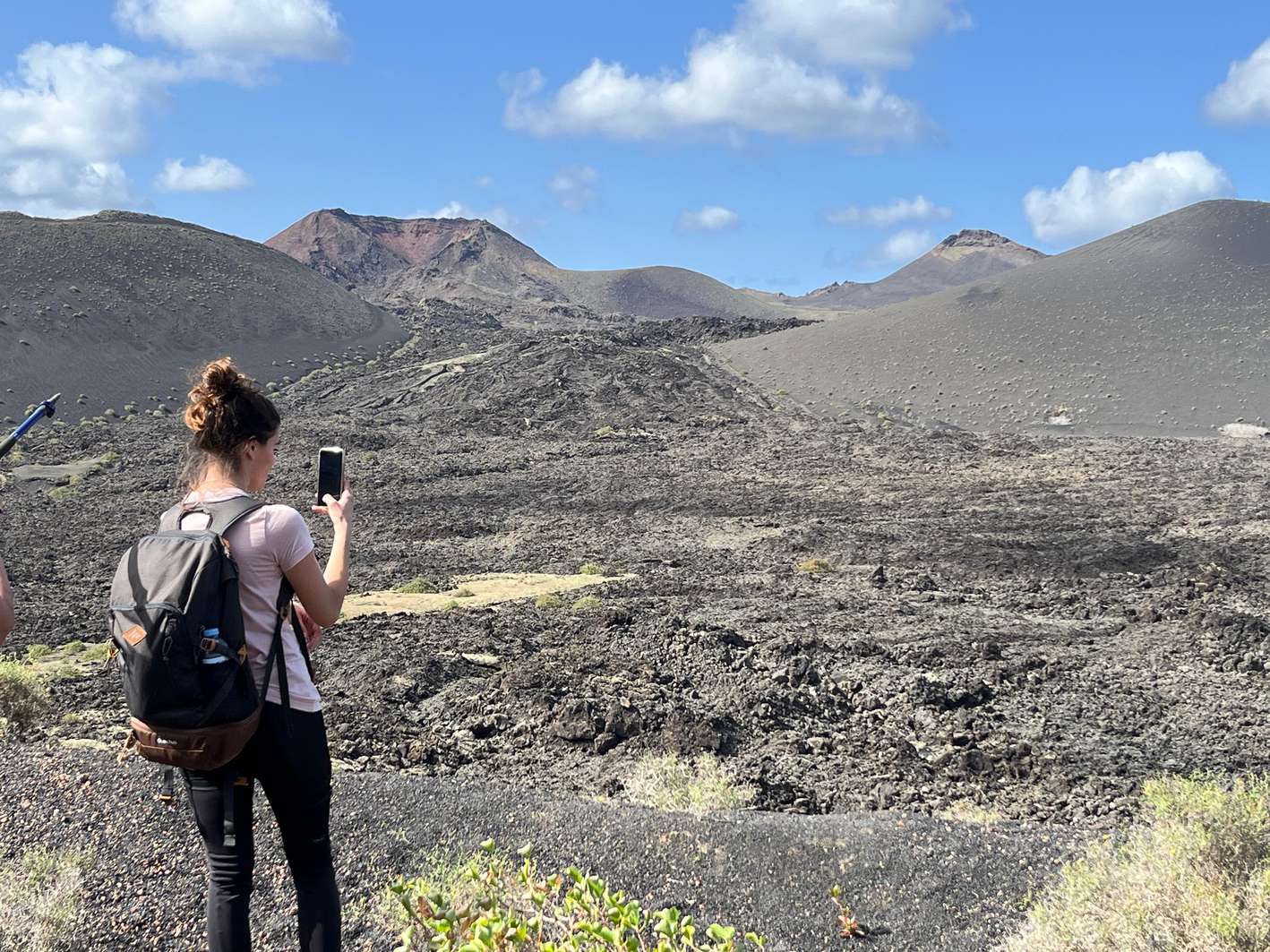
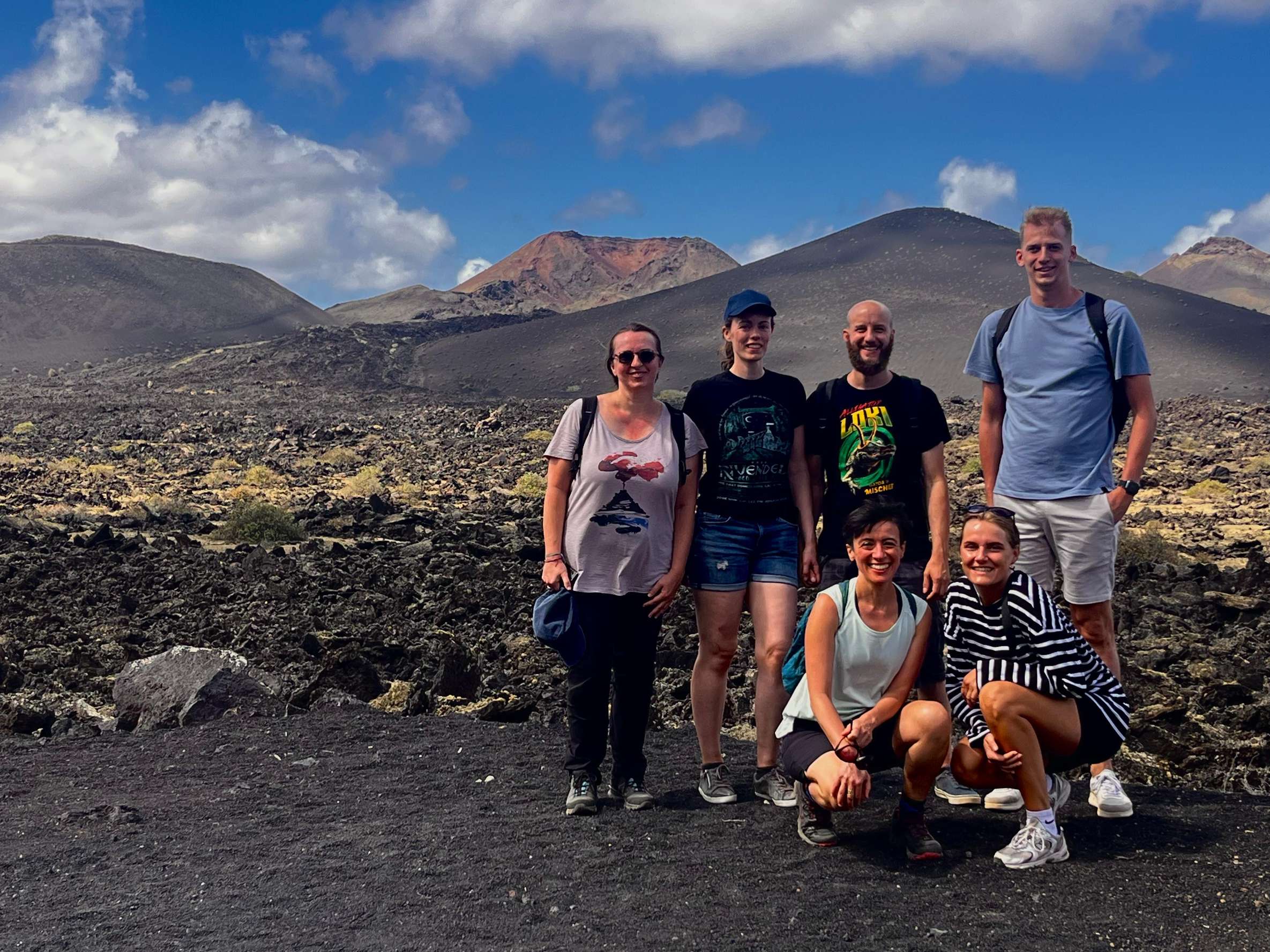
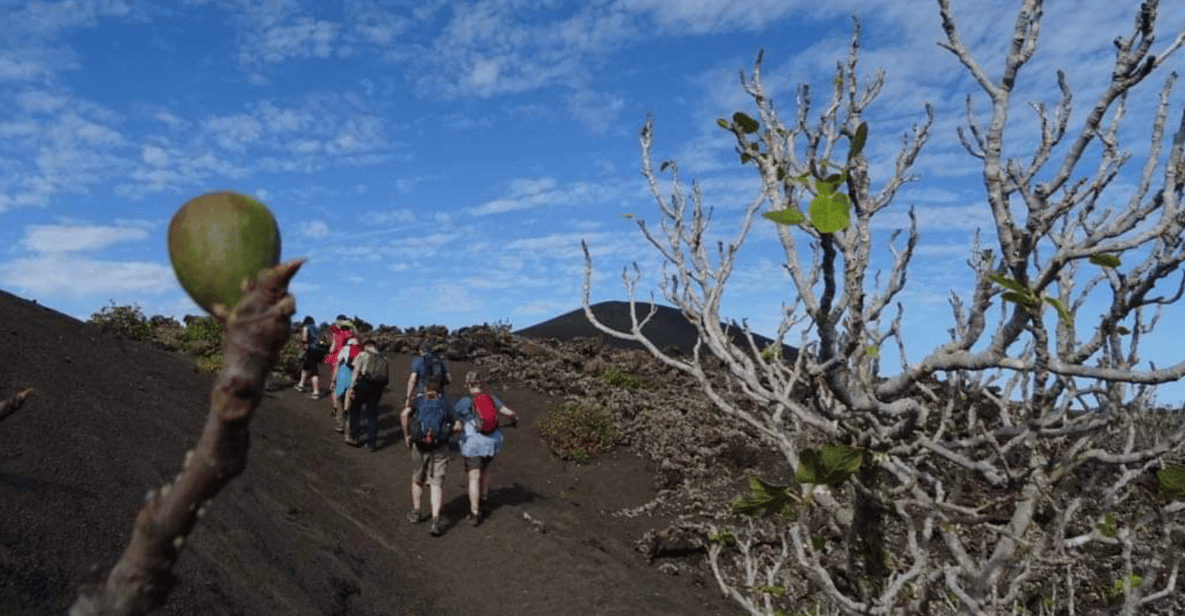
Stepping inside the crater at El Cuervo, black rock in every direction. Pack closed shoes, the lava is sharp.
Is Lanzarote good for hiking?
It is, especially if you like volcanic terrain. Trails lead across lava fields and into craters at Caldera Blanca, Volcán El Cuervo, and Montaña Roja, and guided volcano hikes are manageable even for beginners and children.
Can I hike inside Timanfaya National Park on my own?
No. Independent walking is prohibited across the national park, and on foot you are limited to the Islote de Hilario visitor centre complex. To walk the volcanic interior you need either a pre-registered ranger trek or a guided hike in the neighbouring Los Volcanes Natural Park.
Where can I hike for free without a guide or permit?
Caldera de los Cuervos and Caldera Blanca in Los Volcanes Natural Park are free to hike independently, and Montaña Roja in Playa Blanca can be climbed on foot without a permit. At El Cuervo you can step straight into the crater interior.
How hard are the guided volcano hikes?
Most run about three to four hours over roughly eight to nine kilometres at a laid-back pace, and guides keep groups of around eight to ten walkers together on the rugged ground. You need moderate fitness, closed-toe shoes, and water.
Can children join the hikes?
It depends on the trek. Some guided volcano hikes exclude children under 7, others under 8 or 12, and kids who join must be ready for a lot of walking. Check the age limit for the specific trek before booking.
How do I get a spot on the free ranger-led Tremesana walk in Timanfaya?
The Tremesana Route is capped at 16 walkers a day and sells out months ahead. Reserve on the official national parks portal at midnight exactly 30 days before your visit date, though uncollected slots sometimes open on the day.
What should I bring on a volcanic hike?
Closed-toe shoes are required, sandals and flip-flops get turned away. Bring water, sunscreen, and a windbreaker, because crater rims and lava plains have no shade, no water points, and gusty winds even on warm days.
What happens if a calima dust storm rolls in on hiking day?
Saharan calima haze usually lasts two to three days, dropping visibility over distant craters and viewpoints and degrading the air. Views suffer, so it is a good day for a shorter or coastal route instead.
Can I pick up volcanic rocks or take lava stones home?
No. Removing rocks, lapilli, or disturbing the stone windbreak walls in protected reserves is an offence under Canary conservation law, with fines and restoration orders. Leave everything where it lies.
Are the guided treks run in English?
Yes. Guided hikes and treks run in English as well as Spanish, French, or Italian, so you can follow the geology and history explanations as you walk.
Is there a hike that combines walking with wine?
Yes. Treks through La Geria walk among vines planted in black ash pits and finish with a tasting of dry volcanic Malvasía white wine and local cheese, with some routes also visiting a bodega.
Book a guided hiking day in Timanfaya's volcano country
Walk nine kilometres of lava fields and ancient craters with a guide, snacks and water included, and cancel free up to 24 hours before you set off.